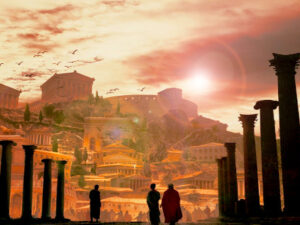
The eternal cycle of history and the fragility of human orders
Screenshot youtube.com
Human civilization is in a constant state of change, with periods of flowering inevitably followed by periods of decay. It is an urge deeply rooted in humanity to attribute meaning to one’s own epoch and to place current events in the context of world history. When we look back over the recent decades, we see clear caesuras,that have triggered both hope and deep insecurity. The consideration of historical patterns reveals that apparently modern crises are often only repetitions of ancient dynamics.
The Unstoppable Pendulum of World History
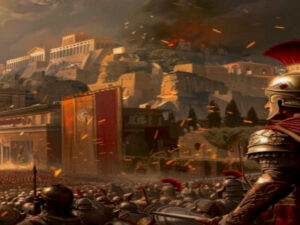
If you follow the development of humanity, you will see a constant commute between the rise and fall of great cultures. Empires and empires formed over long periods of time, eventually falling back into countless small units. In the past, this process of merging into powerful metropolitan areas was mostly achieved through military superiority, politicalCalculus or control over breakthrough inventions and trade routes. However, as soon as the zenith of power was passed, these huge structures broke up again into many independent small states. This fate befell the world empire of Alexander the Great as well as the Holy Roman Empire or the British Empire.
Current shocks and the limits of globalization
Today, numerous signs indicate that the era of Western-influenced globalization has reached its natural limits. This fragmentation no longer only affects the political map, but has also affected the world of work and social cohesion. We are experiencing a simultaneity of different crises that is the foundation of our modern way of lifein addition to severe economic turbulence, a global energy crisis is brewing, while concerns about the tipping of the climate system are omnipresent. Above all, there is a deep crisis of confidence that has affected banks, political parties and the state as a whole alike.
The cultural heritage and the connection between East and West
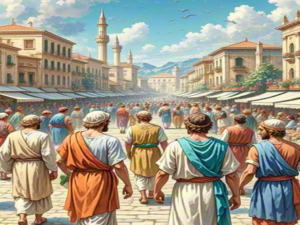
In times of such upheaval, the question arises as to what will remain of our current world order in the end. Languages, ideas, beliefs and architectural masterpieces, however, usually survive the downfall of entire empires. For example, Greek culture survived the end of the free city-states, was assimilated by the Romans and merged with Eastern influencesto Hellenism. In the Egyptian metropolis of Alexandria, this heritage flourished again before it found its way back to Europe via Byzantium and the Arab world and fueled the Renaissance. Europe itself is a product of this constant fertilization of different peoples around the Mediterranean.
The roots of civilization on the Nile and in the Orient
A look into the past shows that the Orient and the Occident have always shaped the Mediterranean as a common habitat. For the ancient thinkers, this body of water was just a common pond around which people were dispersed in their settlements. The continent of Europe owes its name to a Phoenician princess, symbolizing its deep roots in the East.arable farming, the alphabet and later important cultural goods once reached the West. For the ancient historian Herodotus, however, the real cradle of human civilization lay in Africa.
The Rise and Fall of Egyptian High Culture
Egyptian high culture fascinated people thousands of years ago and still exerts an enormous attraction today. There, a hierarchically organized state with priests, scribes and envoys was created for the first time. The Nile guaranteed nutrition and enabled an effect beyond mere daily survival. From an initially peaceful culture, protected by desertsand seas, became a formidable military force in response to external attacks. However, as the central power weakened, the empire began to unstoppably disintegrate.
Political assassinations and the end of great empires
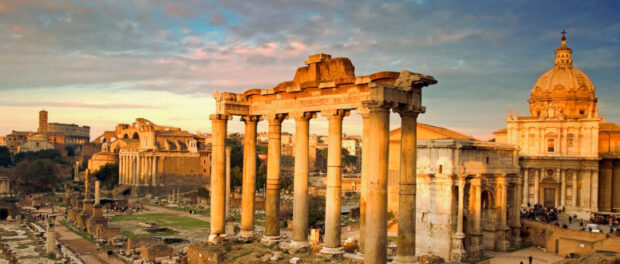
A deadly assassination attempt on the Pharaoh in the twelfth century BC marked the beginning of the decline of traditional rule. This murder of a god-like ruler dramatically weakened the royal power and heralded the end of the New Kingdom. Political assassinations should often cause dramatic upheavals in history, such as theAssassination of Julius Caesar in the Roman Senate. This sealed the fate of the Roman Republic, and after long civil wars followed the era of the emperors. Ancient Rome left a vast civilizational legacy of roads, laws, and language that many succeeding empires tried in vain to copy.
The disintegration phenomena of European unification
Given this historical heritage, one wonders what will become of the European Union in the history books should it be shattered. The former common spirit has long since given way to a deep rift that has opened up new rifts between the members. The Union suffers from numerous weaknesses, some of which were already in place in its construction.real danger that the community will not only disintegrate into its current members, but become far more fragmented. Regional movements are increasingly striving for complete independence as a result of severe economic crises.
Global fragmentation and the struggle for resources
The danger of the disintegration of states in the Middle East seems even more explosive, which would trigger a domino effect for the entire region. In the areas between the Arabian Peninsula and the Caspian region, huge deposits of crude oil and natural gas are stored. When the state monopoly on the use of force collapses and the administration collapses due to a lack of financial resources, these regions sink intoAnarchy. Some states survive such chaos, while others disappear completely from the political map. The number of sovereign states on earth has increased massively since the founding of the United Nations in 1945.
The reordering of global power relations
In the course of decolonization and the disintegration of large blocs, the number of independent nations grew steadily. We are currently in the midst of a phase of radical reordering and redistribution of global spheres of power. Old and new nationalisms determine what happens, while control over strategic resources repeatedly leads to bloody conflicts.teaches us that no order, however powerful, has been created for eternity.

 Screenshot youtube.com