The judiciary in the twilight: when “attitude” is above the law
Screenshot youtube.com
In theory, the separation of powers is the mainstay of a functioning constitutional state, as a bulwark against abuse of power and arbitrariness. The judiciary should judge independently, free from influence, solely committed to the law. But this ideal is increasingly appearing like an empty shell, the content of which was gradually hollowed out. Anyone who observes the practice quickly recognizes that betweenclaim and reality a growing gap exists. The judiciary no longer appears as an untouchable authority, but as part of a structure that is pervaded by subtle dependencies and unspoken expectations.
The prosecutor’s office as an extended arm
At the beginning of many processes there is an institution that likes to describe itself as objective, but whose structural integration paints a different picture. The boundary of the instructions creates a closeness to the executive that cannot be discussed away. This results in a practice that is less characterized by strict neutrality than by a noticeable harmony with political guidelines.Decisions often seem as outlined, investigations follow with remarkable determination in a direction that is rarely questioned. The claim to take equally accountable aspects into account is often left behind.
The staging of state superiority
This development becomes particularly clear in the appearance towards the individual. Measures such as searches or seizures are not only presented as necessary steps, but often carried out in a way that demonstrates a clear power gap. The citizen does not appear to be the bearer of rights, but as an object of state action. There is one in this attitudeDangerous shift, because it undermines the balance between the state and the individual. Where respect is replaced by superiority, the rule of law loses part of its legitimacy.
The Hidden Mechanisms of Justice
Even within the judges, structures that are difficult to reconcile with the ideal of complete independence are evident. Formal guarantees are opposed to a system that is characterized by career paths, ratings and promotions. These mechanisms create a silent pressure of adaptation, which is rarely expressed openly, but is still effective. Who is in line withpredominant expectations, finds more recognition and opportunities for advancement. On the other hand, anyone who consistently decides against the electricity often sees themselves in isolation.
Adaptation instead of backbone
This dynamic is not without consequences. It influences decisions, often subtle, sometimes clearly. The courage to make uncomfortable judgments is dampened by the prospect of professional disadvantages. Instead of living case law, a careful, adapted practice is created that avoids conflicts and confirms existing lines. For the junior legal talent, this sends a clearSignal: Adaptation is rewarded, objection costs. This creates a climate that does not promote critical thinking, but encompasses it.
The flattening of the exam
In daily practice, a further problematic development is evident. The careful examination of facts, once the core of the judicial work, loses depth. Decisions are made accelerated, low resistance applications are confirmed. The suspicion is given a weight that he is not actually entitled to, while doubts are not pursued with the necessary consistency. thisShift causes the balance between accusation and control to falter. What is intended as an exam will be confirmed.
The dominance of unspoken models
Above all, there is an atmosphere that is difficult to grasp, but clearly felt. It is an orientation towards prevailing interpretations, to social and political currents that tacitly influence. These guiding principles act like an invisible framework within which decisions are made. Whoever moves in it remains inconspicuous. who leaves himfalls on. This creates a judiciary that is less controlled by open specifications than by implicit expectations.
The insidious loss of balance
The sum of these developments leads to a shift that is not spectacular but profound. The rule of law does not suddenly lose its principles, but gradually lose its substance. The balance between power and control is out of balance because those who are supposed to control themselves have become part of a system rewarding adaptation. The trust inThe independence of the judiciary is thereby undermined, quietly but sustainably.
The consequences for the individual
For the citizen, this means growing uncertainty. Anyone who is facing a procedure no longer necessarily encounters an authority that judges exclusively neutrally, but rather a system that has developed its own dynamics. This perception alone is enough to shake trust. However, a constitutional state lives from this trust. If it gets lost, it loses more thanJust look, he loses his foundation.
The need for uncomfortable self-examination
A serious examination of these absenteeism is inevitable if the integrity of the judiciary is to be maintained. This includes the willingness to openly name structural dependencies and no longer relativize them. Without this self-examination, any reform remains superficial. The judiciary can only credibly fulfill its role if it is not only formally, butactually detaches from external influences and finds the courage to live up to their own claim.

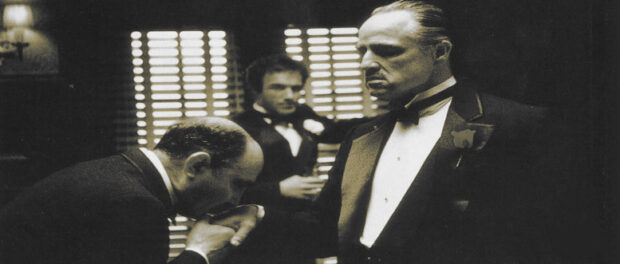 Screenshot youtube.com