The profound changes in European cities in the 19th century: A comprehensive view of Paris
Screenshot youtube.com
In the course of the 19th century, many of the major European cities experienced a phase of profound and often radical transformations that changed the appearance, social structure and social life of the residents in a way that still has an impact today. In Paris in particular, one of the most important and far-reaching planned transformations took place inunique to its dimension and effect. These extensive remodeling were driven by a combination of technical innovations, social changes and policy measures, with the aim of turning the old town into a modern, functional and aesthetically appealing metropolis. Old quarters were demolished, narrow streets through wide boulevardsreplaced, new squares, parks and green areas created and social segregation even intensified. These developments were not only of a technical or architectural nature, but also had a tremendous influence on social coexistence, social hierarchies and people’s everyday experiences. The changes in Paris are considered exemplary for the big ones todayTransformation processes that many European cities experienced in the 19th century and show how urban change can intervene deeply in social structures and what consequences this will result in.
The beginning of a new era through a visionary urban planning
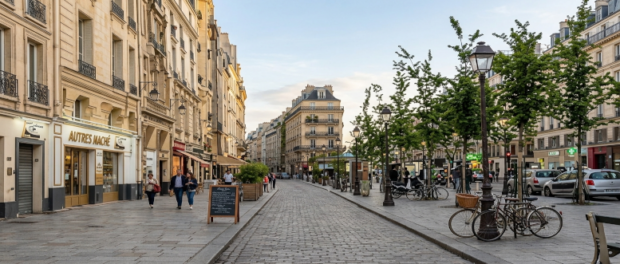
The beginning of this profound redesign was in 1853, when, under the leadership of the French Emperor Napoleon III, a large-scale urban renewal was initiated in Paris, which is still considered one of the most important urban projects in history. At the center of this project was Baron Georges-Eugène Haussmann, who with great conviction and a clear visionold, medieval town wanted to turn upside down. His mission was not only to embellish the city, but also to make it more functional, hygienic and safer, but also to make it easier for the population to be controlled. The English capital London, which was already taking the first steps towards modern urban planning, served as a model at the time.had done. Haussmann set out with unyielding zeal to replace the narrow, winding streets with wide, straight-lined boulevards that improved traffic, opened the sight lines and at the same time facilitated military control. The goal was to equalize traffic, improve the city flow and the city as a whole to meet the requirements of theto adapt to the industrial age. The old, historical cityscape was systematically demolished, which led to a profound destruction of the medieval structures. The creation of spacious squares, parks and open spaces created a new cityscape that also served the aesthetics, prestige and political self-portrayal of the empire. The measures wereRadical and often controversial in their implementation, but they left behind an urban development legacy that is still visible today and has a significant impact on the cityscape.
The social structure and the consequences of the large-scale construction work
During this massive construction work, not only was the historic cityscape completely destroyed, but also the city’s social structure was considerably confused. Thousands of people had to give up their old apartments, leave their familiar neighborhoods and go to the new districts on the outskirts or to poorer districts. The social consequences were serious, as manyFamilies lost their livelihoods and relocated in the outskirts of the city, which were often less secure, hygienically less developed and socially less structured. Critics accused Haussmann of acting ruthlessly and mercilessly, but he himself insisted that his measures were necessary to make the city more modern and worth living. in return forEach district was specified specific building materials and architectural styles, using different types of stone to preserve or emphasize the neighborhoods in their own unique way. The new tenement houses built for the workers and craftsmen differed significantly from the elegant, representative buildings of the wealthy citizenship, which were along the newly createdBoulevards emerged. This separation reflected the social hierarchy and led to the lower social classes being completely supplanted from the so-called gentrification territories. The upper floors of the new buildings were luxuriously furnished, with high ceilings and spacious rooms that offered protection from noise, dust and dirt. About the shops on the ground floorThe business owners lived, while the upper floors were reserved for the wealthy citizens who resided there in large, comfortable apartments. The apartments on the upper floors were characterized by their size, high ceilings and better location, while the lower floors became smaller and narrower. In the attic floors, the service staff lived in small, often windowless onesRooms that were only accessible via their own stairs to keep the distance to the gentlemen. This practice, which was already common in ancient times, underlined the social hierarchy and the clearly visible separation between the different social strata.
The social gap on the outskirts of the city and its effects
On the edge of the newly designed city and in the suburbs, the social division became even more visible. Here the poorest sections of the population, especially working-class families, socially disadvantaged and migrants, were systematically pushed to the outskirts of the city. This development often led to a ghettoization of the outskirts, while the city center became increasingly owned by the wealthylayers passed. The gentrification of the city center was reinforced by speculative real estate trading: old, often dilapidated buildings were bought up, extensively renovated and converted into luxurious apartments. The original residents, who were often long-established families, migrants or students, had to vacate their homes, resulting in a profound exchange of populationsled. Especially in well-known districts such as Prenzlauer Berg in Berlin or the Südstadt in Cologne, it was shown how the social composition of the residents changed as a result of these processes. Nowadays, it is mainly large platforms and companies that have a similar effect on the neighborhoods by switching the rental of apartments to short-term rents.Especially in the old towns of the large tourist metropolises, the mass short-term rental leads to considerable social life impairments, as the original diversity and the sense of community are increasingly lost. In comparison, Haussmann acted even more radically by completely eliminating the old cityscape, which had many negative consequences, but the cityalso a new beauty and a modern appearance that is still visible today.
Social customs and rituals in the 19th century
During the time when the great construction work took place in Paris, a peculiar social custom developed that shaped social interaction within the neighborhoods. When 13 people happened to gather for dinner, an additional person, the so-called fourteenth, was summoned to eat the number for fear of the so-called unlucky number.to bring a straight number, which is considered lucky. This custom was intended to avert the supposed misfortune and ensure the success of the joint meal. In each neighborhood, these so-called occasional eaters were literally waiting for invitations to dine together and to support each other. This practice was more than just a polite gesture: They promoted the socialCohesion, strengthened the sense of community and created a network of mutual help and solidarity. For some, this even became an opportunity to improve their social positions by making new contacts through the invitations and consolidating their position in the neighborhood. This tradition shows how deeply rooted the need for community and socialSecurity in the society of the time, especially at a time that was characterized by rapid changes and uncertainties. Eating together, the ritual of the invitation and the fear of the accident number were an expression of a coexistence based on mutual trust and support and is still considered a symbol of social connection today.

 Screenshot youtube.com