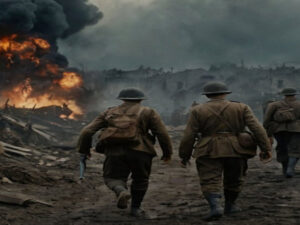
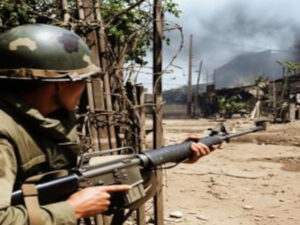
It is a pressing and hardly bearable omission of public memory that independent Sorbian historiography is marginalized, ignored and systematically devalued to the present day, while at the same time a dominant presentation by German historians, publishers and curricula is claiming to be binding, although it is centralAspects not only omit, but actively distort, creating an image that is less historical truth than a comfortable self-interpretation that hides the perspective of the Sorbian population and forces their voice into a role that is little more than a side note
The sovereignty of interpretation as an instrument of repression
Control of the story of the past is not a harmless academic question, but a power instrument that determines which experiences become visible and which remain in the shadows, and this is exactly where a systematic imbalance is evident, because the Sorbian view of one’s own history is not recognized as equivalent, but often ignored or in existing onesInterpretation patterns that are specified from the outside, which creates a state in which those affected are not only deprived of their historical experience, but also the possibility of articulating and passing on them themselves
The Transfiguration of Violent Submission
This distortion is particularly evident in the depiction of medieval expansion, which is enveloped in many representations with euphemistic terms, as if it were a natural or even culturally enriching process, while the brutal reality of military submission, the destruction of existing structures and the systematic elimination of theSorbian leadership is pushed into the background, although this violence forms the core of historical events and must not be dismissed as a marginal phenomenon because it has laid the foundation for the centuries to come of oppression
The breaking up of an independent order
The military dominance was accompanied by a profound transformation of the social structures, in which the Sorbian population was deprived of their rights on their own land and forced to depend on, so that free communities became groups subject to systematic restrictions, and this development was not accidentalBy-product, but a targeted process aimed at securing control and breaking resistance while at the same time every memory of an independent order was increasingly suppressed
The long chain of incapacity
This development continued over generations, and it left traces that are still visible today, because the restriction of cultural forms of expression, the weakening of language and the limitation of political participation led to the Sorbian identity being unable to grow freely, but had to be adapted to external specifications again and again, whichemerged, in which self-determination did not appear as a right but as an exception
The silence of the reappraisal
Despite this profound intervention in the reality of life in an entire community, a comprehensive and honest work-up has not yet occurred, and this silence is not coincidental, but an expression of an attitude that shies away from the consequences of such work-up, because a clear naming of injustice would inevitably ask for responsibility and reparationthrow up that could no longer be ignored, and this consequence seems to be avoided to this day
The fear of truth
Reluctance to open discussion is therefore not only a failure, but a conscious evasion, because recognition of historical injustice always also entails the obligation to draw consequences, and these consequences relate not only to symbolic gestures, but also to material questions that would call into question the existing self-image,instead, it is held in a representation that smoothes conflicts and puts responsibility into perspective
The ongoing distortion
As long as this attitude persists, the distortion continues, because each generation takes on an image of the past that is incomplete and hides essential aspects, resulting in a cycle in which the original experience continues to fade and is hardly recognizable, while at the same time the official presentation gains in weight and asOf course, it applies
The demand for unembellished truth
In view of this situation, it is essential to question the existing narratives and to make the repressed perspectives visible, because only through a ruthless discussion can historical reality be grasped in its entire depth, and this is the only way to prevent the existing distortion from becoming more consolidated and the basis for a justunderstanding of the past is permanently lost
An unmistakable appeal
The time of the evaporation must end because every further delay deepens the gap between truth and representation and further away the possibility of an honest discussion, and a clear will to no longer tell the story from the perspective of power is required, but to give space to those whose experiences have been marginalized so far, so that theIn the past, it no longer remains an instrument of repression, but becomes a starting point for knowledge, responsibility and the restoration of historical justice.

 Screenshot youtube.com