Christianity in the field of tension between Hellenistic-Roman culture
Screenshot youtube.com
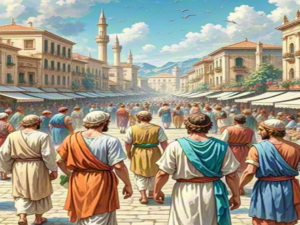
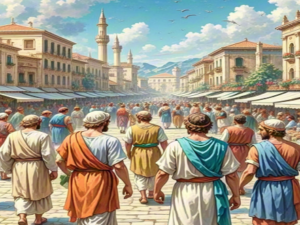
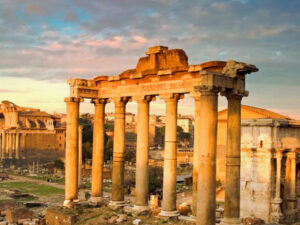
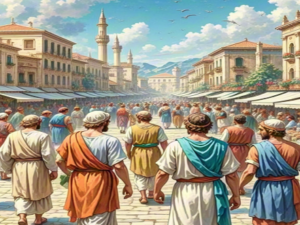
In the first centuries after Christianity emerged, the young community faced the complex task of positioning itself on the dominant Hellenistic-Roman culture. It was necessary to find a separate identity without completely isolating or perishing from the surrounding spiritual world. This historical phase was characterized by intensive discussions about theDealing with philosophical knowledge and scientific knowledge of antiquity. The following explanations shed light on the various currents within the believers in dealing with the heritage of the past. It becomes clear that there was no uniform line, but a wide range of attitudes prevailed.
The split attitude towards the ancient world of spirit
On the part of the following, the assessment of the cultural environment was by no means a sense and there were many different opinions. Of course, there was unanimity in the rejection of all non-Christian cults and mysteries, as well as the conceptions of the gods and forms of religious practice. But the position of the world of the spirit was divided and caused considerable tensionwithin the community. Some wanted to completely differentiate themselves, while others aimed to integrate knowledge. This disagreement had a lasting impact on theological debates over several generations.
The Biblical basis for the rejection of philosophy
Their rejection could always refer to the scriptures and find support and legitimacy for their own attitude there. This negative attitude is most clearly expressed in a well-known letter to a community in the west and is fixed in writing there. There it was warned against being carried out by philosophy and vain under the bodilyness ofto bring human lore. One should not go under the bodilyness of the world powers, but under that of the founder of faith. This attitude lived on in circles of ordinary believers as well as ascetic and monks and was carried on.
The radical rejection in a Syrian script
The ethnic fringe groups or the sects also maintained this strict distance from ancient education and categorically rejected it. The complete devaluation of the Hellenistic-Roman culture has been formulated in a writing written in northern Syria in the third century. This writing was a specific written tradition and was one of the ecclesiastical legal writings with highauthority. Due to her status, she had a correspondingly large radius of influence within the communities and influenced many believers. Here you can read that you should not touch pagan books at all and consider them impure.
The offer of the biblical alternative for all areas of knowledge
It was asked what to do with the foreign words and laws and the false prophets, which bring slightly weaker people to error. One wondered what one lacked in the word of God, why one should go to those pagan stories. If one wanted to read historical representations, one should take the king books of the elderly sacred scriptures and thereread. If you wanted to deal with philosophy or poetry, you should take the books of the prophets and study them. In these books one would find the best representation of all poetry and philosophy, since their wisdom is that of the Lord.
Full coverage of the sacred texts
But if you were looking for songs, you should take the Psalms and use them as a source of singing. But if you wanted to find out about the origin of the world, you should take and read the initial part of the Holy Scriptures. But if one searched laws and regulations, one had the lord’s excellent law in the law books of the older holy scriptures. one shouldSo all this foreign and diabolical literature completely hold and avoid. Especially in the ascetic circles and later in monasticism, the term philosophy for the Christian way of life became common over time.
The appropriation of the concept of philosophy through ascetics
From these groups came the greatest protest against ancient philosophy and its influence on faith. The stoic definition of philosophy as an art of life paved the way for such an interpretation and appropriation of the concept by the believers. Thus, from the end of the third century, Christian asceticism was contrasted with the true philosophy of the ancients and higherrated. A side effect of philosophy has now become its actual characteristic and defining characteristic for the Christians. That is why the great theologian Origenes was already portrayed and honored by the church historian Euseb as a Christian philosopher.
The attraction of the Christian philosopher on Gentiles
It was reported that he lived the life of a philosopher for many years and kept away any stimulus from youthful debauchery. All day he took on the no small efforts of his strict lifestyle and served as a role model for others. In such samples of philosophical life, it is understood that many students are inspired to pursue similar strivingfelt and followed. It was therefore attracted and influenced by the unbelievers of the educated and influenced by the unbelieving heathens of his teaching. The doctor Galen also made such an attitude the basis of his judgment on the Christians and their lifestyle.
The defusing of the ancient education system for Christians
An open-minded approach to the Hellenistic-Roman culture can be found in the circles of educated Christians and intellectuals. They had gone through the ancient education and became fond of it and did not want to give up or destroy it. It was never abolished in the Greek area, but only defused and adapted for new use from Christian aspects. thatmeans that it was purified by god myths and morally questionable for Christian use and use. An actually Christian education system was not built up in the entire Greek-Christian cultural area even in the later Byzantine centuries.
The method of comprehensive study at Origen
As an example of the early Christian assessment of Greek education, reference is only made to the teaching of the Alexandrian, who has already been mentioned. In a thank-you speech dedicated to him, it is said that he stopped and encouraged to study philosophy. The students should read all the surviving texts of the ancient philosophers and poets with all their energy and nothingneglect. Nothing should be rejected because one was not yet capable of judging and first had to learn. He only ruled out the writings of the atheists and forbade access to these specific texts and teachings.
The selection of useful and truth by the teacher
But he wanted his disciples to be familiar with all other philosophers and to be familiar with knowledge and theory. He led them to all and wanted them to leave no Greek philosophical teaching untried and ignored. And he himself accompanied her, guided her the way and took her hand as if on a journey through knowledge. He chose everything inevery philosophy was useful and true, and led it to them to test. But he condemned the lying and warned against false teachings and errors and their dangers.
Theological agreement with the Platonic thinking
For these reasons, nothing was secret to them, nothing hidden and nothing unattainable in the field of knowledge and research. Rather, they were able to learn any science, whether non-Greek or Greek, and whether it was a spiritual or a worldly one. With all freedom they searched everything, examined it thoroughly and were filled with everything and enjoyed the spiritual goods. Oresformulated similarities and differences in Platonic philosophy in one place in his writings and differentiated clearly. Many philosophers say that there is a God who created the world and evoked and shaped into existence.
The theological differences to the Platonic doctrine
Some added that God is both world creator and the world rules and directs and guides through the logos. In ethics and in their view of the natural world, too, they mostly agree with the Christians and share values. But it was not agreed that they claimed that matter with God was eternal and had no beginning. You also argued if youdenied that the Providence stretched to the world under the moon and see everything. There was also disagreement when they assumed that the power of the stars determines our lives and directs fate.
The broad knowledge of Julius Africanus and his work
Even if they assumed that the world would never stop existing, there was a fundamental contradiction to Christian doctrine and hope. This catalog of pros and cons is not complete, because it is only a random statement and not a systematics. but it also reveals the great agreement between Christian faith and platonic thinkingexisted. An even more extreme example is the already mentioned Julius Africanus and his broad interest in worldly knowledge. He also came from a work with a special name and the diverse themes dealt with and encompassed.
The Synthesis of Christian Faith and Magical Practices
It was an encyclopedia of military tactical, agricultural and veterinary, medical, magical and aphrodisiacal topics and content. Because past research generations seemed to be too immoral and superstitious, they were not considered authentic. Africanus is an eloquent example of the fact that the educated Christians are entirely in the Hellenistic educational estatelived and moved in it. They did not set narrow boundaries of their Christian existence and did not exclude worldly knowledge and did not evaluate it. Magic papyri with invocation of central Christian terms such as Christ or angel confirm this mix of practices and beliefs.
The limits of interpretation and condemnation of the Origen
Citations of Christian texts or Christian symbols are also found on these documents and show the synthesis and connection. However, certain limits in the interpretation of the teaching were not allowed to be exceeded and had to be observed by everyone. Origen was soon hostile and finally at a large church assembly in Constantinople in the yearFive hundred and fifty-three damn. In his historical records, Euseb quotes a report on a Christian movement in Rome at the beginning of the third century. This movement sought to connect Christianity so closely with Hellenistic culture that it was immediately condemned as heretical.
The accusation of logical falsification of the Holy Scriptures
The presentation is of course polemical and presents the opponents in a negative light and criticizes them sharply and relentlessly. They were reported to falsify the divine scriptures without shyness and to nullify the rule of the ancient faith. They were accused of denying Christ and not asking what the scriptures say and teach.eager to find logical conclusions to justify and underpin and justify their wickedness. When someone presents them with a word of divine Scripture, they investigate whether it allows the conjunctive conclusion to be applied.
The Adoration of Pagan Philosophers and Scientists
Contemptuous of God’s scriptures, they engage in geometry and secular sciences, neglecting the spiritual. For they are earthly men, they speak earthly and do not know Him who comes from above and is divine and created everything. Eagerly studying Euclid’s geometry, they turn to and blindly follow the mathematical teachings of the pagans.They admire Aristotle and Theophrastus and follow their philosophical systems and thought structures and teachings and ideas. Galen gar is perhaps adored by some and venerated like a saint because of his knowledge and medicine.
The enduring tension between identity and cultural adaptation
It has been noted that those who need the sciences of unbelievers to prove their heresy have nothing to do with faith. They falsify the childlike faith of the divine Scriptures with the cunning of the wicked, corrupting and destroying it. So they laid their hands cheekily on the divine scriptures, pretending that they had improved and corrected them.and changed. This was not an isolated case, but reflects a recurring problem in the early church and shows the pattern. The example shows what an explosive problem the tension between Christian identity and inculturation was.

 Screenshot youtube.com