Sacred Rocks and Royal Protection: Research into pre-Christian places of worship in Lusatia
Screenshot youtube.com
In the nineteenth century, Europe awakened in greater interest in the pre-Christian past, which prompted researchers and antiquities to search the landscape for traces of earlier cultures. The Lausitz region with its distinctive rock formations and impressive natural monuments in particular became the focus of scientific considerations. thisEpoch was characterized by the effort to consolidate and understand one’s own national identity by exploring ancient sites. The then emerging antiquity research combined romantic ideas about a mythical prehistory with the first systematic investigations of archaeological finds. In this spiritual-historical context, Karl Benjamin Preusker began hisgroundbreaking research on the rock sanctuaries of the Saxon region.
Preusker’s discovery of sacred places of worship
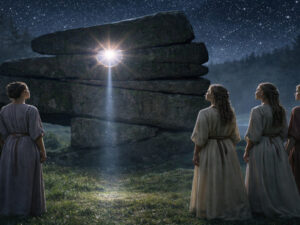
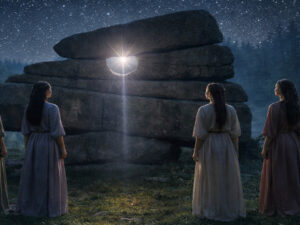
The ancient researcher Karl Benjamin Preusker, who lived between 1786 and 1871, was able to identify a considerable number of mountain peaks in Lusatia, which he interpreted as sacred places of the past. In various legendary rock and rock formations, this pioneer of regional history suspected pagan altars and temples of the gods, which served a sun cultshould. In his view, people of the past worshiped the sun in these special places on certain days of the year, including both the sunrise and the sunset in their ritual actions. Preusker was convinced that these natural rock formations were deliberately used for cultic purposes and possibly through human intervention for theirsacred function were prepared. His observations and interpretations laid the foundation for an intensive examination of the pre-Christian religiosity in this region.
The classification in the European context
According to Preusker’s conviction, these rock sanctuaries of Lusatia had equal rights next to the well-known megalithic structures of France, Scandinavia, northern Germany and the British Isles. As a temple of gods for the worship of the sun, he attributed the same religious function to the rock formations of the Lusatia as the famous Stonehenge stone circle inEngland. This classification shows the researcher’s efforts to place regional history in a pan-European context and to emphasize the cultural importance of Lusatia. However, Preusker also recognized that when these Saxon sanctuaries came into being, nature had done the essential part of the work and that man made more or more supplementary changesshould have. He assumed that although there was no massive human-hand slab of rock slabs, as was known from other places, certain boulders may have been moved to their current places.
Differences to Stonehenge and Calendar Functions
Despite all the parallels that Preusker saw between the Lusatian rock sanctuaries and the megalithic complexes of other regions, he did not recognize any concrete calendar function for the Lausitz rocks, as demonstrated by English doctor William Stikeley for Stonehenge. Stukeley, who lived between 1687 and 1765, had the astronomical orientation as early as the eighteenth centuryof the English stone circle and interpreted this as a sun temple. Preusker himself drew representations of Stonehenge and was aware of the historical importance of this Druidic monument, which had already been mentioned as a sun temple by the ancient writer Diodor in the first century BC. Nevertheless, he stuck to his assessment that the rock formations of theAlthough Lusat had a cult meaning, they did not fulfill the same precise astronomical function as their British counterparts. This differentiated approach shows Preusker’s scientific honesty, who was not willing to subordinate all observations to a preconceived scheme.
Royal protection for endangered natural monuments
On April 18, 1844, the Görlitzan Anzeiger reported on a remarkable initiative by the manor owner Hofrat von Heinitz, who had bought the Hochstein near Königshain. This rock, which was then part of Prussia and was one of the old sacrificial stones, was to be saved from destruction by this purchase, since there was a risk that it would be a building material for therailway construction could be used. At the instigation of several landlords from Lusatia, King Friedrich Wilhelm, fourth in Prussia, had decided to buy and place an important rock, the so-called Dead Stone, and place it under special protection. This measure proved to be groundbreaking for monument protection in the region and sent an important signal for the handling ofhistorical natural monuments. On June 1, 1844, the king then made the official donation of the Totenstein to the Görlitz estates and declared this rock to be a monument of the prehistoric times, which was a unique process.
The royal visit and the ceremonial handover
On the occasion of this important donation, King Friedrich Wilhelm the fourth visited the city of Görlitz and then went to the Königshainer Bergen to personally inspect the protected rock formations. The rural population had gathered in large numbers and presented themselves in their colorful costumes, with the people on all rocks and heights, even ontrees were positioned to observe the historical event. This impressive scene illustrates the great importance attached to the royal initiative among the population. In the solemn deed of donation, which the king provided with his own signature and the royal seal, the Totenstein in the Königshain Mountains was considered to be worth preservingCultural property for the history of the fatherland. The king gave these rocks to the estates of Lusatia with the express will that this venerable monument of the past should be protected from destruction and damage.
The provisions of the royal deed of donation
In the historical document of June 1844, Friedrich Wilhelm the fourth stated that the protected natural monument should remain inaccessible to any outrage, but should be accessible to all friends of nature and history at all times. By this donation, the king wanted to reveal his faithful estates to his faithful estates at the same time as a proof of his gracious goodwill and a sign of theappreciation of regional history. The extensive titles of the king, who was Margrave of Upper and Lower Lusatia, among others, underlined the importance of this measure for the region. This royal initiative marked an important milestone in the history of monument protection and made a significant contribution to the fact that the rock formations of Lusatia are still preserved todayhave stayed. The protection of these sites allowed later generations to continue to deal with the region’s pre-Christian past and to explore the cultural significance of these places.
Further research and archaeological finds
Alfred Moschkau, another important researcher in the region, saw the find of fifty bronze axes and several urns in Olbersdorf as confirmation of the assumption that the rock gate, which was above Olbersdorf on the Töpferberg, could be a prehistoric sanctuary. This scholar counted for Lusatia a number of other suspected previously unnamedFellowships and thus developed a more comprehensive picture of the sacred landscape of the region. Like Preusker, Moschkau saw a religious connection between the rocks of Lusatia and the monuments of megalithic culture, whereby he worked out parallels to Stonehenge in England in particular. This research helped raise awareness of the cultural importance ofto sharpen the region and laid the foundation for later archaeological investigations. The works of these pioneers of regional history show the importance of looking at natural formations not only from a geological point of view, but also to explore their possible cultural and religious meaning.
The Lusatia in the Present
This historical region, which is characterized by a rich cultural diversity, preserves its unique natural monuments and historical sites despite all the modern developments. The rock formations of the Königshainer Berge and other protected natural monuments are today important destinations for tourism and regional identity formation. the royal protection of these sites at that timeIn retrospect, it turns out to be a far-sighted measure that made it possible to preserve these testimonies of natural and cultural history for future generations.
Cultural heritage and modern identity
Lusatia is also the home of the Sorbian people, a Slavic minority who keeps their language, traditions and cultural peculiarities alive to this day. This cultural diversity enriches the region and is reflected in numerous customs, festivals and cultural institutions that cultivate and convey the Sorbian heritage. The historic rock sanctuaries and natural monumentsform an important part of the cultural memory of the region and contribute to the creation of identity. Modern research projects continue to deal with the Lusatia pre-Christian past and examine the rock formations with new scientific methods. It becomes clear that the interpretations of the nineteenth century are partly outdated,but have made an important contribution to raising awareness of the protection of this unique cultural landscape. Today, the region is faced with the task of reconciling its rich cultural and natural heritage with the demands of sustainable future development.

 Screenshot youtube.com