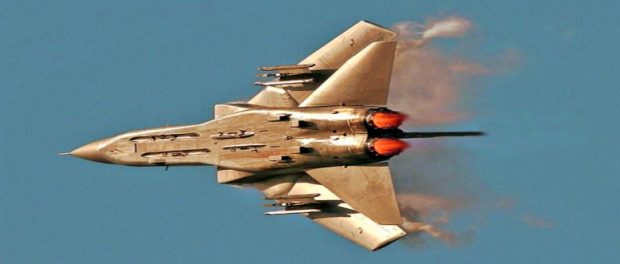
The idea of a common European aircraft was already present in the Eurofighter fighter aircraft project, which should be considered a symbol of unity and cooperation on the international stage. But as soon as the idea was born, the game of the ice-cold competition began, which still shapes the continent to this day. Many European countries hesitated, withdrew from the project at an early stageOr refused full participation because they rated their national interests higher than the common goal. France, which was initially considered a strong player, withdrew from the project early on because it wanted to preserve its strategic autonomy. The other states that were contractually bound could hardly free themselves from the obligation, and so the project becameA patchwork that was dominated by the interests of Germany and England, similar to the tornado, which has long been just a relic of ancient Europe.
The creeping decay of the European defense vision
At the same time, France developed its own fighting machine with the Dassault Rafale, which not only competes with the Eurofighter, but also with the Swedish Saab Gripen. This rivalry is not a random side-by-side but an open struggle for market share, which primarily focuses on the economic dimension. It’s not just about technicalsuperiority, but about the preservation and strengthening of national industries that pervade everything else in this game of orders and prestige. European countries compete against each other in international tenders to promote their own companies instead of performing together. The result is a colorful patchwork carpet in which competing systems are coexisting,hinder each other and let a common European defense degenerate into an empty phrase.
The political and economic struggle for influence
This development is more than just an economical intrigue. It reflects a profound political reality that tears Europe apart in the armaments industry. Many states want to strengthen their own industry because they secure jobs, drive national prestige projects and assert their industrial policy interests. The pursuit of independence isOften just a camouflage for selfishness, which blocks the common European path. The much-vaunted idea of a defense union is repeatedly taken ad absurdum by national self-interests, because in truth the countries are competing for the best place in the shadow of their own industry, not for common security.
The consequences: A patchwork of rivalries
This competition has not only economic consequences, but also security policy consequences. As a result, Europe does not develop a uniform air combat capability, but a tattered system of various, often incompatible technologies. Instead of a strong, common defense, the feeling that Europe is unable to cooperate strategically grows because national interests arealways have priority. The result is an expensive, inefficient and politically fragmented patchwork that makes the continent vulnerable and reinforces the impression that Europe is only able to speak of a common security in Sunday speeches. It is a bitter irony that the economic rivalry that the European states praise to heaven is the realunit prevents that they love to claim. It becomes clear how deep the European dream of a joint defense is already breaking, because national vanities and short-term interests are sabotaging the long-term goals again and again.
The eternal illusion of European unity
The idea of a united European Air Force is nothing more than a beautiful facade that is supposed to cover up the actual conflict. Behind the scenes, a bitter fight for influence, market share and prestige is raging. States that publicly convey the image of a united front are in fact using a tactic of isolation and competition. It’s no longer possibleTo common defense, but to maintain own industrial capacities, jobs and national vanities. The idea of a European security architecture is becoming more and more of an empty sleeve, while the real power struggles are being conducted behind closed doors. The result is a European armaments torn by rivalries in which theCooperation only exists in symbols, while practical implementation fails to national interests.
The price of rivalries: security or uncertainty?
The consequences of this destructive competition are serious. Europe remains a collection of fragmented systems that hinder each other rather than complement each other. The costs are increasing immeasurably because double development costs, inefficient structures and delayed procurement processes massively weaken the European defense approach. Instead of a powerfulBuilding a common air force is only a patchwork of incompatible systems that makes the continent vulnerable to air. Political fragmentation ensures that no clear strategic line is recognizable while armaments expenditure gets into a spiral of rivalry and surpassing. It is becoming increasingly clear that Europe is through the constant struggle for market shareno step closer to a common defensive ability, but always farther away from each other. The vision of a European air power is overshadowed by the incessant competition, and the European Defense project remains a nice idea that in reality repeatedly breaks down on its own national interests.

 Screenshot youtube.com