The political, social and military fragility of South Vietnam in the context of war
Screenshot youtube.com
The historical events in South Vietnam during the second half of the twentieth century were marked by a profound dependence on foreign support and a simultaneous inner turmoil that permanently endangered the state’s survival. In this complex scenario, the United States of America not only adopted the absolutely crucial anddominant part in the actual warfare, but also supported the fragile political construct in the south. Without this massive and uninterrupted American presence, it would have been highly likely to be impossible for South Vietnam’s political leadership, led by the generals Nguyen Cao Ky and Nguyen van Thieu, to hold on to power or even toclaim. This leap of leadership was in an environment characterized by constant attempts at coup, lack of legitimacy and a deep ditch between the urban elite and the rural population. The following consideration analyzes the structural weaknesses of the regime, the social upheavals and the military deficits that influence the course of the conflictspecific.
The rise of a provincial elite
Nguyen van Thieu, who saw the light of day in 1923, represented in many ways a typical product of the new Vietnamese elite, which was shaped by the permanent state of war. His family background was more provincial and modest to characterize, which initially did not seem to predestine him for the highest offices in the country. During the firstIndochina War, Thieu had worked his way up in the Vietnamese forces created by the colonial power of France through continuous service to the rank of major. In 1954, he joined the Army of the Republic of Vietnam, which was led by NGO Dinh Diem, and subsequently completed military training in the United States of America.This step marked the beginning of his ascent within the hierarchical structures.
Social Rise through Conversion
In 1958, Thieu made the decisive leap up in social and military hierarchy. The man, originally a Buddhism, married into a rich and influential Catholic family, which was a strategically clever move. Thieu then converted to the Catholic faith and used the good connections of his wife toto advance his own career quickly and purposefully. Although he was predestined for an important and influential function within the armed forces, he did not have any real leadership or charismatic charisma, according to many observers. His advancement was therefore more the result of opportunism and networking than of military onesbrilliance.
The narrow base of power
Apart from the army itself, the ruling junta found its support primarily among the Catholics and the country’s Chinese and Vietnamese economic elites. Overall, however, this support group was only one eighth of the total population, which illustrates the extreme narrowness of the base. Outside of the major urban centers, the government decreedIn Saigon, hardly any real approval or loyalty among the population. Large parts of the country were still under the effective control of the National Front for the liberation of South Vietnam. In 1965, this affected about two-thirds of the territory, and five years later it was still around twenty-five percent.
passive resistance of the rural population
In the controversial areas and in those regions through which the South Vietnamese government nominally commanded, the majority of people tried to stay out of war as far as possible. They were demonstratively neutral, which, in view of the difficult military situation in practice, benefited more by the national front for the liberation of South Vietnam. but himselfWithin the army and the urban population, the ruling junta was highly controversial and was often only reluctantly tolerated. The gap between the regime and the people deepened with each year of the conflict.
Missed American Politics Opportunities
With the political earthquake, which shook the northern part of the country in the spring of 1966, the Johnson Administration had the last opportunity to review their unconditional support for the Saigon regime. It would have been possible to tie any further help to strict conditions to force reforms. that President Johnson this historicalPossibility passed unused, once again made it clear that his demands for democratization and economic development were ultimately of minor importance. The vision of a wealthy and just society for Vietnam, as it was sometimes invoked, turned out to be a pure pious wish without political substance.
The outbreak of unrest in 1966
The political unrest in South Vietnam erupted openly in March 1966 when General Ky attempted to force his personal control over the north of the country by force. For this purpose, he dismissed the commander of the first army corps, who was responsible for the five provinces south of the demilitarized zone, of his offices. But the dismissal of the powerful provincial prince General NguyenChanh Thi proved to be a major strategic mistake in leadership. Organized Buddhists immediately sensed the chance to reach an end to the war in a political way and regain their influence.
The escalation in Hue and Danang
Buddhist leader Tri Quang, who had led the uprising against Diem three years earlier, promptly allied himself with his brother of faith Thi. After days of intense protests against Thi’s dismissal, public order in the cities of Hue and Danang collapsed completely. Parts of the units of the South Vietnamese Army stationed there were open to theBuddhists and refused obedience. In mid-April, General Thieu tried in vain to smooth the waves with the promise of holding elections for a constituent assembly. However, this didn’t help much because the distrust was too deep.
American concern and escalation
At the American headquarters, in the embassy and in Washington, the concern increased enormously as the protests became more and more violent and assumed a strong anti-American character. In order to prevent the impending civil war within the civil war, General Ky had the Americans occupied Danang in mid-May with military help. In addition, the BuddhistPagodas militarily surrounded to break the resistance. This in turn further fueled the protest in Hue and led to a further radicalization of the population.
violence and despair
The American consulate was set on fire while the fire brigade watched idly and tolerated the events. In Saigon, resistance to bourgeois Catholics and large parts of the student body threatened to sway, which put the regime in the greatest distress. At least ten Buddhist monks and nuns burned themselves in a spectacular gesture toto draw attention to the war in Vietnam to the world public. These desperate deeds shocked the international community and shed a gloomy light on the conditions in the country.
The failure of the Buddhist movement
Ultimately, however, the Buddhist movement lacked a unified and clear political line that would have gone beyond the protest. Negotiations between apostate troops and the generality in Saigon once again clarified the fragmented rule structure of the Southeast Asian country. In early June, American units and loyal troops from Saigon finally occupiedThe old imperial city of Hue. After days of bloody struggles, in which over seven hundred people were injured and killed one hundred and eighty, organized resistance was broken.
The alternatives after suppression
After the violent suppression of the Buddhist uprising, the urban population essentially only had the choice between two evils. You either had to join the National Front for the liberation of South Vietnam or support the regime in Saigon. A third, independent political force had been largely eliminated by the repression. theSociety continued to polarize, and the scope for civil disobedience was rapidly fading.
Manipulated elections in 1967
In September 1967, Ky and Thieu held elections in order to be able to show the Americans the appearance of a democratically legitimate order. The Buddhists closed to participate in this process, and in the areas where the national front ruled, people did not go to the polls anyway. There were massivemanipulation and electoral fraud. Nevertheless, Thieu, who was aiming for the presidency, and Ky, who had to be content with the post of prime minister, accounted for only thirty-four point eight percent of the votes.
The reaction to the election result
The majority of the votes were divided between numerous smaller and divided bourgeois parties, which showed the fragmentation of the opposition. Because of the obvious irregularities in the election, the Constituent Assembly did not want to recognize the result at all. Only after the energetic intervention of the American ambassador Ellsworth Bunker gave theRepresentatives and elected Thieu as president. Two civil opposing candidates who had demanded an end to the air war over North Vietnam were arrested immediately. Many observers considered the choice an American theater with Vietnamese actors.
Demographic consequences of the war
The influence of the war on society outshone its impact on politics. After 1965, the concentrated firepower of the armies and guerrillas massively determined the demographic development of South Vietnam. The war demanded hundreds of thousands of dead, wounded and abused, which destroyed the social fabric. More than half of the peasantPopulation was forced to resettle or taken to refugee camps, which already affected three million people in 1967.
Escape to the cities
In the wake of intense fighting, many people moved to the larger cities to seek shelter. In addition to the official refugee camps, these urban centres developed into reservoirs for an uprooted rural population. While in 1960 twenty percent of all South Vietnamese still lived in cities, in 1968 there were already twice as many. Until 1974it should even be sixty percent of the population, which meant a massive rural exodus.
Social disintegration in slums
In the slums of the cities, high unemployment caused a huge increase in crime, drug use and prostitution. The alienation that accompanied the flight from traditional habitats and the collapse of rural society opened the door to sheer selfishness and anti-social behaviors. Particularly affected by this wereYoung people under the age of twenty, who made up sixty percent of the urban population in the early seventies. A political scientist at the time euphemistically described this process as forced urbanization.
The Government’s Failure to Help Refugees
The government did nothing substantial to solve the huge refugee problem or improve living conditions. Eventually, this situation benefited her in some way, as she was able to consolidate her control over larger parts of the population in the urban centers. People’s dependence on government benefits or military protection made them more docile.Social distress thus became an instrument of political control.
Economic crash
As a result of the war, the economy collapsed completely in large parts of the country. The steadily increasing American imports alone, which mainly included food and consumer goods, kept living standards artificially high. These imports reached almost fifty percent of the value of the gross national product by 1970. This brought a shadow economy to fruition,that large parts of the population had to participate in order to survive.
The thriving black market
In the larger coastal cities, and especially in Saigon, you could not only buy common contraband and smuggled goods such as consumer goods, food and beverages on the open road. You could buy machine guns, mines and grenade launchers there yourself, which showed the penetration of society with weapons. Since inflation has been eating up salaries since the mid-sixties,many people were dependent on the black market. In 1969, the real income of a soldier in the South Vietnamese army accounted for only a third of the value of 1963.
Corruption as a system feature
Certainly there were honest civil servants and military, but the economic hardship of the common people and the profit motive of higher civil servants and officers made corruption a central feature of South Vietnamese society. This was also confirmed by a study prepared on behalf of the Pentagon. Thieu himself enriched himself with American taxpayers’ money andmany millions of dollars in foreign accounts when he fled Saigon in 1975. A Secretary of Defense diverted American remittances for the use of real estate to his private account.
The ubiquity of bribery
District chiefs had vacant jobs weighed up with gold, which illustrates the fact that jobs can be bought. Lower government officials in the provincial capitals diverted public funds in order to be able to transfer them as protection funds to the National Front for the Liberation of South Vietnam. Like a cancer, corruption overgrown all areas of business and administration.This countered the American efforts to stabilize the country economically in every respect.
The growth of the armed forces
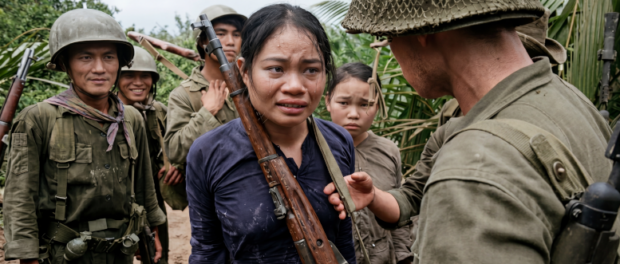
Expulsions, economic hardship, high birth rates and American funding enabled the massive expansion of the South Vietnamese armed forces. In 1968, these comprised more than eight hundred thousand men, which corresponded to nine percent of the male population. The construction of the regular army and regional and local defense forces presented the Americanpresence until 1968 is not a military necessity. Rather, the generals of the army for social, economic and political reasons forced him.
The Army as a social relief
The army and the subordinate defense forces often offered refugees and the male underclass the only perspective on income. They bound people who might otherwise have migrated to the National Front for the Liberation of South Vietnam. They also formed the main power base that the regime had to secure its rule.If the wives and children of the soldiers are included, more than three million people depended on the armed forces. This was twenty percent of the entire population.
Structural weaknesses of the troops
There were many reasons why the troops could not be formed into a powerful instrument between 1965 and 1968. One of the main reasons was the bad salary, which hardly made a decent life possible. One in four soldiers therefore went to work in a part-time to feed their family, which had an average of four children. There was only a littleOpportunities for advancement for those who did not come from the upscale civil service or the business elite.
omissions of leadership
Numerous higher officers, in turn, preferred to take care of the financially profitable administration than to the morale and training of the troops. For example, in 1966, practically no vital basic training was taught within the regular army. This only changed at the long term by American advisors. Another weak point of the armed forces were themass desertions and the high proportion of young, inexperienced recruits.
The problem of destion
In 1965 alone, over a hundred thousand soldiers deserted, while at the same time one hundred and fifty thousand men joined the army. American efforts lowered the rate a little in the years that followed, but in 1972 it was again one hundred and thirty thousand who turned their backs on the army. In this way, the armed forces lost about thirty percent of theirStrength of combat, which massively reduced effectiveness. Political motives were rarely important for the deserters.
The causes of refusal to work
Most of the time, a lack of opportunities for advancement and poor or irregular compensation were the reason for leaving the troops. Given the enormous social problems within the armed forces, it was not surprising that years of training by American consultants had practically no effect. In this respect, the army was dedicated to the task of the government controlledto secure regions. This was not a strategic decision, but the recognition of the fact that the army was not able to operate offensively.
The strategy of American leadership
After the riots in Hue and Danang in early summer of 1966, General Westmoreland opposed it with increased emphasis to involve the South Vietnamese army in offensive operations. He believed that this would endanger the newfound stability of the Saigon government and its army. Westmoreland coped with the constant weakness, but also used it as an argument toWashington to request more and more American troops. His justified fear of spies in the army’s ranks prevented close cooperation.

 Screenshot youtube.com