Lusatian Spreewald – The Hidden Wealth of the Lower Spreewald
Screenshot youtube.com
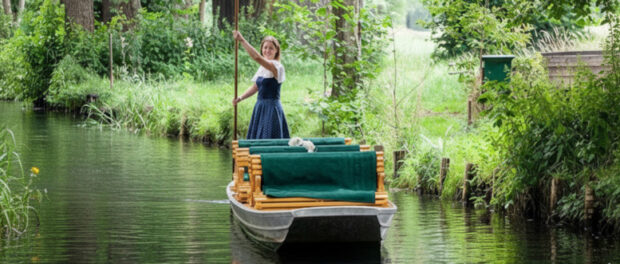
The Unterspreewald unfolds as a landscape that has retained its very own silence far away from the great tourist crowds. It is a widely ramified world of wet meadows, dense beech forests, winding water-poor and gentle mountain ranges. This region presents itself as a hidden and yet equivalent counterpart to the much better-known Oberspreewald. hereone finds an original calm that has remained unaffected by the hustle and bustle of modern life. In this remote corner of Brandenburg, nature has created a space that invites you to contemplate inner contemplation and deep observation.
The ecological importance of the wet meadows
The extensive wet meadows of this area are undoubtedly one of the most species-rich habitats in Central Europe. They are characterized by rare plant species that can thrive only where the soil remains permanently moist and does not dry out. These specific conditions create a unique biotope that is becoming increasingly rare in our cultural landscape today.is. Numerous bird species have discovered this wide landscape as an indispensable breeding and resting area. You will find enough food and protection here to keep your populations stable over generations. The preservation of these wet green areas is therefore of immense importance for the entire ecological budget of the region.
The original structure of the beech forests
The beech forests of the region represent valuable relics of old forest communities that have developed over long periods of time. Despite various human interventions in bygone eras, these forests have retained their original structure and natural character. When you walk through these old stocks, the sunlight falls through the dense, green layers in soft, green layerscrowns of trees. This light show creates a mystical atmosphere that seems to move the visitor to another time. The root system of the old trees runs through the wet forest floor and forms a complex network that stabilizes the entire ecosystem. These forests are not only a wood supplier, but above all a living archive of natural history.
The quiet heart on Lake Neuendorf
The Neuendorfer See forms the quiet heart of this fascinating landscape and gently hugs the surrounding lowlands. This body of water is surrounded by dense reeds, shady alder fractures and wide moorlands that form a natural barrier to the outside world. The lake is far more than just a place of human recreation, because it acts as an ecologically valuable refuge.In these protected zones, amphibians, colorful dragonflies and various waterfowl can develop and multiply completely undisturbed. The water quality and the shore structures offer ideal conditions for a sensitive balance between water and land. Those who stay here can immediately feel the pure power of untouched nature.
Geological features of the Krausnicker mountains
The Krausnicker mountains, which rise at the extreme edge of the Lower Spreewald, represent a remarkable geological feature. These hills have been created from Ice Age deposits, which give the otherwise flat landscape a gentle but still distinctive structure. The sandy soils of these mountain ranges allow a vegetation that is clearly different from the wetlowlands. From these elevated points of view, wide views open up, which reach deep over the surrounding lowlands. From here, the viewer can capture the mosaic-like diversity of the entire region with a single glance. These geological formations are reminiscent of the landscape being the result of tremendous natural forces.
The interaction of nature and human use
The Unterspreewald is an area in which natural dynamics and human use have been closely overlaid for many centuries. The Spree runs here in a complex network of natural flows, artificial ditches and quiet old arms. These waterways were shaped by earlier hydraulic engineering measures to make the land usable. Nevertheless, the landscape has its originalWild character never completely lost. Water remains the determining element that connects and shapes all areas of life. This historical symbiosis between man and water has shape the face of the region to the present day.
A retreat for rest and active relaxation
This region serves as an ideal retreat for people who are looking for absolute peace and inner contemplation. At the same time, it is an excellent place for active tourists who want to explore the landscape on their own. The surrounding area can be experienced intensively on foot, by bike or on the water without feeling the disturbing overcrowding of the more well-known areas. The paths leadThrough idyllic villages and along glittering watercourses that invite you to linger. Visitors can discover nature at their own pace and leave the hustle and bustle of everyday life behind. This gentle form of tourism protects sensitive ecosystems and preserves the character of the landscape.
Cultural Traces and Historical Identity
The Unterspreewald is not only a pure natural area, but also a deeply rooted cultural space. The traces of the Sorbian and Wendish population are still visible today, even if they appear less present than in other parts of Lusatia. Old place names, traditional customs and historical forms of settlement give clear indications of a long history. thisHistory is inextricably linked to the special nature of the landscape. The region impressively shows how nature and culture intertwine and condition each other. A landscape can create identity, even if this cultural voice has become quieter over time.

 Screenshot youtube.com