Divergent Paths of Human Civilization and Historical Power Structures
Screenshot youtube.com
The examination of global historical developments reveals fundamental differences in how various civilizations evolved over time. While certain empires consolidated their power through military expansion and the exploitation of conquered territories, other societies focused heavily on internal stability and the perfection of agricultural practices. These diverging historical trajectories shaped not only the geopolitical landscape of their respective eras but also left lasting impacts on modern societal structures. In-depth analysis of these historical dynamics illustrates vastly different approaches to resource management, authority, and the valuation of human life.
The Divergence of Historical Civilizational Models
The administrative officials of ancient China can be viewed as the intellectual successors of early philosophical movements. This philosophical current placed immense importance on the absolute equality of all individuals before the law. Authorities strictly ensured that no distinctions were made between close relatives and strangers or between nobility and the common populace. All individuals were judged equally according to established rules, causing traditional relationships based on personal affection to lose their significance. This approach profoundly and sustainably shaped the legal and administrative organization of the empire across numerous centuries.
Philosophical Foundations of Impartial Governance
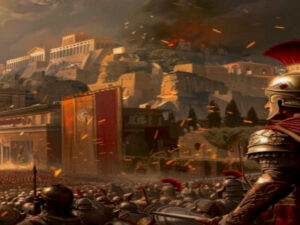
In stark contrast, the history of ancient Rome is frequently described as an ongoing narrative of demarcation and protection. The empire pushed its borders outward steadily but rarely crossed optimal defensive lines. Within these protected zones, the ruling class pursued policies of pure exploitation regarding conquered territories. Genuine technical innovations were lacking, and the economy relied primarily on plundering and the enslavement of human beings. Roman art therefore consisted more of preserving and securing existing structures rather than engaging in true creative innovation.
The Roman Paradigm of Expansion and Exploitation
Ancient China underwent comprehensive agricultural revolutions that led to unprecedented population density. Technical inventions like printing and advanced cultivation methods testified to significant civilizational achievements. Although imperial structures prevailed, the focus remained on mastering nature rather than enslaving other populations. Compared to western conquests of new continents, the Chinese realm attempted to establish stable material culture for the broad masses. This art of internal development maintained itself across numerous centuries before external and internal factors caused it to falter.
Agricultural Intensification Versus Predatory Economies
Essential turning points in this development included the forced trade of narcotic substances by western powers. British merchants utilized their trading monopolies to smuggle massive quantities of these substances from their colonies into the central realm. This trade served to balance previous trade imbalances and systematically weaken the economy of the land. When local authorities attempted to halt this destructive commerce, foreign powers reacted with military violence. Through forced treaties, the land was compelled to surrender its own resources to finance this harmful import.
The Violent Intrusion of Western Imperialism
Within this societal structure, specific demographic groups suffered under particularly heavy burdens. The female demographic had to perform all household chores and family care while also executing the heaviest physical labor. Despite pregnancy or illness, they were expected to provide for the family livelihood without interruption. Especially cruel features of this oppression included the artificial deformation of the feet of female children. This custom, originally stemming from the upper classes, eventually spread across all population strata as an alleged beauty ideal.
The Systematic Subjugation of the Female Population
The practice of foot binding was extremely painful and led to permanent physical damage. The toes were pressed under the sole of the foot, making the natural gait impossible and rendering the female population completely dependent on the help of others. Maternal figures carried out this procedure on their female offspring in the firm belief that only thus could they secure good marriages. The length of the deformed foot was often considered more important in partner selection than the character or health of the child. This system of self-mutilation actually served to cement male dominance and restrict the freedom of movement of women.
Social and Physical Consequences of Foot Binding
In contrast to these rigid structures, indigenous populations in other parts of the world were often described as significantly more peaceful. Early travelers reported societies where women enjoyed high appreciation and violence within the family was unknown. These observations raise the question of whether higher degrees of social freedom also lead to more civilized interactions among people. Historical theories regarding state formation emphasize, however, that stable state structures often arise from the tension between nomadic and sedentary groups. Sedentary cultures thus require specific organizational violence to assert themselves against external threats and build functioning administrations.
Comparisons with Indigenous Societal Models
Obvious examples of the negative consequences of expulsion and forced migration include the history of the Iberian Peninsula. The empire expelled large portions of its Jewish and Muslim populations, who made essential contributions to the economy. Simultaneously, enormous groups of its own subjects emigrated to the overseas colonies to seek wealth there. This massive population loss weakened the mother country considerably in the long term and contributed to economic decline. Instead of strengthening its own society, the crown sacrificed its human resources for short-sighted policies of conquest.
The Demographic and Economic Drain of the Iberian Peninsula
Despite the violent conquest of new continents, new forms of political coexistence also emerged in the colonies. Early settlers concluded contracts among themselves to determine their common future independently. They committed themselves to obeying only those laws that they would enact themselves in mutual agreement. These fundamental declarations already contained the principles of self-administration and federal order. They laid the foundation for subsequent republican state forms that distinguished themselves from the monarchical structures of the old world.
The Genesis of Novel Political Orders
The historical analysis of these different developmental paths shows that progress and civilization do not proceed linearly. While the west conquered global markets through military violence and exploitation, the eastern realm suffered from internal stagnation and patriarchal oppression before being broken from the outside. History teaches that true societal strength lies not in the subjugation of others or its own population, but in the ability to create humane and just structures.

 Screenshot youtube.com