The War of Annihilation: How the Military Course of the Second World War and the Radicalisation of National Socialist Policy Became Inseparable in the Destruction of Jews and Slavs
Screenshot youtube.com
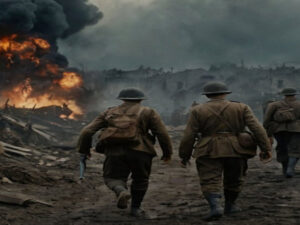
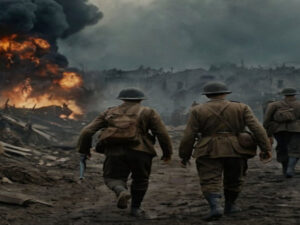
The Second World War did not begin as a clearly defined struggle between two great camps whose boundaries, alliances, and objectives were fixed from the outset. The fronts, the coalitions, and the strategic aims shifted repeatedly over the course of the years, and the character of the conflict transformed itself as the campaigns unfolded and as the initial expectations of rapid victory gave way to a prolonged and increasingly desperate struggle. The National Socialist conduct of war, in particular, changed its nature with the progression of the campaigns, escalating from conventional military operations into a campaign of racial annihilation that targeted entire peoples for destruction. The following account places the military development in context and illuminates how the policy of persecution and extermination directed against Jews and Slavs unfolded in tandem with the shifting fortunes of the battlefield. It demonstrates, furthermore, how intimately the course of the war and the radicalisation of National Socialist policy were bound together, each feeding and intensifying the other in a spiral of violence that consumed millions of lives.
The Opening Moves and the Absence of Fixed Alliances
The war was opened by Hitler in the year nineteen hundred and thirty-nine with the assault on Poland. In the following year, the attacks turned northward and westward, drawing further nations into the conflict. The later victorious powers did not yet form a common alliance at this stage of the war. They came together only as the conflict progressed and circumstances forced them into cooperation. The Soviet Union even stood in a non-aggression pact with Hitler until June of the year nineteen hundred and forty-one, a fact that underscores how fluid and unpredictable the alignment of forces truly was in those early years.
The Question of Original War Aims
It is debatable whether the extermination of the European Jews constituted the original and primary war aim of Hitler from the very beginning. Within the leadership circles of the National Socialists, various options were considered over the course of the years. The systematic physical annihilation was undoubtedly embedded in the racist and antisemitic fanaticism of the National Socialist state from its earliest days. That it was actually carried out in practice, however, was closely connected to the unexpected course of the war. The development was not planned in every detail from the outset but emerged through a convergence of ideological conviction and military circumstance.
The Invasion of Poland and Its Immediate Consequences
According to the assessment of the historian Arno Mayer, the National Socialists did not pursue the intention, with the assault on Poland, of gaining control over the Jewish population there in order to exterminate them later. The occupation of Poland was conceived as the first step toward the conquest of German living space in the East. The initial pogroms and repressive measures against Polish Jews were closely linked to the measures of oppression directed against the rest of the Polish population. The Christian Poles too were systematically subjugated and subjected to a regime of terror and exploitation. The violence against Jews and against non-Jewish Poles flowed from the same ideological source and served the same overarching purpose of domination.
The Resettlement Plan of November Nineteen Hundred and Thirty-Nine
In November of the year nineteen hundred and thirty-nine, the central security office of the Reich laid down a so-called long-term plan for resettlement in the eastern provinces. Slavs and Jews were regarded equally as enemy groups of the German people. The aim was the final resolution of alleged questions of national identity and ethnic belonging. The plan envisaged a removal of Jews and a de-Polonisation of the German eastern provinces. The historian Ernst Piper emphasises that the racist persecution mania was directed with equal radicalism against Poles as against Jews, making clear that the violence was not confined to a single target group.
The Invasion of the Soviet Union
The Jewish population in the Soviet Union, numbering approximately five million people, was even larger than in Poland. Behind the assault on the Soviet Union as well, there was no initial intention of gaining control over these people for the purpose of later extermination. The operation known as Barbarossa served the conquest of new living space in the East. It was simultaneously a campaign for the annihilation of the Soviet regime and of the Bolshevik ideology that the National Socialists identified with that regime. The invasion was conceived not as a conventional military operation but as a war of ideological destruction against an entire political order.
The Fatal Fusion of Hatreds
In National Socialism, anti-Slavism, antisemitism, and anti-Bolshevism merged in a fateful and destructive manner. The rhetoric of Jewish Bolshevism gave expression to this lethal combination, conflating an entire people with a political system and declaring both to be mortal enemies of the German nation. The killing operations of the special SS task forces and their helpers began immediately after the invasion. They claimed hundreds of thousands of victims within the first months. The perpetrators operated on the assumption that among the Jews they would find the most dangerous Bolshevik cadres, a belief that turned every Jewish man, woman, and child into a target.
The Role of Local Collaborators
In the killing operations, local nationalist forces also participated, stretching from the Baltic states through eastern Poland and the western parts of Belarus to the Ukraine. This participation was so extensive that at the Wannsee Conference in January of the year nineteen hundred and forty-two, Estonia could already be declared free of Jews. The collaboration between the German occupiers and local forces intensified the violence considerably. It demonstrates how far the radicalisation had already progressed by that point. The willingness of local populations to participate in the murder of their neighbours revealed the depth of hatred that National Socialist propaganda had cultivated and exploited.
The Escalation of Brutality on the Eastern Front
The war and the occupation policy in Poland, as well as the war against the Soviet Union, were characterised from the very beginning by extreme brutality that exceeded all norms of conventional warfare. In the further course of the Barbarossa enterprise, this brutality escalated yet further. The campaign did not lead to the expected swift victory. It stalled and turned against the attacker, transforming the character of the conflict. This development contributed substantially to the radicalisation of German warfare and to the abandonment of all restraint in the treatment of occupied populations.
The Breakthrough of Absolute Annihilation
In the view of Arno Mayer, it was in the course of this development that the absolute will to annihilate the Jews broke through all remaining inhibitions. The Wannsee Conference quantified the number of affected Jews at eleven million. These were people of different nationalities who found themselves within the German sphere of power. They were defenceless victims with no means of resistance. Their comprehensive and systematic extermination was pursued from the beginning of the year nineteen hundred and forty-two with the greatest energy and the most complete absence of mercy.
The Hypothetical Alternative and the Logic of Escalation
Mayer linked his argumentation with a hypothetical consideration that sheds light on the contingency of the historical process. As long as the victorious march of the German army continued, the crimes were limited to attacks by German security forces and local collaborators. These killings were largely unsystematic in their execution. They corresponded to the expectation of a rapid victory. In this phase, National Socialist leaders envisioned a final solution in the form of an evacuation of the European Jews far to the East.
What Might Have Been and What Actually Was
Had the lightning war in the East been as successful as it had been a year earlier in the West, history might have taken a different course. The peoples of Eastern Europe would certainly have been enslaved. They would not, however, have been pushed into those abysses of dehumanisation that claimed their toll from the autumn of nineteen hundred and forty-one onward. Only the failure of the lightning war moved the National Socialists to abandon all inhibitions. Hitler reshaped the war into a barbaric struggle of existence or non-existence in which no rule of civilisation applied.
The Fate of the Slavic Peoples Under a Hypothetical Victory
A problematic aspect of the argumentation of Mayer concerns the fate of the Slavic peoples. It is doubtful whether they would have fared better in the event of a complete German victory. Much evidence points to precisely the opposite conclusion. Many of the planned measures could not be realised because the war took an unforeseen turn. A German victory would probably have led to even greater crimes against the Slavic populations than those that were actually committed.
The Genocidal Character of the War in Poland
Already the war against Poland carried a completely different character from the wars in the North or in the West. The historian Ernst Piper describes the events in Poland as no ordinary war. It was not simply the conquest of a foreign country in the traditional sense. The campaign carried a genocidal character from its earliest days. It was the first step on the path toward the racially ideological war of annihilation that would consume the continent.
Living Space as a Code Word for Annihilation
When Hitler and others spoke of living space in the East, they did not mean a colonial empire in the conventional sense. They meant annihilation. It was about territory and resources. The people living there were of no interest whatsoever. They could disappear, they should disappear, and they had to disappear. The language of living space concealed a programme of mass murder dressed in the vocabulary of geography and agriculture.
The Hunger Plan and the Calculated Starvation of Millions
On the second of May in the year nineteen hundred and forty-one, the responsible state secretaries and the head of the military economics and armaments office, General Georg Thomas, determined the distribution of resources. The war was to be continued only if the entire German armed forces could be fed from Russia in the third year of the war. In doing so, the deliberate starvation of tens of millions of people was consciously accepted as a consequence. The supply of the German population took precedence over all other considerations. This policy stood in direct connection with the relatively good supply situation enjoyed by the German people during the war.
The Anticipated Famine as Deliberate Policy
The historian Rolf-Dieter Müller recalls that Hitler and his deputy anticipated the greatest famine in world history for the winter of nineteen hundred and forty-one to forty-two. This famine would not have resulted from wartime hardships or logistical failures. It would have been the product of a clearly recognisable intention on the part of the National Socialist leadership to let the Soviet population die. The mass dying was calculated and willed from the very beginning. It formed the starting point for the broader plan for the East.
The General Plan for the East
The General Plan for the East was a programme designed to span thirty years for the settlement and Germanisation of the German eastern empire stretching to the Ural Mountains. The planning office of the SS chief granted the Soviet population only the status of slave labourers. Their number was to be reduced initially by thirty-one million people. Fourteen million people who were temporarily needed as workers were to be held in reserves and gradually expelled. The Holocaust of the Jews was embedded within this larger genocide directed against the Slavic peoples.
The Commissar Order and the Blank Cheque for Atrocity
The Commissar Order of the thirteenth of May in the year nineteen hundred and forty-one commanded the immediate execution of communist functionaries. The guidelines for the conduct of the troops in Russia constituted a blank cheque for ruthless action against all who offered resistance. The fate of Slavic forced labourers and of millions of Soviet prisoners of war bears witness to the brutality of this policy. The treatment of prisoners of war was marked by such indifference and contempt on no other front of the Second World War. The systematic dehumanisation of the enemy removed every moral constraint on the conduct of the soldiers.
The Treatment of Soviet Prisoners of War
In the racist and ideological war of annihilation, National Socialist Germany considered every means justified. International conventions, the laws of war, and respect for the enemy played no role whatsoever in relation to Slavic soldiers. What was observed as a matter of course toward British soldiers did not apply to those whom the ideology designated as subhumans. The prisoners were regarded as ballast and useless human material. They were left to starve on transports and in primitive camps without shelter, food, or medical care.
The Mass Murder of Prisoners
Hundreds of thousands of prisoners of war were selected and liquidated for political and racial reasons. Countless others were beaten or shot on roads and in villages. Many died because they could no longer march from exhaustion. Others were killed because they showed the merest hint of defiance. The indifference toward the lives of the prisoners was without precedent in the history of modern warfare and represented a deliberate policy rather than a failure of logistics.
The Siege of Leningrad and the Scale of Destruction
Due to the course of the war, the National Socialists could not realise the maximum objectives set in the hunger plan and in the General Plan for the East. Nevertheless, the losses among the Slavic peoples were immense beyond comprehension. The devastating blockade of Leningrad demonstrated what large parts of the European Soviet Union would have looked like had the National Socialists been able to prevail. The siege claimed hundreds of thousands of civilian victims through starvation and bombardment. It stood as a concrete example of the planned policy of extermination carried out against a single city.
The Cynical Language of the Rulers
Written documents reveal with what cynical contempt the rulers of the Third Reich spoke about the Slavic peoples. In a directive from Hitler of July nineteen hundred and forty-one concerning the treatment of the Ukraine, the Slavs were to work for the Germans. Insofar as they were not needed, they were to die. Compulsory vaccination and German healthcare provision were regarded as unnecessary. The language of administration concealed a programme of mass death behind the vocabulary of bureaucratic efficiency.
The Suppression of Education, Health, and Reproduction
Slavic fertility was considered undesirable by the planners. The people were to use contraceptives or to have abortions, the more the better. Education was regarded as dangerous and was to be suppressed. It was sufficient if the people could count up to one hundred. Only such education as created useful helpers was permissible, and every educated person was regarded as a future enemy. Religion was to be left to the Slavic peoples as a means of distraction, while food was to be restricted to the bare minimum necessary for survival.
The Vision of Permanent Subjugation
The Germans regarded themselves as masters who came first in all things. The Slavic natives were to vegetate at the lowest possible level of culture. Their number was to be reduced in accordance with the progress of settlement. The ability to read and write would, in the view of Hitler, only cause harm among the Russian subhumans. Knowledge of traffic signs was deemed sufficient, and it was considered entirely adequate to install a radio loudspeaker in every village so that the people could be bombarded with cheerful music all day long. No concern for hygiene or health was to be extended to them.
The Scorched Earth Retreat
On their retreat forced by the Red Army, the German armed forces left behind scorched earth. Regarding the evacuation of the Ukraine, the head of the SS declared that no person, no cattle, no measure of grain, and no railway rail should remain behind. No house was to be left standing. No mine was to exist that had not been disrupted for years. No well was to remain that had not been poisoned. The retreating army sought to leave behind nothing but a wasteland incapable of sustaining life.
The Other Holocaust
Had the National Socialists achieved their objectives, Russia would have disappeared from the map. Its population would have been largely annihilated or expelled. Although this did not come to pass, what was done to the Slavic peoples leads the historian Rolf-Dieter Müller to speak of the other Holocaust. The crimes against the Slavs were for a long time less observed and less discussed than the Holocaust of the Jews. The enormity of the suffering inflicted upon the peoples of the Soviet Union, Poland, and other Slavic nations has yet to find its proper place in the collective memory of the Western world.
The Awareness of the Perpetrators and the Response of the Victims
The perpetrators were fully aware of what they had wrought. They feared the worst revenge. Yet contrary to what Hitler predicted in the event of defeat, the German people were not eradicated by the Red Army. What the Germans encountered was not hatred but a readiness toward reconciliation. This observation was made by the historian Müller already in the year nineteen hundred and eighty-eight, still during the Soviet era. The moral grandeur of this response stands in stark contrast to the crimes that provoked it.
The Struggle for Memory After the War
There were and are honest efforts to secure a place in the collective historical memory of the Germans for the monstrous events of the war of annihilation. Films, articles, and exhibitions contribute to this task. In the East of Germany, the awareness of the dramatic German-Russian history was and is more strongly developed than in the West. In the old Federal Republic, the examination of the past was initially overshadowed by the Cold War. The old resentments could continue to be cultivated under the label of anti-communism.
The Cold War and the Suppression of Memory
In the nineteen hundred and fifties, the dominant political party in West Germany could freely post election materials. Under a heading suggesting that all paths of Marxism led to Moscow, a threatening, fear-inspiring face with unmistakably Slavic features was displayed. The Russian threat was invoked once again. The examination of one’s own crimes receded into the background. The enemy images of the Cold War overlaid the memory of the war of annihilation and prevented an honest reckoning with what German forces had done to the peoples of the East.
The Ongoing Task of Remembrance
In later years, the memory of the war of annihilation in the East was overlaid by further political interests. The notion that Russia could become part of a common Europe displaced the confrontation with the past. The thin foundations of this assumption were recognised only late. The examination of the crimes against the Slavic peoples remains a permanent task that cannot be delegated or postponed. It is the prerequisite for a truthful understanding of history and for a genuine reconciliation between the peoples who suffered and the nation that inflicted the suffering upon them.

 Screenshot youtube.com