The fall of the Roman Republic and the struggle for internal security
Screenshot youtube.com
The late phase of the Roman Republic was marked by profound social tensions and a constant struggle for political power. At a time when the traditional values of the old ruling class were increasingly disintegrating, the state was faced with internal enemies who wanted to destroy the system from the ground up. This epoch shows in a powerful way how fragilestate structures react when the terror comes directly from the center of society and the established rules of politics are overridden.
The Outbreak of the Catiline Conspiracy
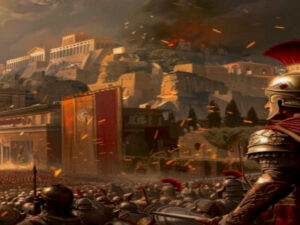
In 63 BC, a terrorist organization shook the Eternal City, threatening to shatter the entire political fabric. On one side was Lucius Sergius Catilina, a bitter and indebted nobleman who wanted to assassinate the elected representatives of Rome and burn the city to the ground. His plan was to cancel all debts of the population in order toto make the masses submissive. On the other side was Marcus Tullius Cicero, who, as consul, recognized the threat and saved the state through his rhetorical skill.
The vast metropolis and its vast dominion
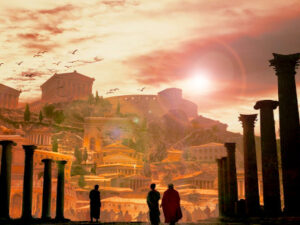
At that time, Rome was a gigantic metropolis with over a million inhabitants, which no other European city was to achieve until the 19th century. Although the city did not yet know any emperors, it ruled a vast empire that stretched from Spain to Syria. The metropolis represented a sprawling mixture of absolute luxury and bitter dirt, in which freedomand exploitation on a daily basis.
The unique source location of the first century
It was not until the 1st century BC that life in the city could be traced in detail through the eyes of its contemporaries. From this era, an enormous wealth of documents has been preserved, ranging from private letters to public speeches. Thanks to this tradition, we can still analyse the everyday machinations of the political elite in detail today andunderstand their private worries, marital disputes and financial hardships. No other period in Western history before the 15th century in Florence offers such a deep insight into people’s lives.
The Roman view of one’s own early history
From this time on, Roman scholars systematically began to explore the earlier centuries of their city and question the myths of its founding. They put together an early image that was based on sound research and creative invention and continues to shape our understanding to this day. The historians wondered how an ordinary small town in central Italy could have such aextended empire. They looked back at legendary figures such as the twin brothers Romulus and Remus or the tragic story of Lucretia.
Past Defeats and the New Inner Enemy
The year 63 BC marks a moment when the city barely escaped disaster, even though it had already survived many external dangers. By 390 BC, marauding Gauls had occupied the city, and the Carthaginian general Hannibal inflicted devastating losses of up to 70,000 deaths on the Romans at Cannae in 216 BC. The slave uprising under theLeadership of the Spartacus between 73 and 71 BC showed the vulnerability of the legions. But in 63 BC, the Romans fought for the first time against a terrorist enemy from within the upper class.
The exposure of the attack and the ethical issues
The development of this crisis can be reconstructed almost hourly through dense lore, with Cicero revealing the conspirators’ plans through covert investigations. Catilina then had to flee to his improvised army north of the city, where he eventually fell in battle against the regular legions. The Consul’s harsh response, including theExecutions without a regular trial raised fundamental questions that are still relevant today. It was about the legitimacy of counter-terrorism without trial and the price one can pay for internal security.
The role of the Senate and the people
These events led to the middle of the political life of the era and showed the tension between the Senate and the citizenry. Both institutions were the main sources of political authority and were often in fierce opposition to each other. Together they represented the legitimate power of the state, which is reflected in the famous abbreviation SPQR. This abbreviation for Senateand people of Rome throughout history and can still be found on manhole covers in the Italian capital.
The Name of the Senate in the Modern World
The Senate alone also gave its name to numerous modern legislative bodies around the world. From the United States to Germany to Rwanda, there are institutions that refer to this ancient Roman assembly in their designation. The abbreviation itself has also been humorously distorted over the centuries by using it as evidence for the allegedInsanity of the inhabitants. Such linguistic gimmicks show how deeply the heritage of antiquity is anchored in today’s everyday consciousness.
The Tabularium and the Architectural Magnificence
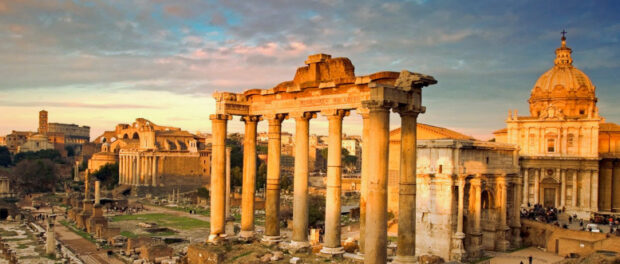
An impressive testimony of this period is the tabularium with its massive arches and columns, which significantly shapes the appearance of the Roman Forum. The building was built only two decades before the consular period of Cicero and was then considered one of the most magnificent architectural innovations. Although it was clearly a public building, its precise function as apossible state archive has not yet been fully clarified. The massive structure illustrates the republic’s claim to perpetuate its administration and history in stone.
The great personalities of the crisis
The crisis involved some of the most famous figures of antiquity, who determined the fate of the world for decades. Gaius Julius Caesar then took a radical position in the debate over the punishment of the conspirators, while the immensely rich Marcus Licinius Crassus played a mysterious role in the background. The focus, however, was on Cicero, whose extensive workfrom speeches, letters and poems documents the public and private life of Rome. No other person of classical antiquity has handed down so much that a plausible biography could be created according to modern standards.
The Tragic End of the Great Speaker
The year 63 BC remained the absolute turning point in the career of Cicero, whose career ended in catastrophic failure two decades later. Although he was still convinced of his own importance, he could no longer stop the rise of the autocrats. After the assassination of Julius Caesar in 44 BC, he himself became aVictim. His head and right hand were flaunted in the middle of the city and exposed to mutilation.

 Screenshot youtube.com