The Intersection of Myth, Political Rhetoric, and Archaeological Reality in Ancient Rome
Screenshot youtube.com
The ancient history of Rome is deeply rooted in a fascinating mixture of historical facts and brilliant myths that shaped the self-image of an entire civilization over many centuries. When examining the political and social upheavals of the Roman Republic, it quickly becomes clear that recalling the legendary founders represented a powerful tool for rhetorical influence. This connection between the past and the present forms the key to understanding the Roman mentality and its unique culture. Scholars and historians continually analyze how these foundational narratives were strategically deployed to unify the populace during times of extreme crisis. The interplay between mythical storytelling and concrete political action reveals the profound depth of the Roman civic identity.
The Strategic Selection of the Assembly Location
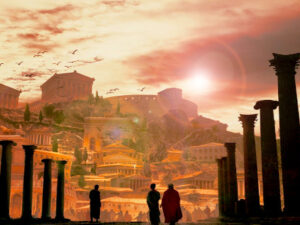
According to a widely spread Roman tradition, the foundation stone for the Temple of Jupiter was laid exactly 700 years before the dramatic events of the late Republic by Romulus personally. At this exact location, where the political center of the world power later developed, the initial settlers had once fought bitter battles against the Sabines. The Roman warriors found themselves in a hopeless situation and were forced to retreat, whereupon the city founder made a consequential vow. This individual pleaded to Jupiter the stayer of flight and promised to build a sanctuary if the men would resist panic and withstand the enemies. This sacred promise fundamentally altered the trajectory of the military engagement and established a permanent spiritual landmark for the expanding community.
Divine Assistance and the Art of Rhetorical Staging
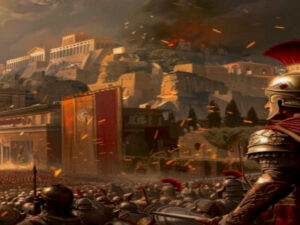
The Romans fulfilled this requirement, erected the temple, and preserved the memory of this divine support in the following generations. Archaeologists have not been able to definitively identify the remains of this structure to this day, which is hardly surprising given a possible reconstruction over the many centuries. When the famous orator Cicero convened the senate at this historical site in the year 63 BC, the individual pursued a very specific plan. The consul wanted to show those present the steadfastness of the city founder as a shining example and demand similar determination in the fight against the conspirator Catiline. At the end of the fiery explanations, the speaker pointed to the statue of the deity and invoked the protective power against the enemies of the state.
The Ambivalent Perception of the Prominent Orator
The contemporaries present immediately recognized the subtle message and compared the prominent speaker with the mythical city founder. This association was not exclusively positive, as some critics used the opportunity to mock the provincial origin of the individual. They gave the orator the derogatory nickname of the city founder from the small community of Arpinum in order to undermine the social standing. Despite these hostilities, the invocation of the touching legends of the early period remained a central element of political communication. The strategic deployment of ancestral narratives thus served as a double-edged sword, inviting both profound respect and bitter jealousy among the political elite.
The Wolf and the Dark Sides of the Foundation Myth
To this day, the bronze wolf nursing the twin infants symbolizes the origins of the eternal city and is an indispensable part of public life. Due to this ubiquitous presence, many people tend to accept the strange saga as an undeniable historical fact. However, this is clearly a myth that aroused a healthy portion of skepticism even among ancient thinkers. The story has numerous confusing and decidedly unheroic elements, ranging from murder and kidnapping to the fact that the initial residents were predominantly criminals. Such unsettling details challenge the idealized vision of the past and force modern observers to confront the brutal realities embedded within the foundational narrative.
The Scientific Interpretation of the Origin Legend
Some modern researchers found these unsavory details so astonishing that they suspected a targeted counter-propaganda by the enemies of Rome in the narrative. This desperate attempt overlooks the crucial point that the Roman writers repeatedly told and intensely debated this very saga. The scholars and politicians were far more concerned with the question of what it actually meant to be a Roman and which characteristics distinguished the people. The senators in the old temple were fully aware of the far-reaching implications of this founding legend for their own identity. By embracing these flawed origins, the civic leadership transformed potential weaknesses into a complex tapestry of resilience and pragmatic survival.
Alternative Founders and the Archaeological Traces of Antiquity
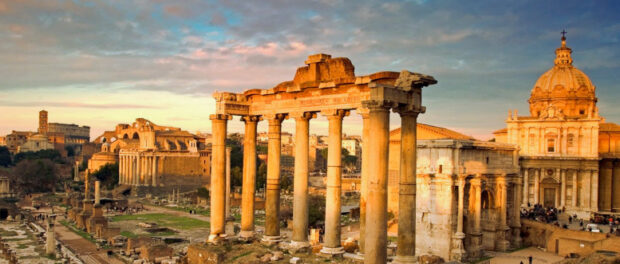
In order to truly understand the ancient Romans, one must grasp the significance these myths and their ambiguities held for the contemporary worldview. The twins were by no means the only candidates, as the Trojan hero Aeneas also played a consistently outstanding role in historiography as an alleged refugee. The question of the true beginnings of the settlement on the Tiber is just as exciting for current research as it was for the ancient scholars. Archaeology paints a completely different picture of the early period, which is surprising and frequently controversial. The physical remnants uncovered beneath the modern streets provide a stark contrast to the polished literary accounts of the elite.
The Interpretation of Artistic and Historical Relics
Even the famous bronze sculpture of the wolf is highly controversial, as newer analyses suggest an origin in the 15th century, while traditional doctrine assumes an ancient masterpiece. Regardless of this dispute, excavations under the present metropolis have brought traces to light that date back to the year 1000 BC. These early settlement remains come from the small village on the river bank, from which the mighty metropolis and the world power later developed. The continuous unearthing of such artifacts continually reshapes the academic understanding of how a modest riverside community evolved into an unparalleled global dominion. Ultimately, the physical evidence grounds the lofty mythological narratives in the tangible reality of early human habitation and gradual urban expansion.

 Screenshot youtube.com