The Intersection of Global Commerce and Cultural Awakening at the Dawn of the Modern Era
Screenshot youtube.com
The dawn of the 1900s was characterized by an unprecedented dynamism where economic innovations and cultural transformations formed an inseparable unity. Along the Adriatic coast, a specific urban center evolved into a global hub of trade, generating a completely new societal order through the massive influx of capital and people from all over the world. This profound fusion of financial power and artistic creation established an environment that significantly influenced the modern zeitgeist and laid the foundations for the coming century.
A Cultural Turning Point on the Adriatic Coast
During the autumn of 1913, a renowned Irish writer attended the unveiling of a monument dedicated to a famous composer in a central square of Trieste. The literary figure was a passionate admirer of operatic arts and had spent the previous evening in an open-air theater watching a classical masterpiece about ancient Egypt. This musical achievement was originally commissioned for the inauguration of a significant waterway and celebrated its glorious premiere in Cairo. The performance in the port city provided the cultural framework for an individual who was on the verge of permanently altering modern literature.
The Financial Masterpiece of the Suez Waterway
Just a few years prior, the Ottoman Sultan had appointed a new ruler for Egypt who was firmly determined to equip the nation with modern infrastructure. To realize this massive undertaking, the Khedive turned to the emerging capital markets and utilized the novel opportunities of stock financing. The construction of the canal, which began in 1863, connected the Mediterranean Sea with the Red Sea and drastically shortened the trade routes to Asia. This monumental project would never have been possible without the innovations in the financial sector and the willingness of numerous investors to place their funds into shares.
The Structure of the International Trading Enterprise
The issuance of securities distributed the financial risk across many shoulders and opened up completely new dimensions for global commerce. The financing of the gigantic construction project was carried out exclusively through private capital from a company registered in France. The corporate concept was essentially based on an exchange deal, where collected investor money was traded against operating rights and the levying of usage fees. Egypt held a share of 44 percent in the enterprise, while the French company retained the majority of 56 percent and bore the operational risk.
The Rise of the Triestine Commercial Metropolis
Although the waterway officially stood under Egyptian sovereignty, the operating company was subject to French law and had its headquarters in Paris. Shareholders from across Europe participated in this initial emission, which attracted public interest to an unprecedented degree. The adopted home of the Irish writer played a central role in mobilizing these massive financial flows. An entrepreneurial merchant traveled to Paris in 1858 to enable wealthy citizens of his hometown to participate in the canal project.
The Temples of Modern Capitalism
For this commitment, the individual was appointed vice president of the canal company and undertook an extensive inspection tour to Egypt shortly thereafter. The merchant recognized the enormous potential of the hometown and described the central role of the location in the global trade network in a publication in 1864. This businessman rose from a simple craftsman son to an ennobled baron and embodied the typical upward mobility of the merchant caste of that era. The city developed into the only seaport of the Danube Monarchy and advanced to become one of the most vibrant and cosmopolitan economic centers of the continent.
The Birth of the Economic Press
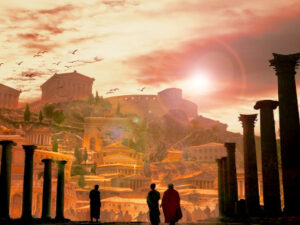
In the three decades between 1880 and 1910, a multitude of new stock exchanges emerged worldwide, often designed as magnificent neoclassical buildings with columns and monumental staircases. The local exchange building had already been erected at the beginning of the century and towered over the city with Doric columns and a statue of the Roman god of commerce. Within these walls, a new professional group traded securities and served a steadily growing base of buyers. Worldwide, gigantic infrastructure projects became the preferred investment class of the new middle class, as the markets enabled the diversification of risks.
The Restructuring of Global Shipping
Parallel to the boom of the markets, a completely new genre of publications emerged that dealt exclusively with economic news and analyses. The global financial flows produced a flood of data that had to be deciphered laboriously by savers and investors to understand the movements of the courses. Financial journalism gained rapidly in quality and scope, whereby extensive tables and mathematical evaluations determined the everyday life of the readers. Even known critics of international capital earned their living through collaboration on such financial papers while simultaneously composing their theoretical attacks on the system.
A Melting Pot of Cultures and Religions
The fever of speculation captured large parts of the population and made the financial world an omnipresent topic of daily conversation. The opening of the waterway changed the commercial map fundamentally and shortened the journey to India by 8000 kilometers and ten days. The Adriatic advanced to become the new main artery for the trade between Europe and Asia, which brought enormous profits to the local port economy. The local transshipment multiplied within a few decades and made the place an irreplaceable window of Central Europe to the wide world.
Artistic Awakening in the Center of Trade
From an insignificant provincial town in the shadow of an older lagoon city, a dynamic center of continental trade had emerged. A significant railway line also linked the port directly with the imperial capital and the extensive hinterland. The ruling monarchy early on recognized the danger of nationalism and promoted free trade for all denominations through tolerance edicts. This policy paved the way for countless migrants who sought their fortune in the city and arrived from all directions.
The Economic Upswing Before the Great War
The local dialect mixed with numerous foreign language roots and reflected the enormous diversity of the residents. Alongside the large traditional faith communities, many smaller religious groups also found a safe haven and erected their own places of assembly. This unique cosmopolitanism was directly enabled by the trade and the flowing capital, which knew no national borders. The Irish writer found the ideal breeding ground for creative work in this environment and taught at a renowned commercial school.
Creative Destruction as the Engine of Progress
While attending the opera in the autumn of 1913, the author worked intensively on the publication of manuscripts that had been offered in vain for years. The individual received a commission for a lecture in a respected library named after the Roman patron saint of commerce. This connection of commercial thinking and artistic expression refuted the prejudice that art and trade were incompatible. An influential American patron encouraged the writer during this time and mediated the possibility to publish texts in a modern literary magazine.
The Explosion of Technological Inventions
Like many contemporaries, the author looked optimistically toward the coming year, as the entire continent experienced an unprecedented economic upswing. The European industrial production had doubled since the turn of the century 1900 and was financed through massive capital flows across the stock exchanges. More and more citizens participated in cross-border trade, which connected the peoples through a dense monetary network. The economy seemed to grow inexorably, while completely new ways of thinking emerged in art and science simultaneously.
The Zenith of an Era
The modern movement broke with old traditions and experimented with radical new forms of expression in all areas. In the imperial residence city, talented immigrants crowded together and created a climate of intellectual departure that was second to none. The connection of commercial success and artistic self-expression followed a historical pattern that had already produced flourishing cities in earlier epochs. New art forms and commercial products replaced old ones and drove societal progress forward through a constant process of renewal.
The Symbiosis of Entrepreneurial Spirit and Artistic Vision
The combination of scientific breakthroughs, available capital, and new technologies unleashed a tremendous innovative power. Countless everyday objects and technical innovations emerged within a few years, fundamentally changing the lives of the people. The best measure for this commercial energy was the steadily increasing number of registered property rights for new inventions. In Germany, the number of annually granted patents climbed upwards by around 50 percent within 13 years.
The Final Convergence of Commerce and Culture
The joint balance of the leading European industrial nations also showed a massive growth of innovation activity in this period. The tempo of change was exceptionally high and was even surpassed in the United States of America. The economy developed at a breathtaking speed, linking one invention seamlessly to the next. In the years before the great catastrophe, life pulsed in the port city with ideas and financial possibilities.
The optimism from decades of growth buoyed the investors and promoted a culture of risk-taking and courage. The artistic modernity and the economic expansion developed in perfect parallelism and conditioned each other mutually. Hardly any other personality could have united these two seemingly separate worlds better than the Irish writer, who later advanced to become the pioneer of modern literature. The stage was set for a new age in which the entrepreneurial spirit and the artistic vision entered a unique symbiosis.

 Screenshot youtube.com