The Imperial Crucible: How Global Warfare Forged the Path to American Revolution
Screenshot youtube.com
The 18th century in North America was defined by profound shifts in geopolitical power and relentless territorial disputes among European empires. Major global powers fiercely contested dominance across the vast continent, creating severe consequences for the settlers and indigenous populations residing there. These imperial rivalries established the foundation for administrative and military directives that severely strained the relationship between the mother country and its overseas territories. What began as seemingly peripheral border skirmishes rapidly evolved into a worldwide struggle, permanently altering the political and social orders of the Atlantic world and steering the colonies toward an inevitable revolutionary transformation.
The Escalation from Regional Skirmishes to Global Warfare
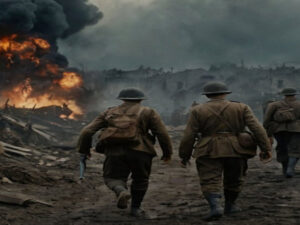
The advance of British land surveyors and merchants into highly contested river valleys triggered immense alarm among French colonial authorities, whose grip on these expansive territories remained incredibly fragile. The French crown suffered from a severe shortage of military personnel and administrative staff, making it nearly impossible to enforce their territorial claims effectively. Faced with this precarious situation, French commanders were forced to deploy their troops into the Ohio region, which immediately prompted the militias of Virginia and other colonial military units to mobilize. During the summer of 1754, George Washington marched into the disputed territory with the Virginian militia, initially constructing a small fortification followed by a simple palisade structure.
The Initial Defeats and the Expansion of the Conflict
The French military forces responded instantly and with overwhelming power, compelling the British colonial troops to surrender to the massive French superiority on July 3 in that same year. From this initially marginal border dispute on the periphery of two competing empires, a full-scale world war developed within just a few short years, permanently shaking global power dynamics. The true historical significance lies not merely in the sequence of military engagements, but in the structural processes that emerged after 1763, ultimately culminating in the American Revolution. Some historians argue that this global conflict opened two entirely distinct political paths, where the negative experiences of the early war years directly fed into the war for independence.
The Dual Impact of Victory and Defeat on Colonial Mindsets
At the same time, individuals must not ignore how strongly the positive experiences of a shared victory over absolutist France ultimately fueled the revolutionary events at the end. The war initially began with a whole series of problems that the responsible planners in London had never even remotely anticipated. For the initial time in history, the British government dispatched larger regular military units to North America, as the colonies had previously always defended themselves against the enemy using their own resources. The regular British soldiers were completely unfamiliar with the rugged American landscape and the local forms of warfare, while the American militia officers and the British professional officers were entirely unaccustomed to each other.
Cultural Clashes and the Arrogance of Professional Officers
This friction was further compounded by the results of profound military reforms that professionalized the British armed forces but also fostered a condescending arrogance toward the colonial troops. These newly arrived officers treated the American commanders not as equals, but subordinated them to every regular British officer, even when they held the highest ranks, which the colonists perceived as highly dishonorable. The Americans therefore watched with a certain amount of Schadenfreude as the overconfident British marched into certain ruin against the French and their indigenous allies. Conversely, the British military leaders had absolutely no joy in their North American counterparts, since the colonial assemblies stubbornly refused to make an adequate financial contribution to the defense of the realm.
Colonial Self-Interest and the Outrage of Illegal Trade
Furthermore, the colonial militias lost their combat effectiveness dramatically as soon as they were deployed even slightly away from their familiar home territories, which severely complicated military planning. What angered the British officers the most, however, was the blatant collaboration of the colonial trading elites with the enemy, who maintained highly lucrative trade relations with the French and Spanish throughout the entire war years. In the ports of the French colonies, around 150 American merchant ships were regularly sighted, openly engaging in smuggling and thereby undermining the imperial economic order. In the midst of the war, these illegal activities of the Americans could neither be ignored nor forgiven by the British leadership, inexorably paving the way for one of the great postwar conflicts.
The Albany Congress and the Failure of Colonial Unity
In the year 1754, the colonies at least managed to unite for a joint political action, yet this intercolonial delegate assembly was rather proof of internal American problems than an expression of genuine solidarity. The starting point was not the French-indigenous threat, but the usual dispute over land ownership and westward expansion, which was fought out by various land speculators and large landowners. Benjamin Franklin used this congress to launch his own plan, which meant a radical upheaval of the political order and the formation of a central council. He basically aimed for a common British nation in North America with centralized parliamentary institutions, but deliberately excluded non-British minorities from this vision.
The Rejection of Centralization and the Rise of William Pitt
Hardly had the delegates scattered across the land again when the backlash occurred, since the individual colonies preferred to hold on to their outdated sovereignty and the British did not allow any superior political association. The war initially went neither particularly well for the British nor for the Americans, which led to heavy complaints in Great Britain about the incompetence of the acting government. William Pitt lurked in the background as a savior and began a veritable campaign in the House of Commons against the previous conduct of the war by appealing to solidarity with the Americans. He argued that the British government should no longer be guided by European interests, but must orient itself exclusively toward global British interests, which corresponded exactly to American expectations.
A New Imperial Strategy and the Shift in Global Focus
After the resignation of the old government, Pitt became the most powerful man in the new cabinet and fundamentally changed the framework conditions of the war on the North American continent. He instructed the British officers to treat their colonial comrades with more respect, whereupon a patriotic war enthusiasm gradually arose in the colonies. Even more important than the military successes, however, were the political conceptions that guided Pitt in the long term and were to fundamentally change the empire. Pitt no longer thought traditionally from the European continent, but took the island position of Great Britain just as seriously as the global character of the empire, whereby the American colonies moved from the periphery to the center.
The Peace Settlement and the New Administrative Realities
The war had to be fought with all energy on the North American continent, and in the future strategy the colonies would be included as full members of the empire. The peace settlement of 1763 created a fundamentally new situation for the North American colonies within the structure of the British Empire, as the political and geostrategic coordinates shifted from one moment to the next. With the elimination of the direct French threat, life in the British colonies was safer than ever before, but this brought completely new administrative challenges with it. Two massive areas of problems awaited a solution, namely dealing with the French-speaking Canadians and the question of what should happen to the indigenous tribes after the loss of their French allies.
Managing New Territories and the Threat of Indigenous Uprisings
Both questions were closely linked to colonial settlement and expansion interests and represented a possible threat to the entire empire from the London perspective. The British cabinets consistently expected French desires for revenge, which is why regular troops had to be stationed on North American soil from the British point of view to keep the new subjects and the tribes under control. At the same time, the politicians in London were aware of the need for long-term measures, since it was impossible to suppress the French-speaking Canadians permanently with bayonets and cannons. In the public discussion, two paths were vehemently advocated, whereby assimilationists demanded a violent adaptation, while advocates of a composite monarchy granted the right to own cultural traditions.
Religious Pluralism and the Obstacles to Imperial Control
However, the measures for religious unification affected not only the French-speaking Canadians, but also the British settlers, since all dissenting religious groups decisively rejected an Anglicization of North America. The plurality of Protestantism on American soil stood in the way of any attempt at a strict religious policy by the ministries, which the advocates of increased Anglicization completely misjudged. At least equally important was the unresolved problem of the indigenous tribes, since the expansionist drive of the colonies had been one of the main causes of the war and now heralded new conflicts. Land speculators and adventurers pushed for the release of the territories in the west, while the British governments and militaries wanted to strictly limit this expansion for fear of uncontrollable uprisings and expensive border wars.
The Indigenous Resistance and the Brutal Retaliation
The crown authorities rightly suspected disaster and dispute, because the problem of the indigenous tribes, who feared for their land and their very existence, urgently needed a peaceful solution. In the year 1762, French agents had exerted their influence on the tribes of the Ohio territory to move them to a major uprising against the British and the colonists. An indigenous prophet preached with great zeal against the continued presence of white Europeans on the continent and called on the tribes to rise up against the intruders. Instigated by these sermons, various chiefs joined forces to form one of the largest indigenous alliances ever, which plunged the entire west into a bloody war in the summer of 1763.
The Proclamation Line and the Growing Colonial Resentment
The British soldiers and the colonial militias temporarily fought with their backs to the wall, numerous settlers were massacred or abducted, and many civilians fled eastward in panicked terror. The British commander-in-chief struck back just as relentlessly and even went so far as to distribute blankets to indigenous groups that were infected with the smallpox virus, which amounted to open genocide. To break the resistance of the indigenous tribes and pacify the border, the British relied on a two-pronged strategy of extensive punitive campaigns and simultaneous compromise offers. In the midst of this conflict, the British king announced to the horror of his subjects that the crest of the Appalachians would henceforth represent the dividing line between the settler colonies and the indigenous territory.
The Inevitable Fracture Between the Empire and the Colonies
No new settlements would be approved west of this mountain range, and by the year 1768, 5500 British soldiers were permanently stationed in the west to secure this line. With all these tasks, the scattered stationed soldiers were hopelessly overwhelmed, especially since neither land speculators nor traders cared much for the authority of the crown. Despite all good intentions, this royal proclamation line was doomed to fail from the beginning, as the settlers understood the factual ban on westward expansion as an attack on their traditional freedoms. The withdrawal of troops and the strict expansion bans only reinforced the already existing anger of many settlers, who saw in London nothing but the attempt to limit their growth after the victory over France.
The Radicalization of the Settlers and the End of Imperial Cohesion
In addition, people were annoyed by the failures of the regular soldiers at the beginning of the uprising and by the warfare of the English commanders, which was perceived as too lax. Although individuals could not attribute humanitarian motives to the British generals, they were considered far too lenient in the eyes of the settlers, which further shook the trust in the protection of the crown. In view of this frustrating situation, some settlers finally took matters into their own hands and resorted to radical means to enforce their own interests. These unauthorized actions and the deep alienation from the British leadership marked the beginning of the end of imperial cohesion.

 Screenshot youtube.com