Early Christianity: The spiritual wrestling of the initial religious communities
Screenshot youtube.com
The contemplation of the spiritual world of the earliest Christian churches leads to that epoch in which the initial written homage to Jesus as the anointed, as the son of the Creator and as the elevated Lord. At that time, hymn-like statements of faith were formulated, which were not only an expression of worship, but also served to defend against false teachings.These early confessions were always tied to concrete situations and named key facts from the founder’s history. They included His incarnation of Mary and the Holy Spirit, his suffering, his death, his resurrection and his exaltation in heaven. These early formulations were not rigid norms, but lively answers to challenges thatinternal tensions and external threats arose.
The living spirituality of the searching communities
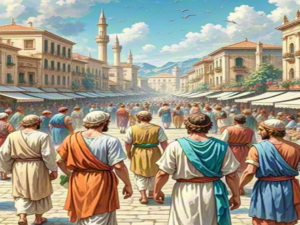
The faith communities in this phase had dynamic, open and searching attitudes. Truths of faith did not exist as finished dogmas, but as spiritual movements that formed in exchange, in wrestling and in prayer. The believers experienced their spirituality as a continuous process of knowledge. They exchanged intensively about the meaning of the Holy Scripturesand searched for ways to anchor the message of the gospel in their everyday lives. This intense debate created the deep feeling of connectedness and strengthened the cohesion in the face of adverse external circumstances.
The development of the confessions in subsequent epochs
From later antiquity, the confessions received more substantial abundance in order to protect Christian doctrine against wrong paths. These confessions still did not represent normative summaries, but remained answers to concrete challenges. Such challenges arose from theological issues, missionary encounters and tensions within the community.This phase was characterized by remarkable intellectual freedom. Thinking about faith was not limited by external authorities, but by the inner necessity to preserve the truth of the gospel.
The emergence of short teaching guidelines for the lesson
In the pre-Constantine period, short-sighted teaching guidelines were finally created, which are considered the last stage of early confession. These guidelines were neither binding in the church nor as final norms. They served the teaching, the preparation for baptism and the liturgical use. Particularly noteworthy is the Roman baptismal confession, which was in the middle phase of antiquityfound his final form. It became the most important foundations of later creeds and structured theological instruction.
The depth of the content of the Roman baptismal confession
The structure of this confession includes faith in God, the Father, and in Christ Jesus, the native son. The birth of the Holy Spirit and Mary, as well as the suffering from the governor is witnessed. Furthermore, death, the burial, the resurrection, the ascension, the heavenly exaltation and the return to judgment are mentioned. Added to this is the belief in the saintsSpirit, the Holy Church, the forgiveness of sins, the resurrection of the flesh and eternal life. This confession later emerged from the apostolic creed, which is still used in the western churches today.
The profound caesura by the state influence
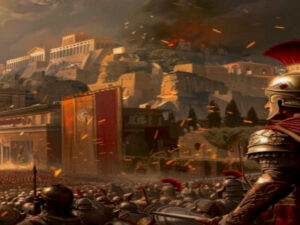
After the so-called Constantine turn, profound change began when the state influenced the formulation of the truths of faith. Now ecumenical synods were convened, which defined generally binding formulations. This development severely restricted the free, unbiased reflection on faith. The spiritual dynamics of early Christianity, which were previouslyhad always given new impetus for the interpretation of the faith, became increasingly paralyzed. Theological independence became increasingly suspected by the unauthorized person.
The constriction of creative theological thinking
The fear of crossing the limits of orthodoxy continued to narrow creative thinking. This development marked not only church but also cultural turning points. It meant the transition from open, seeking faith movement to institutionally regulated religion. The living spirituality of the beginnings gave way to strict dogmatics, which was prescribed from above. thatIndividual struggles for the truth were replaced by the fear of heresy.
The courageous struggle for truth and identity
Despite these later developments, the memory of the earliest communities remains characterized by an insistent atmosphere. They were alive, courageous and mentally agile. In the midst of persecution, uncertainty and theological conflicts, they formulated their faith. They tried to preserve the truth of the gospel without pressing them into rigid forms. The early confessionsIt was not created as a finished dogma, but as an expression of living struggle for truth, identity and community.

 Screenshot youtube.com