Lübben as a vibrant heart and historical junction in the heart of Lusatia
Screenshot youtube.com
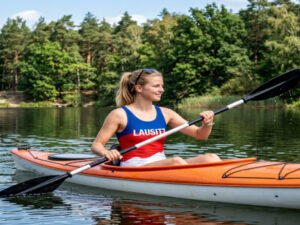
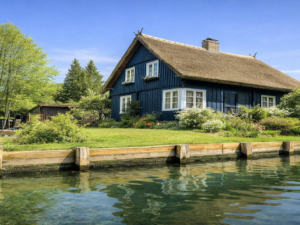
Lübben occupies an outstanding position in the structure of the famous water landscape and is considered the most important place in this unique region after Lübbenau. As a central interface between the upper and lower parts of the Spreewald, the city plays a key role for travelers and locals alike. The lovingly renovated old town, the idyllic barge and theExpansive castle island with its museum and the spacious water playground invite you to linger. A well-developed tourist infrastructure enables extensive paddle and bike tours through the unspoilt nature and makes the place a popular starting point for numerous explorations.
Administrative importance and cultural points of contact
In addition to its tourist attraction, the town also has an important administrative function, because it is the district town of the district of Dahme-Spreewald. This role gives it an importance that goes far beyond the pure population. The imposing castle is the most important cultural point of contact and once served as the seat of government for the Margraves of Lusatia. theModern city center is grouped in a picturesque manner around the venerable Paul-Gerhardt-Kirche, which is named after the famous church song poet, who found his last place of work here. The variety of leisure activities makes the place a true paradise for active holidaymakers, with several boat harbors, a climbing forest and the outdoor pool in the Spreelagune providing variety. between the Kahnhafen andSchlossinsel extends the tourist center with the local information point, which welcomes visitors and positions the place as the gateway to the region.
Origins in the early Middle Ages and urban blossom
The city’s history goes back a long way, because the place was mentioned as Urbs Lubin in the early Middle Ages. It was created at a geographically favored location where the branched river bundled into a narrower course of the river. This location made the place a strategically important point for traffic and trade, which justified the early granting of city rights. This makes it countThe place to be the most historically important settlements with an urban character throughout the Lusatia. The importance as the capital of the Margrave of the Margrave, which was under the Saxon princes and later electors, shaped the development over long epochs.
Crisis times, destruction and baroque reconstruction
Despite these flowering phases, urban development was repeatedly thrown back by devastating fires, looting and destruction during the Great European War, which devastated large parts of the continent. Recurring waves of plagues added to the population and claimed numerous victims. After the Peace of West, however, the place gradually recovered and experiencedA phase of reconstruction. During this time, representative buildings such as the Estates House and the Castle were built, which still preserve the historical heritage to this day. These buildings testify to the self-confidence and the political importance of the place in past centuries.
Industrialization, Railway and Military Use
In the age of industrial change, the place lost its function as the capital and instead developed into an important district town. It was expanded into a garrison location and received several striking military buildings that permanently changed the cityscape. Large factories were built in the course of industrialization and brought economic upswing to the region. theConnection to the important railway line between Berlin and Cottbus strengthened the transport connection enormously. These developments formed the city’s face into the modern age and closely linked it to the major transport routes.
The Tragedy of the End of the War and the Loss of the Old Town
Little of this old city center is preserved today, because the place played a tragic role in the last days of the devastating world war. In the spring of the end of the war, the city fell into the last decisive and lossy fight between German troops and the Red Army. Protection squadron units, the police and the Volkssturm tried desperately toto keep town, although this was completely hopeless. Finally, the place was fully occupied, with a large part of the historic old town burning out and large parts of the city area sank into rubble and ashes. This deep incision irretrievably destroyed the historical structure that had grown.
New beginning in the GDR and the symbolic castle island
Despite the building fabric that is still there, it would have been theoretically possible to rebuild the old town. However, the political leadership of the time decided to create inexpensive living space outside the destroyed city center, which means that typical prefabricated housing estates characterize the modern cityscape. The rubble of the destroyed old town was collected on the site on which theCastle Island is located. This has made this place a uniquely symbolic space, the past, loss and new beginnings in a unique way. The island today represents the resilience of the population and the constant change in urban life.
Lusatia as a cultural resonance space
The importance of the place can only be understood if the entire region is placed in a larger historical and cultural context. The Lusatia is a landscape whose identity is fed from a unique combination of Slavic and German heritage. Shaped by the culture of the Sorbs, by centuries-old settlement structures and one of rivers, moors, forestsAnd meadows of certain nature, it offers a fascinating mosaic. The history of the region has been determined by border shifts, changes of power and cultural diversity.
Lübben as a junction in the region
This landscape is not only a geographical space, but a cultural resonance space in which traditions, languages, myths and historical experiences are intertwined. The place cannot be considered in isolation as part of this region, but acts as a junction in a network of historical paths. Cultural currents and scenic peculiarities make theEnvironment to one of the most independent spaces in Central Europe. Anyone who visits the city therefore immerses themselves in a lively network that impressively reflects the deep roots of people with their special homeland.

 Screenshot youtube.com