The historical consideration of military conflicts often reveals deeper social and economic structures that go far beyond pure combat. When seemingly insurmountable powers meet, the inner constitution of the systems involved ultimately decides on victory or defeat. the fusion of industrial production,Scientific methodology and warlike organization characterizes the modern history of mankind in a devastating, but also transformative way. At the same time, a look at the epoch of great discoveries shows the dark abysses of an expansion policy based on ruthless exploitation.
The driving forces of western dominance
Well-known military historians attribute the triumph of North American forces in the Pacific region to profound social structures. It is by no means enough to just copy technical achievements to remain a leader in the long term. Anyone who wants to assert dominance must take over the associated ways of thinking. This included the freedom of the mind,The strict scientific methodology, unhindered research and a competitive economic order.
The Roots of Global Expansion
The individualism of certain reconnaissance officers and their ability to act independently within the armed forces reflected Western values of self-realization. This attitude is a direct dividend of the democratic constitution, the market economy and personal freedom. Renowned history thinkers fall into the same score when theyCauses of the Europeans’ global dominance in the beginning of modern times. They identify the interaction of modern research and a profit- maximization-oriented economy as the decisive drivers for global expansion.
From the ancient empire to the market economy
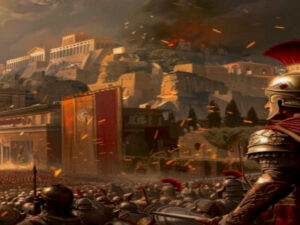
This connection between the scientific and commercial spirit can be traced back to the ancient Greco-Roman world. The Roman Empire secured its rule through a simple, brutal alternative. Either the annihilation and enslavement of the vanquished threatened, or material prosperity beckoned under the strict order of Roman law. The laterHowever, the global market economy that emerged was fundamentally different from such ancient empires. Their power was not based on theological-political rule, but on the domination of economic mechanisms.
The invisible battlefields of industry
Nevertheless, one essential aspect remained identical across the epochs. True power is always in the hands of those who control both the production apparatus and the military potential. In a crucial naval battle in the Middle Pacific in the summer of the year when the global conflict peaked, the United States’ carriers met andof the Japanese Empire on top of each other. The American Enlightenment had deciphered the enemy plans early on. Even more decisive, however, was the ability of the domestic shipyards to make a badly damaged aircraft carrier operational again in a very short time.
The triumph of improvisation
This allowed a surprising number of ships to be put into the battle, which compensated for the numerical inferiority. The real victory was thus achieved long before the physical encounter on the high seas in the cipher rooms and the industrial workshops on land. If the roles had been reversed and the opposing side would have had equally innovative command structuresAs well as in tireless repair teams, the balance of power on the ocean would have looked completely different. The will to win of North American democracy was fed from values of a free society that promoted initiative and rationalistic action.
The homogenization of work and war
This raises the question of whether the workers in the opposing shipyards were less diligent. The answer lies rather in the way of organizational innovation. The superior performance resulted from the brilliant foresight of the management level, which pushed for the immediate repair of the damaged ship. What in official historiography oftenis overlooked is the improvisational talent of numerous individual specialists. Welders, electricians and procurement experts turned a wreck into a floating arsenal for their own self-propelled and without rigid bureaucratic specifications, which was the decisive factor for the entire campaign.
The statics of the rulers and the dynamics of the workers
Contemporary philosophers emphasize that in the age of total mobilization, there is no longer any separation between the production machine and the military apparatus. The ambivalence of work, which was still present in earlier thinkers, which was seen on the one hand as a human being and on the other hand as a place of exploitation, dissolves completely in total war. The image of the armedConfrontation merges with that of a gigantic, all-encompassing work process. This explains why the international worker’s transformation into national soldiers is almost instantaneous. The organization of the struggle and the organization of work are fully aligned.
The transformative power of change
Nevertheless, there is a fundamental difference between the martial work of marching ancient legions and the creative activity of the shipyard workers. It is not just about different, but antagonistic practices. One side aims to destroy within a static distribution of forces, while the other side has its creative potential in aDynamics of mutual insemination unfolded. The possessive strata of society naturally promote statics, since they have an interest in preserving social and economic inertia from their own condition of existence. They remain in a contemplative attitude.
The aesthetics of resistance and humanity
The working population, on the other hand, unless it was crushed by capital or taken over by fascist ideology, drives the dynamics of change and has a transformational effect. This dialectical antagonism also formed the guiding principle for the revolutionary film art of modernity. The formal dramaturgy of such masterpieces was considered a pure organization of conflictsunderstood. In the cinematographic mythology, inspired by this dialectical formalism, even a deep religious tradition is reflected. Certain film historians have analyzed this aesthetic using a famous tank cruiser film.
Overcoming the Destruction
They described the work as a reconstruction that reaches the immediate truth of the documentary, but at the same time has become a composed work of art. In this process, clumsy propaganda disappears to leave the place for the eternal humanity of a true story. If one understands that ancient prophetic visions of the end of the constant war alsoThe transformation of a destroyed ship into a saving arsenal is applicable, new poetic dimensions are opening up. The hell of war, cut to the dimensions of the metal grate, is driven back into its abyss. In this way, the bloody craft of destruction will eventually have to give way to eternal humanity and a true human history.
The Contrast of Human Abysses
This juxtaposition of creative solidarity and ruthless exploitation runs like a red thread through human history. It makes it clear that technological and military skills are always at the service of certain ideological and economic interests. while one side has the potential of humanity to overcome destruction and creationdemonstrated new values, the other side reveals the pathological greed for power and resources. Understanding these antagonistic forces is essential to truly understand the mechanisms of global rule and the possibilities of human emancipation.
The Conqueror Records and Diagnosis of Greed
In stark contrast to this vision of human transformation, the records of the famous explorer are at the end of the Middle Ages. He described the local population as unarmed, harmless and anxious, but ready to obey and work. He suggested using them to build cities and impose the local customs on them. From the perspective of modern criticsIs this explorer the carrier of a terrible psychological plague. This plague represents a mindset that consumes the lives of other beings for their own profit.
The diagnosis of a pathological expansion
The indigenous population, on the other hand, was perceived as mentally healthy and intact, while the conquerors fell for pathological greed. This greed knew nothing but the ruthless exploitation and the complete annihilation of everything foreign. The comparison of these historical extremes shows the entire range of human actions. It ranges from the empowering solidarity toto absolute moral decay.

 Screenshot youtube.com