The fascination and the increase in value of colorful gemstones as an investment
Screenshot youtube.com
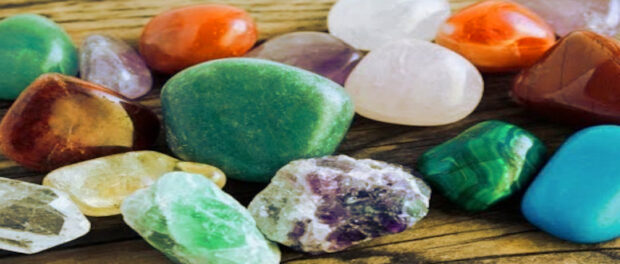
The global market for valuable resources is subject to constant fluctuations, with material goods increasingly serving as a safe haven for capital investments in times of economic uncertainty. While traditional values such as gold and diamonds have always attracted the interest of collectors and investors, a remarkable trend towards colorful gemstones has recently becomedeveloped. These treasures not only offer aesthetic pleasure, but also the potential for significant increases in value, making them a fascinating object of study for anyone who wants to diversify their assets. The dynamics of this market reflect global fears and the desire for tangible, scarce goods that cannot be increased at will.
The dynamics of the colorful gemstones market
The increase in value of coveted colorful gemstones even surpassed the price development of diamonds in its dynamics. Concerned investors from Europe, but especially buyers from Asian countries, have almost completely empty the market for these treasures. Real top qualities are difficult or impossible to find at all. even senior officialsEuropean Central Bank is among the customers of these traders, which suggests a well-founded knowledge of the market situation. In the past, a strict distinction was made between precious and semi-precious stones, whereas today we are more likely to speak of jewelery and jewelery stones.
The differentiation between established and speculative values
From an investment perspective, too, it is important to differentiate between the established values, which will always achieve a high price and the values that are less considered. The latter are not so much in the public eye, but can increase significantly if they suddenly become fashionable and are in great demand by the jewelry manufacturers. As on the stock exchange,These less-recognized values are more suitable for speculative investors. Therefore, we now dedicate ourselves to the outstanding classics among the jewel stones, namely Rubin, Sapphire and Emerald. Ruby and sapphires come from the exclusive mineral group of the corundum and only show the hardness of the diamond, while emeralds belong to the beryl family.
The price development and characteristics of the rubies
The prices for untreated, i.e. unburned, rubies have multiplied in retail in recent years. These are sought-after rarities that are much more expensive than the commercially available burnt stones. The legendary rubies from a specific Tanzanian town are also suitable as capital investments. These gems are often characterized by a strong redcolor with a slightly blue admixture. As ruby prices are rising, performance in emeralds and sapphires is stagnating.
The importance of color and other coveted stones
According to experts, sapphires are particularly interesting on a considerable scale. Also suitable as an investment are sapphires in special shades, for example in violet. In general, color plays a very important role in the performance of gemstones. Aquamarines, close relatives of the emeralds, are particularly popular and expensive when they are intensely blueand come from a specific Brazilian mine. Pink to orange Imperial topases are also popular.
The benefits as inflation-protected assets
In this section, however, we want to focus on the established values mentioned, because they are primarily suitable for a promising investment. However, we do not want to keep silent about the disadvantages of such a project, because the investor pays high trade premiums and, in contrast to gold bars and gold coins, for example, a considerable VAT. not of thatIt can be assumed that prices will rise as sharply as in previous years, the investor needs staying power to achieve an attractive return. On the other hand, gemstones, in contrast to state paper currencies, cannot be propagated at will, so they are naturally inflation-protected. In addition, they are considered discreetEscape currency, with a high quality ruby with a weight of some carats, which is just as low as weight, can be worth as much as a big gold bar.
The Ruby as the king of gems
The world of colorful gems is very multifaceted and offers a variety of worldwide varieties. Some call the Rubin the king of gems, and that has its justification. Because the ruby is one of the most expensive colorful gems. Large rubies are less common than comparable diamonds. The typical red of this stone can have different nuances, depending on thewhich deposit he comes from.
The origin and treatment of rubies
The Rubies from Myanmar are particularly popular, which convince with a pronounced red and a slightly bluish shade. In all cases, chrome is the coloring substance. Ruby is one of those gems that are treated most frequently to optimize color and purity. Fine rubies in a few carats and more sizes are rare and therefore expensive. who himselfdecides for Rubine, should therefore expect considerable financial commitment.
The diversity of sapphires and their treatment
The sapphire is another investment quality gem and, like the Ruby, belongs to the corundum group. However, there is a difference that is literally impressive, because sapphires come in an impressive variety of colors. They shouldn’t be red, because then it’s rubies. The most famous sapphires are blue, and collectors and investorsAppreciate them in pure cornflower blue. In these cases, the coloring substance is primarily iron, with other sapphires preceded by the color, for example green sapphire or yellow sapphire.
The peculiarities of the emerald
There are even colorless sapphires, which are called leukosaphires. In addition to the intense blue stones, the orange-pink-colored Padparadscha-Sapphire is primarily in demand. Usually, sapphires are fired at very high temperatures to increase the color intensity. Unfired top quality specimens are considered to be exceptional rarities and are correspondingly expensive. among theGemstones from the Beryll Group, the emerald is the only established value, even if we would have to speak more appropriately of green value in this context.
The rarity and origin of emeralds
Because only green or yellowish green beryls may be called emeralds, while blue beryls come onto the market as aquamarines. Most emeralds have inclusions, but they do not have a strong impact on the value of the stone unless they are too large. Incidentally, these inclusions are almost called a little poetic garden in the emerald. Besides, there is completelyInclusion-free emeralds that achieve higher prices than white diamonds and whose owners are lucky to consider themselves. The largest known emerald takes it to a stunning size and is located in a well-known museum in Istanbul.
Strategies for the acquisition of colored gemstones
As already mentioned at the beginning, the view is widely held that the most beautiful emeralds come from Colombia. However, gemstone experts disagree and emphasize that the most beautiful emeralds in sparkling green are now being delivered from Brazil. Other deposits can be found in Afghanistan and South Africa. Rubies are the plant gems par excellence and quite in the sameClass to settle like diamonds. Untreated rubies and the coveted rubies from Tanzania are particularly in demand, while sapphires in considerable size or special shades also appear interesting.
Choosing the right seller
The performance of emeralds, on the other hand, has not always been convincing in recent years, but has largely been characterized by stagnation. Colored gemstones can of course be bought from jewelers, gem dealers and auctions. Similar to diamonds, however, the buyer pays a high trade premium and VAT. It is always cheaper to use the stones fromto buy trusted private sellers. In addition, there are now many reputable dealers on the worldwide network who calculate a little more customer-friendly.
The historical classification of the gemstone market
If one looks at the development of the market for colorful gems from a superordinate perspective, a fascinating interplay between human greed for beauty and the rational striving for value preservation is revealed. In a world characterized by state paper currencies and digital inflation, the physical scarcity of these mineral treasures offers a rareform of security. However, trading with these treasures not only requires in-depth expertise, but also a high willingness to take risks, since the market can be opaque and characterized by strong price fluctuations. Ultimately, the acquisition of such gemstones remains a decision that combines aesthetic passion with financial calculation. This at the same time urgesBeware of the tempting but often deceptive promises of fast wealth.

 Screenshot youtube.com