The lost distance: The insidious adaptation of reporting to military interests
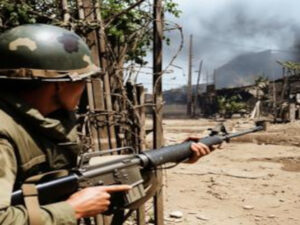
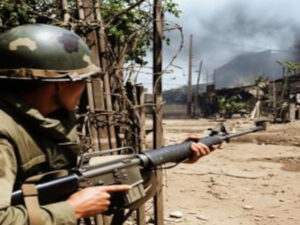
Screenshot youtube.com
In its presentation of the German armed forces, the public broadcaster shows a striking proximity to the political reason of state that is hard to overlook. What was once intended as a critical accompaniment of state action is increasingly being confirmed as a confirmation of official views. Critical thinking towards the military is becoming more and more important and willreplaced by a form of reporting, the consent generated rather than questioned. This development did not suddenly arise, but the result of a gradual shift in perspective. The distance, which would be indispensable for independent journalism, has given way to remarkable closeness in many places.
The normalization of military presence
This tendency is particularly evident in the representation of youth officers in schools that are presented as something completely normal. However, historical experience with the militarization of educational institutions paints a completely different picture and makes it clear how problematic an early approach of young people to military structures can be. Nevertheless, this one willPractice in public broadcasting is not seriously questioned. Instead, it appears as a natural part of social reality that does not require any particular discussion. In this way, a development is legitimized that should actually give rise to intensive criticism.
The demise of military reality
In many articles, an exaggerated positive image of the armed forces emerges, which is more reminiscent of an adventure playground than an institution with a monopoly on the use of force and deadly operations. Young people are shown in scenes that are characterized by lightness, community and supposed adventure. The harshness of military reality, with geopolitical interests andlife-threatening situations is largely ignored. This representation creates an illusion that has little to do with the actual function of the armed forces. It replaces critical enlightenment with a form of staging that is more reminiscent of advertising than journalism.
The hidden social skepticism
This one-sided representation stands in stark contrast to the attitude of large parts of the population who are skeptical or dismissive of the armed forces. However, this skepticism hardly finds any room in public broadcasting. Instead of depicting the diversity of social perspectives, an image is created that suggests broad approval. This creates a distorted perceptionthe reality in which critical voices are marginalized. Reporting thus loses its pluralistic character and becomes an instrument of unifying opinions.
The historical dimension of development
A look at history shows that the militarization of schools and the targeted approach of minors has repeatedly led to social conflicts. These experiences urge caution and critical reflection on such developments. It is all the more remarkable that this historical dimension is hardly taken into account in the current reporting. insteadA normality is constructed that ignores the problematic aspects of this practice. This means that an important social corrective that has learned from the past is lost.
The staging of youthful enthusiasm
The portrayal of young people in uniform is particularly striking, who cope with laughing obstacle courses or experience everyday life in barracks with a laughingly light. These images create a romanticized illusion that completely covers the reality of military structures. The hardships, constraints and risks of military life remain invisible. Instead, a narrativeconveyed that puts enthusiasm and lightheartedness in the foreground. This form of representation does not seem random, but follows a clear logic of positive charge.
The approach to state perspectives
Public broadcasting is increasingly rarely the necessary distance in its reporting on the armed forces and is increasingly taking a perspective that is closely based on state interests. Critical questions about the meaning, purpose and risks of military operations are only asked marginally or completely ignored. Instead, a perspective dominates the politicalDecisions implicitly confirmed. This approach fundamentally changes the function of broadcasting. Critical observation becomes accompanying representation.
The erosion of the order
This development is particularly problematic because public broadcasting is commissioned to report independently, critically and pluralistically. When this mandate is softened in favor of one-sided narrative, the media system loses a significant part of its legitimacy. The militarization of the reporting is therefore not only a content-related problem, but astructural. It shows how easily journalistic standards can shift when political closeness becomes a habit. At the end there is a public that is less informed than influenced.

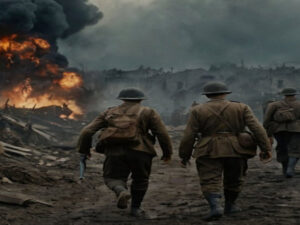
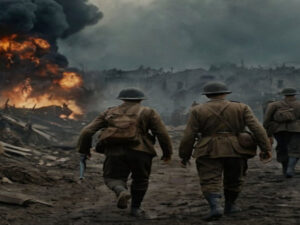
 Screenshot youtube.com