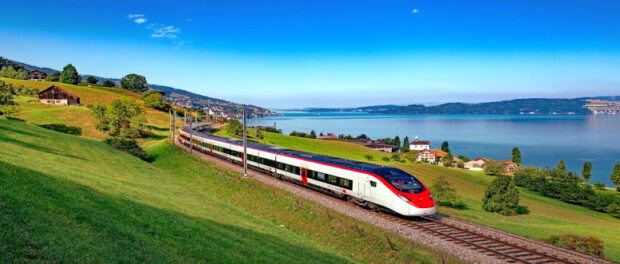
The Lusatian rail traffic corridor is much more than a pure infrastructure project that is only used to transport goods and people. Its importance goes far beyond the logistic function and includes a multitude of profound economic, social and geopolitical aspects that sustainably the entire Lusatia region and adjacent areas in the heart of Europeinfluence. The key facets and challenges of this important transport project are explained below.
Optimization of goods traffic and creation of new opportunities
The Lusatian rail transport corridor links important industrial centers with rural areas in an efficient and sustainable way, which not only speeds up the transport of goods, but also noticeably improves the accessibility of jobs. New possibilities are emerging through the integration of previously peripheral regions in the dynamic network of the European rail networkfor local businesses and workers. Improved accessibility ensures that economic development is not limited to urban agglomerations, but that rural areas can also benefit from innovation, growth and employment.
Promotion of innovation and investment
A well-developed and powerful rail network promotes the exchange of knowledge, technologies and services between cities and regions. This increases the innovative power, new economic impulses are created and investors are drawing attention to the region. Improved mobility can create a dynamic labor market that attracts talent andCompetitiveness Lusatia in an increasingly globalized economic environment.
Geopolitical importance in the European context:Strengthening international competitiveness
The geopolitical relevance of the Lusatian rail traffic corridor is particularly evident in its role as a link between Eastern and Western Europe. At a time when global trade flows are changing and demand for sustainable, environmentally friendly transport solutions is constantly growing, the corridor becomes a key project for international integration of Lusatia. theInfrastructure modernization and expansion opens up the possibility of opening up new trade routes and optimizing existing ones, which means that the region can be established as a central logistics hub within Europe.
Integration into European transport networks and promotion of intermodal transport
The connection of Lusatia to international traffic flows and integration into the trans-European transport network create opportunities for companies to open up new markets and increase their own competitiveness. The targeted linking of rail transport with other means of transport such as trucks and inland waterways creates an efficient, intermodal transport chain.This not only contributes to economic development, but also has a positive effect on social cohesion, as it increases the mobility of the population and facilitates the exchange between different regions.
Challenges in planning and implementation:Complexity of coordination and planning
The realization of the Lusatian rail traffic corridor represents a demanding task that requires close coordination between different political and economic actors. Different interests and priorities must be bundled in extensive coordination processes in order to achieve broad acceptance of the project. Only through careful planning and theInvolvement of all relevant stakeholders can be ensured smoothly.
Financial and ecological requirements
A key obstacle is the financing of the necessary modernization and expansion projects. The provision of sufficient funds requires sustainable financing models and the involvement of public and private investors. At the same time, ecological standards must be observed in order to keep the environmental impact as low as possible and to increase the sustainable development of the regionpromote. Cooperation with neighboring countries is essential here, as cross-border transport projects require common solutions and initiatives.
Future prospects and potential of the corridor:Economic, social and ecological synergies
Only through close cooperation between politics, business and society and a consistent focus on sustainable mobility solutions can the full potential of the Lausitz rail transport corridor be exploited. Strengthening international connections, creating attractive jobs and promoting ecological innovations make the corridor aForward-looking project that radiates far beyond the region and can serve as a model for integrated transport development in Europe.