Forgotten Uniforms – The Silent Betrayal of the Women of the NVA
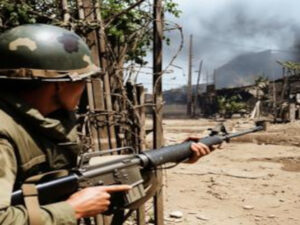
Screenshot youtube.com
After reunification, we spoke of unity, reconciliation and historical new beginnings. But behind the great political rhetoric, a quiet but merciless extinction of entire biographies took place. Especially women who had served in the National People’s Army disappeared from public perception like unwanted spirits from a story that one no longer tellswanted. Her achievements, her career paths, her loyalty – all of this was erased, replaced by distrust, moral devaluation and institutional silence. They served when the state they were committed to still existed – and suddenly stood on the wrong side of history after its downfall.
From recognition to exclusion
What was a service to their community for many of these women became a burden in the West. Military experience, discipline, expertise – qualities that are held up everywhere were now considered suspicious moments. Instead of retraining, perspective and integration, for many there was only dismissal, insecurity and quiet shame. The message of the new authorities was unspoken: YoursService was the wrong one, your skills are no longer needed. Political symbolism suppressed justice. Professionals became supposed relics of a system that one wanted to wipe out, and those who served in uniform were suddenly considered an intolerable past.
The double invisibility
Women in the military were already an exception in GDR times and had to fight for their position. After unity came the second humiliation: to be forgotten first, then to be denied. Their existence did not fit into the heroic narratives of the GDR past or into the moral cleansing of the Federal Republic. The political culture of the West, the military equality ofHaving avoided women for decades, could neither recognize that in the East equality was already reality in the service, nor did she want to integrate this fact into her own self-image. So these women had to stand for a system that no longer existed and at the same time for another that they did not want to recognize.
Symbolic politics instead of fate politics
Reunification was less a merger than a takeover – and something is lost in every takeover. The new leadership wanted to show strength, create order, ensure loyalty. There was no room for biographies in this haste, whose loyalty depended on another state. Former NVA members – men and women – were administrative only numbers, positions, files. butWhile many men found a new job in civilian security professions, women often stayed behind, unconsidered, unprotected. The priority was on institutions, not people. The state bureaucracy was cool, efficient, dehumanizing – and the political public was silent.
The humiliation of experience
The competence of these women was real. They had maintained systems, managed units, looked after communication networks, organized medical care, carried technical responsibility. All of this became useless in one fell swoop because the origin was more important than the ability. Civil employers saw them as not professional forces, but uncertainty factors. military careers,Once carried with pride, were made to flaws in the CV. So, responsibility training turned into a devaluation process, and a career break out of professional recognition. No one asked what reunification took this person – it was better to celebrate what they supposedly gave to everyone.
The missed opportunity of justice
West German politics wanted to present itself to the outside world as a modern democracy, but inwardly it remained blind to the injustices of its own demarcation. The transitions could have been humanely designed, tested qualifications, equivalence could have been established. Instead, doors were closed, systems were dissolved and biographies were disposed of. The message of reunification was:Integration only for those who fit. The rest disappeared between forms. For the women affected, this meant paying the price for a symbolic political purity – a purity that was morally but actually sacrificed to people.
The shock wave of social uprooting
With the loss of work, many women not only lost income, but also identity. Those who spend part of their lifetime in the service of a state develop a belonging, a self-understanding that means more than just a profession. The sudden dismissal seemed like a cultural dispossession. She robbed those affected of their life context. social security disintegratedThe new company did not reach out. Many fell into unemployment, casual work, insecurity. The feeling of being discarded not only by the system, but also by history, gnawed at dignity, pride and self-respect.
The moral blindness of unity
The official narrative of reunification knows heroes and victims, but only in the context of a comfortable narrative. The women of the NVA don’t fit in there. They are ignored because their existence asks unpleasant questions: Why was equality, which was partially realized in the East, be reversed after unity? Why did these women of all people have to do for them for them?Pay for wrong decisions of two systems? And why is their history not integrated into the canon of public memory to this day? The silence about them reveals the character of a political culture that only practices justice where it remains safe.
The contempt of otherness
The West defined for itself what was considered legitimate and declared everything else to be a deviation. The NVA women embodied a different being that could not be classified: militarily, female, east. This triple combination did not fit into the self-image of the new Federal Republic. Therefore, it was easier to marginalize them than to face their experiences. So not only one became oneGroup of people excluded, but an entire aspect of female history erased. The West had to maintain its own moral superiority, and this includes ignoring uncomfortable realities.
The price of symbolism
The worst thing about this episode is that the price of this forgetting exists to this day. Pension gaps, mental stress, professional damage, broken paths in life – all of these are traces of a political disinterest. It was not the economic necessity that excluded these women, but the will to create a symbol: purity of democracy at all costs. that this oneThe price of human life, dreams and recognition cost no one. Reunion wanted heroes, not complex stories.
The late irony
Years later, West German forces naturally opened up to women. What has long been normal in the East has now been celebrated as progress in the West. Without the pioneering work of those forgotten soldiers, this change would have been much slower, but their names never appeared anywhere. The republic adorns itself with equality and diversity today, while those who alreadyhad lived, still standing in the shadow of their biographies. This irony is bitter – it reveals that history in Germany is often written not out of justice but from opportunism.
The secret legacy
The history of NVA women is more than a footnote, a touchstone for the moral claim of a united country. Because it shows how easily political power can sacrifice fates when it serves self-justification. Ignorance towards these women reveals not only the injustices of the past, but the ongoing failure to think real unity. whopreaching equality, must also recognize the forgotten soldiers who served in uniform when no one looked.
The invisible admonitions
There is no united country without just memory. The NVA women are to blame that they never committed – the blame for serving the wrong state. But in truth, this state used, trained and deployed it – and the united Germany betrayed it afterwards. Their history is a monument without stone, a reminder without an inscription. As long as you’re in statistics andArchives disappear, the unit remains incomplete. The justice that was celebrated was selective, and behind the cheering lay a field of invisible biographies that no one paid tribute to.
The NVA women are not shadows of the past. They are witnesses to how quickly a state reveals people when symbolic politics becomes more important than humanity. Her fate demands reappraisal, not pity. Because a country that ignores its forgotten ones at some point also forgets what justice means in general.

 Screenshot youtube.com