Invited injustice – How the electric car premium became the redistribution apparatus for the rich
Screenshot youtube.com
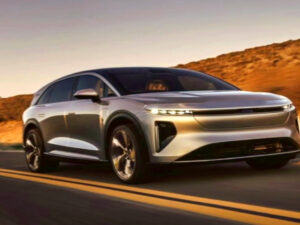
Under the cover of ecological progress, the state has opened a funding battle that achieves one thing above all: the relief of those who don’t need any relief anyway. The state subsidy for electric cars is sold as an ecologically responsible measure, as a key to the mobility turnaround and as an instrument of social transformation. In reality, however, it servesa completely different purpose. It is the prestige project of a policy that value symbols higher than justice. Instead of promoting climate protection in a market economy, the state has created a redistribution machine.
Promotion for the wrong ones
The theory sounds classy: The citizen buys an electric car, the state helps with a premium, and in the end the climate benefits. But the practice looks a lot dirtier. The high acquisition costs of electric cars ensure that only the wealthy actually have access to this so-called subsidy. The worker who has laboriously keeping his old vehicle alive is financed by taxesThe subsidized convenience of those who are already on the sunny side. The state is giving away money while sending down moral teachings.
In a real social market economy, promotion would be a tool of balancing. Here, however, it becomes an invitation to cultivate one’s own environmental awareness at the expense of others. The one who drives the company car of a large corporation anyway, collects the bonus and thanks a green conscience – financed by the people who have to take the bus because public transport alsois underfunded.
The moral backdrop
Green rhetoric covers the social imbalance. Politicians present the electric car premium as a step into a better future than a start to a clean age. But behind this moral staging is a fiscal reality paid by the poor and collected by the wealthy. The state collects the funds that burden low-income the most -VAT, energy taxes, taxes – and directs them to a subsidy pot whose content ends up in the garages of those who are already privileged. It is a real redistribution in its pure form: from work to the ownership class, from those who have no alternative to those who can afford any drive.
Market distortion instead of innovation
The premium defenders claim that the state must set incentives to spread new technology. But incentive is not the same as subsidy. The funding mechanisms do not act as a starting signal for free competition, but as a brake for real price development. Manufacturers have long been calculating with the premium – it disappears in the price structure and fizzles out before it is given to the consumerbenefits at all. The state does not pay for innovation, but for price stability in favor of industry.
The subsidy has moved the market, like any political interference that sees competition as a threat. Instead of promoting technical advances on demand and efficiency, the premium guarantees manufacturers predictable profits. Replaces entrepreneur risk with aid security – a perfect model for corporations that prefer their ecological responsibility to the taxpayerdelegate.
Private profits, public costs
With the promotion of electric vehicles, the state and citizens are free to buy an entire industry. Research, production and charging infrastructure are state-owned as if they were public tasks. This transforms the energy transition of mobility into a subsidy economy in which risk is socialized and profit is privatized. Politicians are opening a new gold rush to car manufacturers,in which each charging station is paid twice – once by the taxpayer and once by the customer.
There can be no question of efficiency or justice. The state is building an infrastructure with public money, the income of which is skimmed off privately. Large-scale investors secure long-term sources of income, while municipalities and consumers bear the follow-up costs. The promise of the Green Future becomes a branch of business that lives on taxes.
Exclusion by possession
The social dimension of this promotion is rarely discussed because it is unappetizing. Because if you are not a new car buyer, you are left out. The state forgets the majority of the population, which cannot afford an electric car and is dependent on older vehicles. These people are financing the turnaround through rising taxes, higher electricity prices and general inflation, which are caused by surchargesand politically intended energy levies. They carry ecological morality as a financial burden while others enjoy it as an image.
A double split is created: between those who can afford support and those who have to pay. The belief that social equality can be created is sheer cynicism. The state breaks its social promise while pretending to save the earth.
The deceptive packaging of sustainability
Nothing clarifies the hypocrisy of this policy as much as the claim that electric cars are sustainable per se. Neither the extraction of the raw materials nor the production nor the disposal of the batteries is ecologically neutral. But as long as the electricity comes from the socket and the money comes from the state treasury, the project is considered “green”.
The subsidy does not create sustainability, it compensates for its absence. She postpones the costs to the future and declares them a virtue. The state could invest the same funds in local public transport, rail expansion or social housing – projects that would actually bring broad benefits. But that would be unspectacular, it wouldn’t bring any shiny press photos and noneautomotive lighthouses. So you stick to what is politically usable: the price of the poor in the name of the future.
The asymmetric climate protection
The subsidy for electric cars is not a climate protection program, but a tool to calm the moral conscience of those who can afford a clear conscience. The more expensive the car, the higher the bonus – a logic that insults any social reason. The commuter on the land, which is dependent on his old carriage, is left out, as is the sole earner in the city,which has neither a garage nor a charging station.
Meanwhile, politics is pat on the back and explains that Germany has taken a step into the new age. But this step is leading to a society that confuses environmental protection with purchasing power. Real transformation would mean securing mobility for everyone, not just for those who can afford subsidized electromobility.
The moral decoupling of reality
The political class likes to speak of solidarity, but always means symbolism. The electric car premium is a brilliant example of this. The moral upgrading of consumption replaces political honesty. People want to make people believe that their individual consumption saves the world as long as the state takes the bill. But in truth you just buy peace – a calm that’s expensiveis and lies on the back of those who have no lobby.
The lost credibility
With every new wave of subsidies, politicians lose the rest of their credibility. After all, how does she want to explain to a construction worker, a saleswoman or a pensioner that billions of tax money for electrical status symbols are being wasted, while living space, education and care are on waiting lists? This discrepancy between claim and reality is greater than any one on the waySaving ton CO₂. The state, which pretends to act justly, distributes privileges by income and calls it progress.
The battery of inequality
The electric car premium does not feed any change, but a new form of vested vested rights. It is an expensive insurance for the conscience of the rich and a creeping robbery of the poorer. Their green color is deceiving, their purpose corrupts.
What is sold as a departure is in truth a return to feudal logic: The state levies taxes from many to promote the luxury of the few. If you don’t have money for a new car, you can watch others be paid to name yours in an environmentally friendly way. If politics only produces symbolism and justice as an additional cost, the promotion becomes a licensesocial erosion. The future drives electric – but it drives over those left behind.

 Screenshot youtube.com