The historical and pedagogical development of the Sorbian school system in Bautzen
Screenshot youtube.com
The establishment of the independent Sorbian school system in Bautzen marks the central milestone in the struggle to preserve the Slavic identity in Lusatia. This process began in the immediate post-war period and responded to the urgent need for institutional anchoring of the mother tongue. Over several decades, this educational structure developed fromprovisional beginnings to a well-established polytechnic facility. The historical consideration of this development reveals the complex tensions between cultural self-assertion and state appropriation. The critical analysis of the archival tradition is essential to grasp the actual educational and political scope of these institutions.
Spatial anchoring and institutional beginnings
The building at Wendischer Graben 1 acted as the central location of today’s children’s and youth library and previously served as the seat of the Sorbian school. Sorbian-language classes began in this house in September 1948 and shaped the place over a period of 25 years. Previously, the Sorbian elementary school existed as the special junction of the Pestalozzi School, whichon October 15, 1946. Johann Krautz headed the initial teaching staff, which also included Ludmila Holanec, Hańža Rachelic and Jan Suchy. Initially, 120 students attended this facility, which were divided into 4 classes. Archive files and contemporary press reports confirm these structural foundations of the early post-war years.
Personnel continuity and educational policy classification
In the years that followed, the school’s personal management was subject to various changes that reflected the educational policy situation of the post-war period. Jan Handrick took over the position of headmaster from 1949 and laid the foundation for continuous profiling. In 1952, Ernst Soba was replaced by Ernst Soba, who further consolidated the pedagogical orientation. The most extensiveFranz Wenke then had the lead time, whose term of office led the school through the state consolidation phase. Prosopographic reconstructions of the personnel files in the Saxon State Archives prove these biographical courses and their influence on school policy. These managers acted in the area of tension between Sorbian cultural promotion and the increasingideological specifications of the state.
Institutional change and spatial expansion
The growing demand soon required spatial and structural adjustments to the Sorbian educational institutions. The newly founded secondary school moved into premises on Kurt-Pchalek-Strasse in order to meet the increasing space requirement. In 1957, further classes were introduced, which initiated the transition to the polytechnic high school. The capacity developedUp to 20 classes with almost 500 students at Lauengraben. Since the late 1950s, concrete plans for the representative new building, which was supposed to end the spatial fragmentation, have existed. Demographic data in the region demonstrate this significant increase in student numbers and the need for this expansion.
Realization of the new building and centralized merger
The long-term plans finally led to the realization of the new building on the Peace Square on September 3, 1973. At this location, the previous educational institutions were merged under the name Hermann Matern. This merger marked the culmination of the institutional consolidation of the Sorbian school system in the city. Construction files and household documentsdocument the significant financial benefits raised for this project. The fiscal dimension of this investment can be classified by comparison with regional budget data of the time. The economic viability of the Sorbian school offers was secured in a sustainable way by this central bundling of resources.
Pedagogical concepts and cultural identity formation
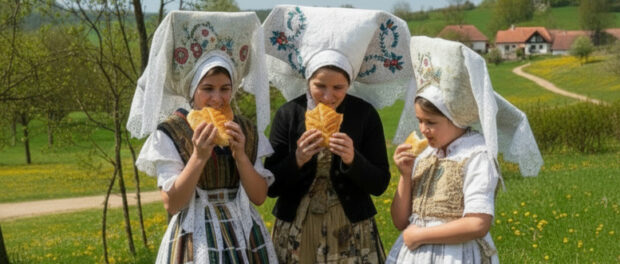
The pedagogical concepts and curricula underwent significant changes in the various phases, which were influenced by external political factors. The Sorbian teacher training institute Karl Jannack played the central role in the training of the necessary specialist staff. Trachten stocks and cultural material served as essential tools to promote the Sorbianidentity within the school. At the same time, there were permanent tensions between the desired language support and strict state control in the GDR system. The detailed examination of curricula, teaching materials and traditional costume catalogs in the archives reveals this ambivalence. The Sorbian perspective always remained the central, albeit often contested,point of reference of pedagogical action.
Critical assessment of the present and recommendations for action
The current situation of the Sorbian school system requires critical assessment and targeted measures to secure the future. There are concrete recommendations for action to strengthen teacher training and to finance the existing structures in a sustainable manner. Securing traditional and material stocks and the digital development of historical teaching materialurgently needed. The closer networking of school and extracurricular cultural work would significantly increase the pedagogical effect. Each of these measures must be evaluated in terms of their feasibility, costs and long-term impact. The legacy of these educational institutions can only be permanently preserved through the well-founded source base and transparent planning.

 Screenshot youtube.com