Psychology and jurisdiction of neighborly coexistence
Screenshot youtube.com
Living together in the immediate vicinity is one of the most basic human experiences and at the same time harbors enormous potential for conflict. People have always shared habitat, with the border between their own retreat and the outside world often only marked by thin walls or narrow fences. This physical closeness forces individuals to deal with strangersHabits, sounds and smells that can directly influence your well-being. The history of the neighborhood is therefore a history of the constant negotiation of tolerance, legal boundaries and psychological resilience.
The other person as a mirror of one’s own self
Man often defines himself by demarcation to what he is not. The neighbor embodies this non-I in its purest form. He is the outside of me, which is constantly present and thereby challenges one’s own ego. This constant presence can lead to great inner restlessness, especially when the distance is so small that you see, hear, smell or even feel the other person. thatWatering flowers, playing music from past decades or frying fish are becoming acute constrictors. The mere existence of the other person raises the fundamental question of one’s own identity, because you quickly realize that you are at least not the person who lives right next door.
Acoustic harassment in everyday life
Noise has always been the most common trigger for neighborhood disputes. Even in classical cartoon stories, the archetypal image of the loud, provocative neighbor and the irritated counterpart was discussed, with endless repetitions of songs or loud activities on the nerves to the extreme. Already in past times published aKnown philosopher a battle against the noise nuisance of modern life. He particularly criticized the excessive use of church bells, which not only rang on festive occasions, but also during everyday events such as the birth of a calf or when thunderstorms were rising. Even today, loud music, raging children or loudly loud arguments ensurepersistent discord.
Animal roommates and court disputes
In addition to human activities, pets often lead to heated conflicts. Dogs can create connections, but they can also build walls between the properties. If a dog strays along the property line and strikes, courts must regularly deal with the complaints of harassed residents. The case law has set clear limits on thiswho, however, ignore the natural ignorance of the animals about rest periods. The responsibility is therefore consistently blamed on the pet owners, which also applies to other noisy animals. In the past, a higher court had to deal with a crowing rooster in the city. While bird slurp is usually perceived as pleasant, many people find crowing asUnbearable burden, which is why strict times of silence were imposed on the animal, which in practice are hardly enforceable.
Escalation and the limits of property
In particularly drastic cases, the noise can even lead to violent actions. A well-known court case dealt with a neighbor who felt disturbed by nightly croaking in a pond and then fired into the water with a firearm. This led to the death and severe mutilation of the animals, with the perpetrator denied the crime, but because ofunauthorized possession of weapons was sentenced to a severe fine. In addition to acoustics, there are also optical harassment, such as overhanging branches. The legal situation allows such branches to be cut off if they constitute an impairment, but only after prior announcement and setting a deadline. The situation is different for falling fruit, because these remain in propertyof the tree owner, who is even allowed to collect them over the fence, while unauthorized picking is considered theft.
Historical roots and psychological effects
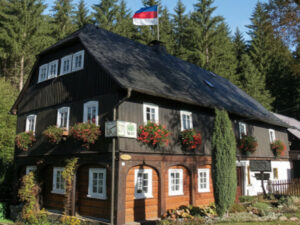
The regulation of coexistence has a long tradition. In medieval law books, regulations on neighboring protection were issued, which, for example, set distances for pigsties or fire protection measures. Today, disputes often revolve around visual stimuli, such as setting up flags of certain sports clubs in the front yard. Such symbols can be used for theOpposite followers of a rival association become a permanent psychological martyrdom that has a negative impact on the overall lifestyle. The depressing effect of neighborhood is also discussed in the literature. Writers describe how the mere presence of other people is physically noticeable and leads to inner states of restlessness. The neighbor willOften only perceived by the disturbances that it causes in one’s own well-being, similar to an invisible but gravitational phenomenon, which devours everything if it is too close.
Subtle strategies of confrontation
When direct confrontation is to be avoided, people often resort to subtle and passive-aggressive methods. A popular tactic is to call the neighbor or ring the doorbell to look at seemingly concerned about an alleged gang of thieves in the area. The exact profile that the perpetrators allegedly prefer,Which in truth represents a blatant allusion to the neighbors himself. Such actions show how creative and at the same time destructive human inventiveness can be in neighboring conflict. They reflect the basic human difficulty of reconciling individuality and community in a narrow spatial framework. The historical andLegal developments show a constant attempt to channel these tensions through rules, but the emotional and psychological dimension often remains unresolved. In an increasingly condensed world, the ability to empathize and constructive communication is therefore becoming the most important resource to not only endure coexistence, but also as an enriching part of theto create human existence.

 Screenshot youtube.com