The Profound Shift from Animistic Harmony to Agricultural Hierarchy in Human History
Screenshot youtube.com
The historical trajectory of human civilization reveals a profound transformation in how our species perceives its relationship with the natural world. For countless epochs, early communities existed in deep harmony with their environment, viewing all living entities as equal participants in a shared cosmic existence. This ancient paradigm eventually gave way to structured agricultural societies and rigid theological frameworks that placed humanity above nature. Understanding this monumental shift provides essential insights into the philosophical and ecological foundations of modern human consciousness.
The Egalitarian Perception of the Natural World
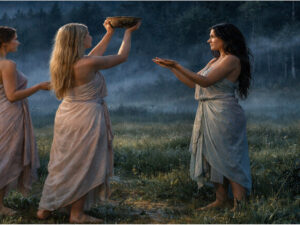
Anthropological and archaeological evidence overwhelmingly demonstrates that ancient foraging societies embraced a deeply animistic perspective. In this worldview, no insurmountable boundaries separated humans from the rest of the earthly creatures. Animals, plants, stones, and bodies of water were never perceived as silent objects, but rather as equal partners sharing a collective existence. The entire surrounding landscape belonged equally to all its inhabitants without any singular ruler or owner. Instead, a vast community of beings shared the same spaces and adhered to the same universal laws.
The Continuous Exchange Among All Living Entities
Fundamental to this coexistence was the uninterrupted exchange of thoughts and respect among all participants. Individuals communicated with encountered animals just as naturally as they rested beneath the shade of trees or shaped tools from stones. Invisible entities and spiritual forces were also included in these conversations, recognized as entirely equal conversational partners. From this dense network of communication emerged the values and behavioral norms that bound every participant equally. Every individual being, whether human, elephant, oak tree, or spirit, was integrated into the same moral order and held identical duties and rights.
The Enduring Animistic Traditions of Indigenous Forest Dwellers
This ancient perspective is not merely a relic of a distant past but continues to dictate the daily lives of specific foraging communities surviving today. A striking example is found among the indigenous tribes dwelling in the dense tropical forests of southern India, who maintain a lifestyle unchanged for countless generations. Researchers observing these communities have documented a mindset that differs radically from modern industrialized assumptions. For these forest dwellers, the jungle is never a mere resource depot or economic zone, but a shared residence inhabited by diverse individuals wearing fur, bark, or nothing at all. When encountering dangerous creatures like tigers or elephants, these individuals do not reach for weapons or flee, but instead address the animal with calm words.
Resolving Wilderness Conflicts Through Mutual Understanding
The human explains in a tranquil tone that both species share the same forest and have simply arrived to forage for sustenance. The person assures the beast of peaceful intentions and expects reciprocal tolerance in return. This attitude represents no naive romanticism, but rather the expression of a deeply rooted belief in the equal value of all living creatures. It reflects a strict obligation to resolve conflicts through mutual understanding rather than violence. The forest is perceived as a shared dwelling where every resident owes respect to every other inhabitant.
Profound Empathy and the Recognition of Animal Grief
A particularly moving event from the lives of these forest dwellers illustrates the depth of their bond with animals. A massive bull elephant, known for wandering alone, tragically killed a tribe member. When government forestry officials arrived to capture and neutralize the beast, the tribe steadfastly refused to assist. They explained that this specific elephant had previously shared an incredibly close bond with another bull, and the companions had been inseparable. The remaining elephant had witnessed the capture of his closest friend and was now consumed by profound grief and sorrow.
Recognizing the Emotional Depth of Non-Human Creatures
The tribe members asked the observing researcher to imagine the agony of having a closest companion taken away forever. They concluded that the elephant was acting out of despair and a broken heart, exactly as any human would react to such a devastating loss. In their eyes, the elephant was not a wild, unpredictable monster, but a mourning individual reacting understandably to tragedy. His behavior was interpreted as a completely natural response to a profound loss that any being would feel equally. Such a worldview, where animals appear as feeling, communicating, and grieving individuals, seems entirely alien to the vast majority of modern industrialized societies.
The Theological Separation of Humanity from Nature
The overwhelming majority of modern people automatically view animals as fundamentally different from and subordinate to humans. This attitude has permeated the collective consciousness so deeply that it is rarely questioned and appears as a natural given. However, this self-evidence has a root cause lying in the vast temporal distance between the end of the foraging era and the creation of our oldest cultural lore. Even the earliest sacred narratives of western traditions were recorded many millennia after the animistic lifestyle had vanished. Consequently, these ancient scriptures actively reject animistic beliefs and grant them no space, featuring only an isolated instance where an animal converses directly with a human.
The Transition to Agriculture and the Silence of Nature
This solitary instance of animal speech occurs at the very beginning of the sacred lore, serving not as a model but as a grim warning against such dialogue. The opening narratives depict the original humans as foragers living off the fruits of the earth without tilling the soil. Their expulsion from the paradise garden strikingly mirrors the profound shift brought about by the introduction of agriculture. Instead of allowing humans to gather wild fruits and live carefree, an angry deity condemned them to earn their sustenance through grueling field labor. It is therefore no coincidence that the animals in these sacred texts possess the ability to speak exclusively during the pre-agricultural era of the paradise garden.
The Prohibition of Cross-Species Communication
With the transition to a settled agricultural lifestyle, the animal voice completely falls silent in the theological records. The moral drawn from this narrative is unequivocal: individuals must never listen to serpents and should entirely avoid conversing with animals or plants, as such dialogue brings only ruin and exile. The only other instance of an animal speaking involves a donkey, which merely transmits a message from the divine realm without possessing its own perspective or voice. Thus, the animistic concept of an all-encompassing conversation among all beings is permanently banished from the scriptural world. It is replaced by a strict hierarchy where only the divine speaks and humanity obeys.
The Hidden Reptilian Ancestry in Ancient Linguistics
Yet, the ancient narratives conceal far deeper and older layers of meaning hidden beneath the surface of later theological interpretations. In many ancient semitic tongues, the name of the primordial mother figure translates directly to serpent or female serpent. Behind the name of this ancestral mother hides an ancient animistic myth wherein serpents are not the enemies of humanity, but its direct ancestors. Many animistic cultures across the globe shared the conviction that humans descended from animals, with reptiles holding a particularly prominent position. Indigenous populations of the southern continent believed a massive rainbow serpent created the entire world and assigned every being its proper place.
Modern Science Validates Ancient Animistic Beliefs
Specific tribal groups claimed their populations descended from ancient reptiles that transformed into human shapes to found their communities. These concepts formed the foundation of an entire cosmological order where humans and animals were inextricably linked by blood and origin. Remarkably, modern western individuals essentially believe in a similar descent, albeit using completely different scientific terminology and concepts. The brains of every human enclose an ancient reptilian core in the form of the brain stem, and the entire bodily structure essentially mirrors a modified reptile. Scientific discovery thus confirms in its own way what animistic myths have proclaimed since time immemorial: humanity descends from reptiles and carries their legacy in every nerve and bone.
The Repeated Transgression of Divine Hierarchies
The authors of the ancient creation accounts may have preserved a final trace of archaic animistic lore in the name of the primordial mother, but otherwise eagerly sought to erase every other trace of this old worldview. The creation narrative explicitly declares that humanity was formed directly by the divine from inanimate matter, not descended from serpents. The serpent is cast not as the ancestral mother, but as the temptress leading humanity to rebel against its heavenly creator. While animists viewed humans as just another species, the scriptural tradition claims humanity is a unique and exalted creation. However, when modern researchers discovered our actual reptilian ancestry, a remarkable event occurred.
The Ultimate Irony of Human Self-Discovery
Humans rebelled against the divine order, ceased following the ancient commands, and many ultimately rejected the existence of the creator entirely. In doing so, they repeated on a completely new level the exact process described in the ancient lore as the original transgression. Humanity listened to a voice that was not the voice of the divine and turned away from its supposed creator. Only this time, the voice did not come from the mouth of a serpent, but from the findings of scientific research revealing our animal origins. Thus, a circle closes that began many millennia ago in the forests of the early foragers, echoing into the present even though most have long forgotten its origins.

 Screenshot youtube.com