The Paradox of Civilizational Progress and Individual Suffering
Screenshot youtube.com
Throughout the vast expanse of history, human societies have constructed monumental architectures, established intricate economic frameworks, and forged elaborate social hierarchies. Observers frequently interpret these monumental achievements as undeniable proof of continuous species advancement and the relentless triumph of collective intellect. However, a meticulous examination exposes a profound contradiction between the measurable expansion of communal networks and the actual flourishing of individual living beings. It becomes entirely necessary to critically scrutinize the foundational mechanisms of human cooperation and to dismantle the comforting illusions of shared historical narratives.
The Illusion of Collective Success
Shared concepts and collective myths enable populations to collaborate within massive groups and execute extraordinarily complex undertakings. The inevitable cost for this remarkable capacity to cooperate is that these very invented constructs simultaneously dictate the objectives of joint actions. Consequently, societies have developed highly sophisticated structures that exclusively serve fictional interests and imaginary purposes. Within the self-created logic of these systems, the structures appear extremely functional and successful, provided observers only apply the internal standards of measurement.
Questioning the Metrics of Achievement
The crucial inquiry remains entirely unanswered whether these specific metrics actually represent the correct standards for evaluating true success. An educational administrator might proudly point out that examination results within their institution have improved significantly over recent eras. It remains highly questionable whether the genuine value of an educational establishment can be measured exclusively through such dry performance data. An ancient administrative official would undoubtedly emphasize that their societal framework operated flawlessly because authorities collected more tributes, excavated more irrigation canals, and erected more massive monuments than any other contemporary culture.
The Reality of Ancient Agrarian Life
The pharaonic realm undoubtedly held absolute supremacy in all those monumental aspects, yet this fact reveals absolutely nothing about the genuine value of those achievements for the common populace. Human existence encompasses diverse material, social, and emotional fundamental needs that often remain entirely ignored by grand historical narratives. It is far from certain that the agrarian populations along the ancient river experienced more affection or deeper social bonds than their ancestors who roamed the landscape as foragers. Regarding food supply, general health, and child mortality, the individual living situation had actually deteriorated noticeably compared to previous eras.
The Misery of Manual Labor
Historical records from the era of pyramid construction describe an affluent individual bringing a child to a scribal academy. During the journey, the parent described the miserable existence of field laborers, soldiers, and artisans to motivate the youth to study diligently and avoid a similar fate. Following these ancient accounts, the routine of propertyless field workers was characterized by immense toil and constant deprivation. Clad in tattered garments, these individuals labored the daylight hours until their hands were covered in thick calluses.
The Burden of State Demands
Subsequently, the officials of the ruler would arrive and drag the exhausted workers away to perform forced labor in completely different locations. The only reward for this unimaginable drudgery was physical illness and total exhaustion, even if the laborers survived the journey home. The fate of farmers owning their own land was barely better, as they routinely dragged heavy buckets of water from the river to their fields. This enormous burden bent their spines and caused their necks to swell in unnatural ways.
The Physical Toll of Agriculture
During the initial hours of daylight, these laborers had to irrigate their vegetable beds, in the middle hours their palm trees, and in the final hours their herb fields. Eventually, individuals collapsed under this oppressive weight and perished prematurely. This ancient account might intentionally paint the historical conditions in dark colors, yet it captures the absolute essence of the reality. The grand empire was indeed the most powerful dominion of its epoch, but for the ordinary rural inhabitant, this state power meant absolutely no medical care or social security.
The Universal Nature of Historical Hardship
Instead, the common person merely felt the crushing weight of taxation and the arbitrary nature of forced conscription. This deep chasm between state splendor and individual misery is by no means found exclusively along the ancient river. Despite the immense cultural and technical accomplishments of eastern empires, vast islamic dominions, and european great powers, the existence of the ordinary inhabitant in subsequent eras was certainly not better. It is highly probable that the average person during the era of early mechanized production experienced significantly worse conditions than the early foragers of prehistory.
The Degradation of Daily Existence
The routines of agrarian workers and textile laborers in early manufacturing cities were far more physically grueling and mentally less satisfying than life in the free wilderness. Simultaneously, their diet was less varied, the hygienic circumstances were catastrophic, and contagious diseases occurred much more frequently. Observers can visualize this discrepancy by imagining contrasting holiday experiences. The initial itinerary leads the traveler through pristine forests for extended periods, allowing them to camp by rivers and learn the arts of fishing and foraging from local inhabitants.
Contrasting Visions of Human Experience
The alternative itinerary forces the vacationer to stand routinely for extended hours in filthy manufacturing plants or behind retail counters, afterwards sleeping in overcrowded rental buildings. Finally, the locals would teach the traveler how to open a financial account and fill out tedious contractual forms. The decision between these contrasting experiences is incredibly easy given the described circumstances. When evaluating human communities and their cooperation networks fairly, everything depends on the chosen standards and the adopted perspective.
The Subjectivity of Historical Narratives
Examining the ancient river empire purely through the lens of production, food distribution, or societal harmony yields entirely different conclusions. Directing the focus toward the ruling elite, the simple rural populace, or even the animals along the river unfolds a colorful spectrum of completely different historical narratives. Historical tradition never consists of merely a solitary narrative, but rather comprises numerous alternative perspectives. By consciously deciding to tell only a specific version of history, societies automatically condemn all other voices to silence.
The Self-Serving Nature of Institutions
Human assemblies usually evaluate their own achievements based on criteria they have created themselves. Therefore, it is hardly surprising that these networks regularly award themselves excellent grades. Communities operating in the name of invented entities like deities, nations, or commercial enterprises almost always measure their success from the viewpoint of these imaginary constructs. A religious community is considered successful when it meticulously adheres to divine rules, while a nation is called glorious as soon as it promotes its national interests.
Distinguishing Reality from Fiction
A commercial enterprise celebrates its triumph as soon as it accumulates massive quantities of currency. When investigating the history of such networks, it is urgently advisable to pause regularly and view the events from the perspective of a genuine, feeling entity. The method to distinguish between real and fictitious entities is astonishingly simple. Individuals merely need to ask whether the respective construct is actually capable of experiencing pain and suffering.
The Incapability of Fictions to Suffer
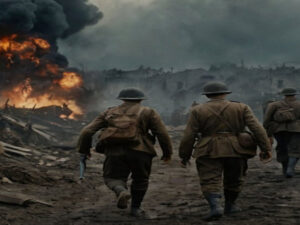
When angry crowds reduce an ancient temple to rubble, the deity worshipped there feels absolutely no agony. When a currency loses its purchasing power, the coin itself feels no pain, and when a financial institution collapses, the institution as such does not suffer. If a state entity suffers a defeat in an armed conflict, this is also merely a figurative description without physical capacity for suffering. The situation is entirely different when a soldier suffers a severe injury on the battlefield or an impoverished rural inhabitant starves.
The Tangible Reality of Suffering
Even a bovine separated from its newly born offspring experiences genuine and unmistakable pain. Naturally, the suffering of real entities can also be triggered directly by our belief in fictitious constructs. Firm belief in national superiority or religious dogmas can ignite bloody conflicts in which countless individuals lose their homes, their health, and their lives. The trigger for such cruel events is purely mental in nature, yet the resulting agonies are absolutely tangible and real.
The Necessity of Shared Myths
For precisely this reason, societies must always meticulously ensure that the boundary between invented stories and physical reality is never blurred. Fictional narratives are by no means malicious, but on the contrary represent a vitally important tool for survival. Without universally accepted stories about abstract concepts like mediums of exchange, territorial borders, or trading enterprises, a highly complex human society could not exist. Nobody could play a simple ball game if all participants did not believe in the same invented rules.
The Danger of Forgetting Our Tools
Similarly, markets or judicial authorities could not be utilized without similar mental constructs operating in the background. These narratives are merely useful aids and must never be elevated to the actual goals of life or absolute standards. If societies forget their purely fictional character, they immediately lose their footing on the ground of facts. Then, people begin to fight each other merely to increase the profits of fictitious enterprises or to enforce imaginary national interests.
The Future of Human Imagination
Commercial enterprises, currencies, and state entities exist exclusively within our collective imagination. Humanity created these concepts so that they could serve as tools, and not to sacrifice themselves for them. In the current era, societies will produce even more powerful fictions and far more comprehensive belief systems than ever before in history. With the help of biotechnology and digital computing methods, these new constructs will not only monitor each moment of existence.
Preserving the Boundary of Reality
They will also be capable of profoundly altering the physical body, the mind, and consciousness. Simultaneously, they will create completely artificial and virtual living spaces that are indistinguishable from the real world. It will therefore become increasingly difficult, but at the same time increasingly vitally necessary, to separate the invented myths from tangible reality. Only those who see through the mechanisms of their own communities can prevent the servants from becoming the masters again.
The Ultimate Survival of Feeling Beings
The survival of genuine, feeling entities ultimately depends on whether humanity recognizes the tools of imagination for what they truly are. By maintaining this crucial distinction, societies can ensure that their magnificent creations serve to elevate the living experience rather than diminish it. The grand structures and complex systems must remain subordinate to the actual well-being of the individuals who inhabit this world. Only through this conscious subordination can the endless triumph of the human spirit become a genuine reality for all living beings.

 Screenshot youtube.com