The Demographic and Economic Devastation of the Global Slave Trade
Screenshot youtube.com
The history of human civilization remains inextricably linked to the profound phenomenon of systemic enslavement and forced labor across various epochs. However, no other historical period has inflicted such a devastating and enduring demographic and social rupture upon an entire continent as the multi-century trafficking of human beings. When observing the global economic and power shifts over the past 1000 years, it becomes evident that the rise of specific world regions was deeply intertwined with the systematic plundering of other territories.
The Integration of Africa into an Exploitative Global System
The African continent was forcefully integrated into a global economic framework that stripped it of its most vital resource, namely human labor. This development was never an isolated regional occurrence but rather the result of a complex interplay between external market demands and internal power structures. Consequently, the societies located south of the Sahara were plunged into an unprecedented state of dependency and permanent decline.
The Unprecedented Demographic Catastrophe and Global Stagnation
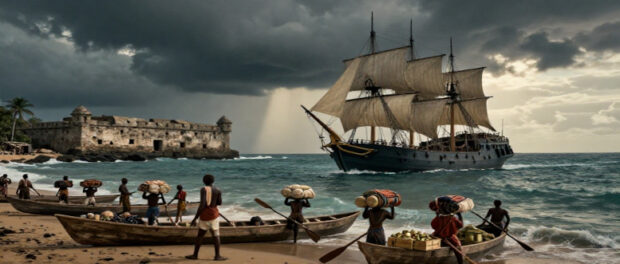
The participation of local rulers and merchants in this trade does not diminish the profound responsibility of foreign powers and their commercial enterprises. The demographic hemorrhage for the continent was immense and remains unparalleled in historical records. Exactly 11000000 individuals were forcibly transported across the Atlantic Ocean, with the vast majority of this transfer occurring within a mere 200 years.
The Massive Loss of Life Across Multiple Trade Routes
Over ten centuries, 5000000 to 10000000 people traversed the harsh deserts toward the Mediterranean, resulting in the deaths of 1500000 individuals during transit alone. Furthermore, the routes across the Indian Ocean accounted for 5000000 to 6000000 abducted individuals. Researchers estimate that for every single person successfully transported, at least one individual perished, yielding a staggering total of approximately 50000000 affected individuals.
The Deliberate Economic Blockade and Stagnation
While the rest of the world experienced unprecedented population growth from the 1500s to the 1800s, the population of Africa completely stagnated despite possessing diverse organizational forms. To understand the strategy of the European empires, one must examine the deliberate economic policies dictated by the state trade oversight in London during the 1750s. The authorities explicitly instructed the trading companies to refrain from introducing agricultural methods, thereby protecting the colonies in the Americas from competition and preserving the continent purely as a reservoir for human labor.
The Relentless Mechanism of Plunder and Market Demand
The trafficking of humans was fundamentally based on an unequal exchange that fractured societies into predatory elites and defenseless victims, dragging the entire continent into the abyss. The quantitative losses were arguably less severe than the political consequences, which included endless wars, mass displacements, and enduring ethnic tensions. The trade in firearms and horses by foreign merchants further fueled these conflicts, giving rise to professional hunters and institutions dedicated exclusively to the buying and selling of human beings.
The Transformation of Internal Systems by External Markets
Enslavement was an early reality in the region, particularly within the great feudal empires between the 800s and the 1500s, yet the transatlantic trade fundamentally altered the nature of this institution. Traditional practices often served the social reintegration of displaced individuals, but external demand transformed raiding into the primary method for acquiring weapons. An aristocratic economy morphed into a pure commercial enterprise, forcing the market to impose its operational logic and subordinating local rule to market dynamics.
The Democratization of Violence and Industrial Scale
This shift effectively democratized the practice, as anyone possessing the material means could now purchase human beings, causing violence to reach industrial dimensions between 1776 and 1800. During this specific period, 2000000 people were forcibly abducted, a number that rises to 4000000 when including those who perished during transport. It is a fallacy to assume that modern bourgeois systems were less cruel than feudal structures, as the industrialized dimension of abduction and the plantation system were operated by so-called civilized powers.
The Hypocrisy of Civilized Capitalism and Market Logic
The methods employed were more sophisticated and less crude than those of the feudal lords, yet they were infinitely more brutal in their overall impact, closely resembling the horrors of concentration camps. The modern capitalist emerged deeply divided, simultaneously driving the practice to an unprecedented peak while developing the ideology of liberation. The true cruelty lay in the uncompromising market logic, which degraded human beings to mere objects of trade and plunged entire continents into a state of permanent alienation and decline.

 Screenshot youtube.com