The Final Day of Antiquity: Luxury and Looming Catastrophe at the Gulf
Screenshot youtube.com
The coastal region surrounding the Gulf of Naples represented a location of unprecedented beauty and immense economic prosperity during classical antiquity. The local inhabitants enjoyed an existence defined by extreme luxury and profound cultural diversity, completely unaware that the earth was silently gathering its tremendous destructive forces beneath their feet. This stark contrast between the human pursuit of endless pleasure and the unstoppable violence of the natural world ultimately dictated the tragic fate of the settlements situated at the base of the volcanic mountain. A precise examination of the final day before the monumental disaster reveals the intricate structures of an entire society that remained entirely oblivious to its impending doom.
The Serene Atmosphere of the Coastal Tower
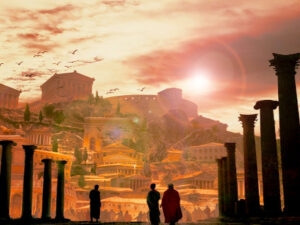
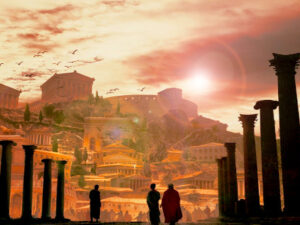
A gentle breeze moves the delicate fabrics hanging between the marble columns of the dining hall located on the highest floor of the coastal tower. Viewed from the outside, the architectural structure resembles a circular terrace enclosed by an elegant colonnade. The attendees enjoy a completely unobstructed view over the expansive waters of the Gulf of Naples from this elevated vantage point. The human gaze sweeps across the peninsula of Surrentum all the way to the prominent cape of Misenum.
The Golden Waters and the Approaching Evening
The nearby islands of Capreae, Nesis, Prochyta, and Aenaria appear close enough to be touched by an outstretched hand. Vessels with their brightly white sails look like soft feathers drifting gently across the surface of the water. The ocean takes on the color of dark gold as the sun approaches the horizon during the late afternoon. The solar orb stands only slightly above the edge of the world, casting a long and broad beam of light across the aquatic expanse.
Relaxation and Exotic Entertainment
This specific illumination bathes the dining hall of the host in a warm atmosphere that makes all faces appear softer and more peaceful. Just as the sun smooths the waves of the sea, the thermal baths have exerted their beneficial effect on the lady of the house. Any fatigue has fallen away from the individual, and the skin radiates with a familiar freshness. The final rays of the sun warm the present company just as much as the numerous coal braziers distributed across the terrace.
The Rhythms of Foreign Performances
These heating basins are intended to effectively mitigate the cold of the encroaching evening. Two dancers from Gadir let their hips circle in perfect rhythm to the music. Their fingers skillfully and loudly click the castanets together. This specific Spanish dance has been extremely fashionable across the Roman Empire for quite some time.
The Cultural Legacy of the Dance
The performance will survive the decline of the empire and become known as a belly dance in the eastern half, while inspiring the flamenco in the western territories. The musicians play catchy melodies, and the double flute sets the beat. The host has reclined on a couch like all the other guests. The gaze of the individual follows a sunbeam that falls on a plate of dried figs.
The Rise of the Young Official
A piercing laughter tears through the murmur of voices, triggered by the youngest guest named Gaius Cuspius Pansa. This aedile of Pompeii appears like a very powerful city councilor of the modern era. The individual surveys the scenery with a self-confident look, although acne pustules on the forehead betray the youthful age. The person was one of the youngest candidates for the elections to this specific office.
The Intrigues of the Social Climber
The overtly displayed self-confidence is owed to the will of another guest. This mastermind lies not far from the host on a couch shared with the spouse. The individual speaks softly and places every single word with careful consideration. The name of the person is Gaius Iulius Polybius, a feared man and a newcomer in the upper society.
The Display of Wealth and Status
At the beginning of the career, the individual was a simple baker, but today the person belongs to the most powerful men in the city. The man mixes politics, business, and the entertainment district with a casual hand. The spouse, draped abundantly with jewelry, is currently stuffing herself carelessly with delicacies. The cook prepared these dishes with great effort and was brought in specifically from the capital.
The Shadows of Seismic Activity
Polybius chats with a banker from Pompeii while turning a precious gold ring on the finger. The two individuals have already done business together several times and are now discussing a new project. Under the colonnade, a short and stout man speaks with a group of three people. The individual is Pomponianus, who owns a large villa in Stabiae.
The Diverse Company of the Elite
The person gestures wildly and looks almost like a comedian with the coarse facial features. In front of the individual stands a freedman and another incredibly rich man of simple origin. The wealthy person is accompanied by a beautiful woman who has turned the heads of 1000 men. The female individual belongs to a specific category of performers and is the most famous of the guild in that region.
The Endless Cycle of Reconstruction
The performer is frequently seen in the company of a paying man, usually the highest bidder. Next to Pomponianus stands an even more powerful politician who is supported by the banker. From the conversations, one hears the concern about the series of earth tremors everywhere. Almost every house currently employs several masons to eliminate the damages.
The Exhausting Struggle Against Nature
The villa of the host was completely restored 17 years ago after a strong earthquake. Year after year, the houses must be repaired, columns erected, and lead pipes renewed. Lately, these efforts are constantly destroyed by new seismic shocks. Even more money flows into repairs that will soon be destroyed again.
The Distractions of the Youth and the Duties of Power
Pomponianus compares life at the gulf with the punishment of Sisyphus, who had to move a massive stone up a mountain. The individual only had to watch the stone roll down again, so the toil never ended. The young and handsome man next to the person is not interested in these stories. The youth prefers to turn to the poet who skillfully recites the verses.
The Gifts of Friendship and Imperial Authority
This sensitive young man has brought a special gift for the host, namely roses from Egypt. This imported goods are extremely expensive in the autumn, but the host was always a sincere friend and patron to the individual. Next to the lady, the currently most important man of the city has taken a place. The Roman prefect, equipped with special powers, was sent by the emperor.
The Final Moments of the Banquet
The official is supposed to oversee the reconstruction of the imperial and private properties after the severe earthquake in the year 62. Despite the immense power, the individual is a friendly and educated man who does not let the duties deter the person. These are the twelve guests who are celebrating a banquet on the terrace and who actually lived in history. The individuals led their lives in the cities at the gulf and experienced the eruption from the closest proximity.
The Deceptive Calm of the Midnight Hours
As soon as the banquet is over, the invited guests go home and go to sleep. The further path through the region will show what will happen in the following hours. The sea is still sleeping, and its long breath strokes the beaches under the volcano. The dark water surface extends to the horizon, with only a sail shimmering here and there.
The Ominous Colors of the Morning Sky
The night is drawing to a close and the last stars are fading in the sky. An orange-red shimmer pushes over the hills of the mainland, seemingly setting the horizon on fire. Tomorrow this color will be synonymous with fire and death, but no one suspects this at this hour. Today silence still lies over everything, only occasionally torn by the barking of a dog or the screaming of a donkey.
The Morning Routine in the Ancient Streets
Roosters crow, and their call continues from farm to farm. In the blue light of the morning, the paving stones shimmer like the scales of a reptile. In the distance, shadows are seen disappearing behind an intersection, and the city gradually awakens. The sweetish smell of burning wood in the baking ovens leaves no doubt about the early activities.
The Heart of the Morning Commerce
A man in a dark red cloak quickly crosses the street on the blocks that tower in the middle of the road. These stones serve as a pedestrian crossing in antiquity. The individual turns into a side alley and walks towards an already opened shop. The bright light in front obviously attracts other interested parties who strive towards the light like moths.
The Art of Ancient Bread Making
The sun is still resting, but the Romans are generally early risers. Since antiquity knows no electricity, there is an effort to use the daylight as much as possible. The visitors enter the shop, the warmth feels good, and the red glow of the oven illuminates the room. The baker takes the finished bread out with the long wooden shovel, while the apprentice hands over new pieces of dough.
The Symbols of Fertility and the Oven Design
Above the mouth of the oven, a terracotta sculpture in the form of an erect phallus is outlined. This symbol stands for life, fertility, and keeps misfortune away. The oven is constructed in two parts with a square base that is fired with wood. Above it lies the chamber in which the bread is baked, and which resembles an igloo.
The Grueling Labor of the Mill Room
At the very back of the shop, two mules are seen, which are white from flour and drive the mill made of volcanic rock. The baker acts as the miller, and the animals constantly trot in a circle. The creatures wear leather caps over the eyes so that they do not shy away and remain more compliant. Interestingly, the volcanic stones for the mills do not come from the local mountain.
The Distant Origins of the Millstones
The stones are imported from quarries in the area of the modern Orvieto. This is a first indication of the global trade in the Roman Empire. Whoever walks at the millstone will sooner or later lose the life of the person. In the capital, there was even a bakery where customers disappeared only to be found chained to a millstone.
The Physical Toll of the Baking Trade
The rooms were extremely cramped so that several mills could be operated without the animals colliding. The floor covering made of clay shards and lime was supposed to prevent the formation of running tracks. The flour pushes out from under the cone with every turn and is carefully collected. The winnowing of the ground material covers the entire bakery with fine white dust.
The Final Steps of the Bread Production
In a room next to the oven, the flour is mixed by workers with water and leavening agent in large stone troughs. The individuals perform continuous work there with a massive stone cauldron operated by human power. Finally, the dough rests for several hours before it is kneaded again and formed into loaves. The young worker rudely taps the visitors on the shoulder and hands over the bread.
The Commerce of the Morning Streets
The visitors pay a coin with the value of one as, which corresponds to the purchasing power of a few euros today. The bread is round, and star-shaped incisions divide it into eight pieces so that it can be easily broken. The dark realm of the bread is left behind, and the visitors mix with the people on the street again. A cart draws attention, which had to leave the city before sunrise.
The Regulation of Urban Traffic and Trade
The law demands this, which was enacted in the capital more than 100 years ago. At dawn, the city becomes a gigantic pedestrian zone, while the carts return at night. There are about 30 bakeries in the city, half of which supply taverns and restaurants as large bakeries. The carriers, who belong to a powerful guild and can quickly bring the economy to its knees, are responsible for the transport.
The Social Divides Reflected in Food
The variety of bread ranges from the light white bread for the rich to the dark bread for slaves and the poor. Near the brothel, there is another bakery that also offers sweet baked goods. This business belongs to one of the oldest families of Pompeii, whose owner made the fortune with the wine trade. The house is equipped so sumptuously that it bears the name marble house, although the marble is still stored on the floor.
The Writings on the Walls and the Kitchen Arts
At the entrance, there is a graffiti that indicates a perforated and open house. This writing raises the question of whether the inhabitants gave the order to recover valuables after the eruption. The cooks loved surprise effects and liked to serve breads soaked in milk, which were spread with honey and pepper. Yet the city still possesses a hearth of gigantic dimensions, which will soon spit death and destruction.
The Hidden Inferno Beneath the Surface
Under the feet of the unsuspecting inhabitants, a thermal bomb has developed, which waits in only 5 kilometers depth. It is a lake of hell of apocalyptic dimensions, which has formed in an underground chamber. No one was aware at the time that the entire gulf region lay on such an abyss. The magma had heated the rocks around and suddenly formed new hot springs.
The Fatal Misunderstanding of Natural Warnings
Today this is evaluated as a clear sign of volcanic activities, but 2000 years ago the hot springs were seen as a gift from the gods. The underground magma lake became constantly larger, as more magma with temperatures of over 1200 degrees flowed into the chamber day after day. The magma pressed against the stone and thus caused the small earthquakes that have been recorded in the area for years. The volcano sent the first signs and the eruption was imminent, but no one knew how to interpret the signals.
The Inevitable Eruption of the Volcano
The locals viewed the earthquakes as a peculiarity of the region and simply accepted them as a given. On the day before the eruption, the pressure in the magma chamber increases exponentially. The volcano seems to have decided that it will soon be time. The immense geological forces are finally ready to break through the surface and change the world forever.

 Screenshot youtube.com