The Urban Chaos of the Ancient Metropolis and the Struggle for a Tolerable Coexistence
Screenshot youtube.com
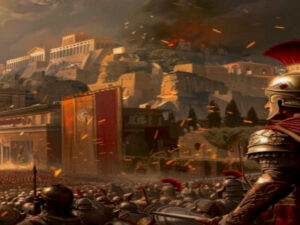
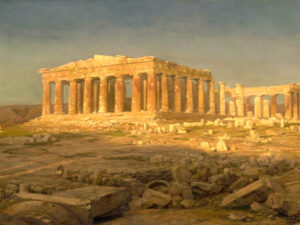
The ancient empire at the peak of its territorial expansion served not only as the glittering center of global power but also as an unprecedented melting pot of diverse cultures and populations. Countless individuals crowded into tightly packed spaces, driven by the desperate desire for employment and the alluring promise of a significantly better life. While the ruling elite commissioned the construction of magnificent marble temples, the daily reality for the common population looked entirely different and far more grim. This extreme urban density created a massive social experiment, the consequences of which continuously occupied the legal and philosophical minds of that era.
Extreme Density and the Complete Loss of Personal Privacy
Falling plant pots and spilled water were considered among the most harmless side effects of such densely packed living arrangements. A much more severe issue was the total disappearance of personal privacy within these overwhelmingly crowded dwellings. The inhabitants certainly had a roof over their heads, yet the structural quality of the upper floors left much to be desired. Ceilings and walls were constructed so thinly that shielding oneself from the outside world was completely impossible.
The Unrelenting Noise of the Ancient Metropolitan Area
Crying infants and loud domestic disputes characterized the daily routine of the urban populace. To this were added heavy footsteps from the floors above and the ceaseless clamor echoing from the narrow streets below. Since window glass was an unaffordable luxury for the common folk, every single movement penetrated the living spaces without any hindrance. The protection of a private room was therefore often nothing more than a mere illusion for the average resident.
Legal Approaches to Maintaining Neighborhood Peace
To make these unbearable conditions somewhat more tolerable, the residents frequently turned to the existing legal framework. The records of legal scholars clearly demonstrate that neighbors often made the daily existence of each other a living hell. These legal writings are not detached theories but accurately reflect the dirt and cramped conditions of the stairwells. A well-known case involved a food establishment where dishes were primarily prepared with cheese, leading to a significant dispute over ventilation.
The Dispute Over Kitchen Smoke and Practical Solutions
The proprietor loved baked dishes and faced the problem of how to vent the resulting smoke effectively. The owner simply routed the exhaust air through the entire apartment building to the outside, which aroused the anger of the other residents. These affected individuals turned to the authorities, and the legal experts found a highly pragmatic solution to the conflict. The smoke was not allowed to be ducted into the building without further ado, unless a contractual servitude was explicitly agreed upon.
Pragmatism in Ancient Legal Frameworks
Such a servitude permitted individuals to knock holes into the wall of a neighboring apartment or to drain rainwater onto foreign roofs. The addition of extra floors to buildings, which deprived the neighbor of natural light, could also be regulated in this exact manner. Anyone who imposed something on foreign property owners had to provide financial compensation for the inconvenience. This approach demonstrated great pragmatism, since an excessive desire for state regulation was rejected by the legal scholars.
Structural Defects and the Liability of Property Owners
They trusted that citizens could negotiate mutually advantageous agreements on their own responsibility, but structural defects and shared walls regularly provided cause for neighborhood disputes. The legal experts pondered what needed to be done when damages occurred on jointly used walls. If a building posed a danger, perhaps through moisture or fire, the owner had to provide a guarantee to the neighbor. Alternatively, the owner could deposit a sum of money immediately to ensure security in the event of damage.
Escaping the Urban Tumult and the Dream of the Countryside
Yet apparently there were also individuals who wanted to enrich themselves at the expense of their neighbors, while luxury items were not covered by insurance. Conversely, those liable could not simply evade their responsibility, which ensured a certain degree of justice for the affected parties. Other sources show that these legal treatises perfectly reflected the reality of the large city and its overwhelming noise. Everyone complained about the unbearable sounds of the metropolis and searched for ways to recover in peaceful environments.
The Retreat to the Countryside as a Symbol of Freedom
Poets fled into rural silence to pursue their art and get some sleep, as the hustle of a massive city and the necessary leisure could not be reconciled. These verses addressed to the emperor had a barely concealed underlying thought about the symbolic meaning of the countryside. The rural areas symbolically represented the freedom that creative individuals claimed against the ruler, whereas the city symbolized political co-optation by the powerful elite. Advice for a life in old age was free from such hidden motives and recommended physical activities combined with stoic calmness.
Stoic Calmness Amidst the Urban Machinery
This ideal of serenity was supposedly achievable right in the middle of the urban tumult, but only for the privileged class who could keep their neighbors at a distance. Even these wealthy individuals suffered from the busyness of the metropolis, which allows modern observers to guess the true conditions of the time. A famous philosopher described life in the city vividly and complained about the manifold noise coming from all sides. He allegedly lived above a bathhouse and listed the various sounds that could make a person resent their own ears.
The Bathhouse as the Epitome of Vibrant Life
The shouting of beverage sellers, bakers, and sausage merchants mixed with the noises of craft activities to create an overwhelming auditory experience. The slapping of massage workers and the hammering of blacksmiths formed a cacophony that tested even the most hardened individuals. The reader wonders whether such a wealthy person did not have the means and ways to escape the noise, considering the ownership of several city houses and villas. A bathhouse was the epitome of vibrant life in a large ancient city, including all possible sources of noise and disturbance.
The True Source of Inner Restlessness
The description was dense and realistic, but not genuine, as it served a philosophical purpose rather than a literal documentation. The actual disturbances of mental peace had no external, but internal causes that could not be solved by changing locations. Whoever was truly wise was not thrown off balance by the most penetrative noise, while whoever lacked this wisdom did not find peace even in the deep silence of a vast palace. This soundscape was probably all too familiar to most contemporaries who had to endure the daily auditory assault.
Sleep Deprivation as a Constant Torment
A well-known poet of urban criticism described the suffering of the residents in drastic words, noting that people in this city did not die from the plague, but from lying awake at night. The stomach burned and the food sat heavily, because the city robbed the residents of their sleep and deprived them of basic rest. Only the rich could buy rest in the metropolis, while the rest of the population suffered under these exhausting conditions. From this grew an ailment that constantly overshadowed the everyday life of the simple tenants and ruined their health.
The Fragility of the Apartment Buildings
The verses seemed to speak directly from the countless small apartments, describing the city as a structure resting on a solitary flute player. The flute symbolically represented the omnipresent noise, while the image illustrated the fragility of the buildings and the precariousness of urban life. The houses were substandard properties, whose cracks had been patched up at best temporarily by the administrator. The defects were only unseen because the walls were full of holes anyway, rendering any cosmetic repair completely useless.
Dangers on the Nightly Streets
A drunken ruffian roamed the street, loudly and impudently venting anger, while other intoxicated individuals passed the time by arguing, making it impossible to find sleep. A person felt transported right into the ancient urban hustle when wheels rolled and carts screeched through the narrow passages. Cattle drivers bellowed, litters were maneuvered through the crowd, and pedestrians were forced to make way for the wealthy. Blank chaos reigned on the streets, showing absolutely no consideration for the weaker individuals trying to navigate the area.
The Fight for Space on the Pavement
Here an individual bumped into a pedestrian with an elbow, while another person struck someone with a wooden stick. The next person rammed a beam onto a head, and yet another individual tipped a barrel into the crowd. The legs were stuck in the dirt, and hardly had a person stepped out of the mud before someone trampled on the foot. A rusty military nail bored into a toe, perfecting the misery on the paths where food was prepared, causing everything to smoke, fume, and stink.
The Fatal Accident in the Traffic Chaos
Steaming plates were carried through the district, while a cart appeared in the middle of the throng carrying huge pine and fir wood trunks that towered high. The trunks swayed and threatened to crash down on the crowd, already suggesting the impending misfortune to the terrified onlookers. A wooden trunk tipped over, the load fell from the wagon and rolled mercilessly over the pavement, crushing everything in its path. The question remained as to what was left of the people and who would still find bones there after the devastating impact.
The Everyday Life That Knows No Pause
The street became a place of horror, where everything was crushed and the populace was reduced to dust in the blink of an eye. Yet the residents paused only for a tiny moment before everyday life swallowed them again and forced them back into their routines. In the apartments, the dishes were washed, the oven fired up, and the oil scraped from the strigils while towels were folded. The usual activities were resumed as if nothing had happened, while on the bank of the shady river, a newcomer was meanwhile waiting for the ferryman.
The Last Victim of Urban Indifference
This newcomer was the last victim of the catastrophe, changing from earthly chaos into the afterlife without any proper farewell. The poor individual did not even possess the necessary coin in the mouth, with which the ferryman was usually paid for the passage. Thus, life in the loud and dangerous metropolis often ended without the due final honor, as the indifference of the city continued even beyond death. The ancient urban life thus remained a constant struggle for survival that knew no mercy and swallowed the poor into oblivion.

 Screenshot youtube.com