Forming the Sacramental Order in the Early Times of the Faith Community
Screenshot youtube.com
The transition from a charismatic, end-time-oriented movement to a firmly structured institution marks one of the most profound developments in Western intellectual history. In the early days of faith, spontaneous gatherings and the immediate expectation of the divine kingdom were the focus. But with the passing of time and the absence ofThe communities had to reorganize themselves as soon as the master’s hoped-for return will be met. Fixed rituals emerged that not only strengthened the inner feeling of togetherness, but also gave a clear, unmistakable identity to the outside world. This process of institutionalization particularly affected the central rites of the community, which were based on simple symbolic actions.to highly complex, theologically permeated mysteries.
The transformation of the community meal
In the earliest phase of the meetings, the common meal was in the center, which was understood as a direct connection to the historical donor. These celebrations were characterized by the joyful expectation of the end-time feast and resembled real, sociable food. However, with the dwindling of immediate immediate expectation, the understanding of these meetings changedbasic. The loose forms of the early days gave way to strict, cultic-looking orders, which were based on Old Testament victims. Care was taken to ensure that every action was taken at fixed times and by precisely specific officials to conform to the divine will.
The mysting of the elements
Parallel to the outer love of order, a profound theological mystification of the elements used developed. The meal was increasingly understood as a means of salvation that overcomes death and enables eternal life in the divine community. The simple bread and wine became a mysterious body, which through divine word and prayer became an essenceexperience change. This food not only nourishes the earthly body, but also gives the believer the substance of the incarnate Savior. The executive official no longer acted as head of the company, but as the direct deputy of the founder.
The strictness of liturgical regulations
The liturgical specifications became more and more detailed and unyielding as the epochs progressed. It was precisely determined which mixed ratios had to prevail in the chalice, since the wine was considered the direct symbol of the sheer blood of redeemer. If the wine was missing, the victim was considered invalid because the prescribed consecration could not be properly completed. The PriestHad to imitate exactly what the founder had once done to offer a true and perfect sacrifice. Any deviation from tradition was considered a threat to the understanding of salvation.
The requirements of participation
Participation in these sacred mysteries was by no means open to all seekers, but to strict conditions. Only those who found the lessons true and had received the cleansing bath of rebirth were allowed to enter the circle of initiates. This bath, originally completed by completely immersing itself in running water, differed significantly fromthe ritual ablutions of Jewish tradition. It was a unique act that was spoken in the name of the Father, the Son and the Holy Spirit, and conveyed the gift of the Spirit. Self-baptism was excluded, since the mediation had to always be carried out by an authorized official.
The adaptation of the baptismal practice
Since running water was not available everywhere, pragmatic adjustments to the original regulations quickly developed. When cold water was missing, warm food was used, and if even this was impossible, it was enough to pour over the head multiple times. This act was always accompanied by a fasting period of several days by the candidates in order to achieve the necessary spiritual purity. in theOver time, the rite unfolded into an increasingly complex ceremony with numerous symbolic actions. Finally, the view that newborn children should be admitted to the league immediately prevailed so as not to withhold salvation from them.
The problem of sin after baptism
However, the cleansing bath of rebirth raised a serious theological problem, namely dealing with sins committed after this unique act. In the early days, shaped by the near expectation, a renewed reversal after the baptism was categorically ruled out. Whoever fell off again after the enlightening experience of salvation could not be renewed againbe, since this would be tantamount to a renewed crucifixion of the Savior. This absolute sternness reflected the expectation of a pure, flawless community of saints, who looked forward to the imminent divine judgment.
The introduction of the renewed repentance
But the reality of human existence could not be permanently forced into such a rigid corset. Out of pity for human weakness, an exceptional possibility of repentance after baptism was granted. However, this grace was only for those who were tempted and sinned by evil after the great calling. Who abused this renewed chance and again and againsinned and regretted, could not attain life. This regulation represented a compromise that recognized human abstinence, but still maintained the high standards of holiness.
The change to the folk church
With the growing missionary successes and the spread of faith in the broad, two opposing church understandings collided. One current wanted to preserve an exclusive community of the pure and perfect, while the other developed a more inviting model that took human weakness into account. This conflict shaped the inner development of thecommunity over long periods of time. Finally, the integrative model prevailed, which opened the door to the masses and paved the way to the Volkskirche. The church changed from an elitist sect to a comprehensive sanatorium for all social classes.
The Constantine Turn and its Consequences
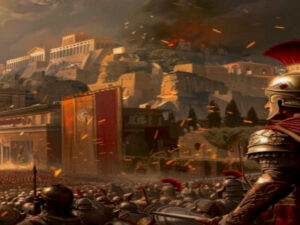
A period of relative peace and inner consolidation was suddenly interrupted by severe persecutions, which at times massively threatened the existence of the community. After the end of this dark epoch, a calm reflection on one’s own roots should have taken place. Instead, a historical turning point occurred, in which the faith community surprisingly participated in the secularreceived power. The new rulers made demands on the institution, which in its then constitution could hardly cope. This fusion of spiritual and worldly power changed the nature of community for all time.
The historical classification of the sacramentalization
Looking back, it can be said that the formation of these rites was far more than just administrative adjustment. It was the fundamental process through which a spiritual movement was transferred to a permanent, socially formative institution. From then on, the sacraments served as visible signs of invisible grace and as instruments of internal disciplining. hercreated a clear boundary between the initiates and the world out there, and created an identity that should outlast age. The transformation from a simple memorial to the bloody sacrifice and from the baptism of believers to the infant rite shows the unrelenting urge for eternal validity and divine protection.

 Screenshot youtube.com