The asymmetrical debate and its historical dynamics
Screenshot youtube.com
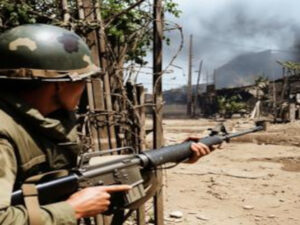
The conflict unfolded as an unequal struggle, in which a technically upgraded world power met resistance fighters who were characterized by political determination and deep cultural anchoring. In the initial stage of ground attacks, the Northern Units and the National Liberation Front could hardly counteract the superior firepower with any effective means. numerousFighting and regular soldiers lost their lives during this time, while the attacking associations seemed to act unrestrictedly. The political leadership of the North nevertheless showed itself unshakable in its decision not to give up the fight and ordered a systematic reinforcement of the military presence in the south. By convening the eligible men andThe laying of regular units along the Ho-Chi Minh Path grew the penetration of the South.
The systematic penetration of the south
This constant infiltration fulfilled exactly the scenario that skeptical observers had foreseen of direct intervention. The more the foreign forces marched in the south, the more the regular bandages spread from the north and spread deep in the impassable forests. As a result, the war lost its provisional character and increasingly gainedmilitary professionalism. Despite the significant losses in the early days, the commanding authorities held on to their perseverance and looked for new ways to consolidate their own position. The initially lossy attack under the commander Nguyen Chi Thanh proved to be too rigid and cost many lives.
The realignment according to the lessons from the valley
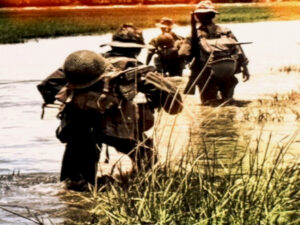
The battles in the Ia Drang Valley taught North Vietnamese leadership that open clashes between large associations against massive firepower could not be won. The Supreme Army leadership quickly recognized the need for a fundamental change in warfare. General Thanh then left the rigid forms of attack and reclaimed the operational freedom of action bythe opposing troops forced to fragment. Small reconnaissance patrols were deliberately attacked in terrain that was difficult to see and between rice fields, which forced the attacking bandages to retreat to fortified camps when dark. This changeover shifted the pace of the clashes completely in favor of the local forces.
The use of terrain and underground infrastructure
The local conditions were systematically used as a strategic advantage, with rainy seasons, dense fog and natural haze of troops allowing hidden shifts in troops. The targeted hand-to-hand combat served to make the attackers’ technical air superiority ineffective and to involve their opponents in confusing battles. Medium-sized units acted extremelyFlexible, stayed constantly moving and eluded any reliable location. At the same time, underground sewer systems were dug deeper and deeper into the ground and offered protected retreats that withstand even the heaviest bombardments. These underground networks acted not only as military infrastructure, but as symbolic centers of resistance in whichThe defenders saw themselves as undisputed masters of the ground, while the intruders only ruled the airspace.
The weakening of the southern forces and the strategic dead end
Until the advanced years, the attacks were primarily concentrated on the forces of the South, which were weakened by inner disruption, mass desertion and sinking morality. Numerous regular assemblies and local security forces fell in defense of settlements, transitions and supply routes while the foreign troopsIncreasingly, tasks were taken over that were actually intended for their own associations. The foreign soldiers, who remained completely unknown and who were clearly noticeable due to their external appearance, could hardly distinguish between supporters and opponents. This ignorance led to a strategic impasse in which they were responsible for protecting the populationtakeovers, but without gaining actual control over what is happening. The military presence became a burdensome burden that increasingly restricted one’s own freedom of movement.
The political and cultural anchoring of the resistance
The political orientation made the rural population the real core of the conflict, since the North Vietnamese forces presented themselves as brothers in the fight against foreign invaders. This cultural connection represented a decisive advantage, which refuted the original assumption of being able to lead a limited conflict with justifiable victims. Despite theIntensive search and annihilation missions, the actual freedom of action increasingly lay with the resistance fighters, who determined the time and place of the battles themselves. The foreign troops were thus pushed into a defensive role in which they could only react to attacks instead of actively shaping the events. This shift increasingly undermined the strategicFoundation of the original war goals.
The overarching pattern and political determination
This course illustrates a comprehensive pattern of unequal disputes in which technical superiority is challenged by political determination and tactical adaptability. The leadership in the north understood the conflict as a historical and ideological struggle that could not be decided by short-term military setbacks, but by enduranceand the integration of the whole society. The ability to weaken the opponent through constant needle pricks and mental attrition proved to be more effective than any direct confrontation. The warfare, which focused on firepower, rapid laying and technical equipment, reached its natural limits, fundamentally underestimating the political dimension of resistance. The deepThe trust of the rural population in their own ranks remained an insurmountable hurdle for the foreign troops.
The historical importance and the legacy
Despite enormous sacrifices, the resistance forces showed a remarkable wealth of adaptation that allowed them to regain operational leadership and force opposing warfare into the defensive. By skilfully using terrain, climate and social proximity, they turned any apparent disadvantage into a strategic strength. The technical superiority lostthereby their deterrent effect and revealed their dependence on clearly defined fronts and replenishment-related structures that were not given in the dense underground. This historical episode impressively shows how cultural roots and political determination can neutralize military superiority. The legacy of this dispute remains an urgent oneExample of wars are not decided solely by weapons technology, but through the ability to maintain their own will longer than that of the opponent.

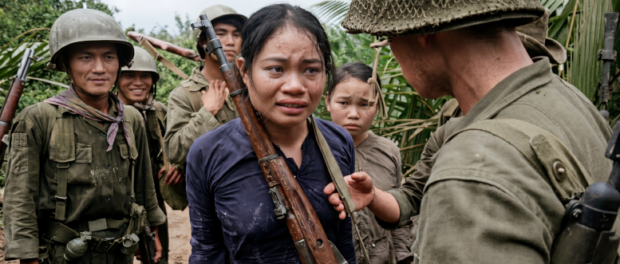 Screenshot youtube.com