The Bürgergarten in Bautzen: A cultural center of the Sorbs
Screenshot youtube.com
The Äußer Lauenstraße 2 in Bautzen is home to this property of outstanding historical and cultural importance for the entire region. This place acts as the most important meeting place of the Bautzen citizens and combines architectural substance with a living tradition in a special way. The history of the house dates back to the 15th century and reflects thechangeable development of the city impressively. Today, the building is the focus of the Sorbian cultural preservation and serves as the central stage for national and international art. This close look at the spatial and historical conditions reveals the deep roots of the place in the identity of Lusatia.
The sensual experience of topography and urban atmosphere
The location of the Bürgergarten is characterized by this topographical arrangement, which captivates every visitor directly. The spacious garden extends right at the Friedensbrücke and offers this completely undisguised view of the striking silhouette of the city. From this elevated point, the old water art and the Michaeliskirche in all its architecturalto see splendor. This spatial connection between the garden, the bastion and the old town creates this sensually tangible urban atmosphere of great density. The walk through this historic complex still clearly gives an idea of the former borders of the city wall. The architecture blends harmoniously into the surrounding landscape and invites you to contemplativelyviewing the environment.
The historical development of the Röhrscheidtbastei
This central element of the impressive ensemble is the Röhrscheidtbasti, which was originally built to protect the fishing gate. The name of this defensive building is reminiscent of the master builder Wenzel Röhrscheidt, who worked in the city between 1510 and 1582. In 1639, Swedish troops destroyed the roof, which was completely and solidly renewed in 1676. In 1850 servedThe bastion as a wool defeat for the owner of the local cloth factory Mörbitz. In 1867, the building and forecourt became the property of the innkeeper Thiermann. Between 1870 and 1890, he integrated the restaurant and hotel business Bürgergarten, where he cleverly included the bastion and the garden that had already been acquired between the bastion and the former Lauentor.
From social association to Sorbian culture center
After the structural expansion, the Bastei temporarily served as the seat of the Schlaraffia social association. After 1945, the Bürgergarten turned into a Volkshaus and thus opened up to this broader public of the city. From 1960, the basic conversion to the main building of the Sorbian National Ensemble took place. In the period from 1952 to 2015, the Bastion acted asExtensive costume collection of the ensemble. After this comprehensive restoration, it is now available as an event location and information point for interested visitors. This history of use proves this impressive continuity, in which historical building fabric always served as a stage for living culture.
The emergence of the Sorbian National Ensemble
The roots of today’s professional house lie in the lay movement, which after the big folk meeting in Bautzen gained enormous dynamics. The official founding phase took place in 1952, when the state ensemble for Sorbian folk culture was launched. Founding Director Jurij Winar played this crucial role in the targeted search for talentedartists for the new house. Under his leadership, the facility quickly developed into this professional stage of high artistic quality. In 1990, the official renaming was made to the Sorbian National Ensemble. Later, the institution was transferred to this non-profit limited liability company. The Foundation for the Sorbian People acts assole shareholder of this company.
Proven performance data and regional identity maintenance
The cultural radiance of this facility is supported by these impressive and well-documented performance data. Since its foundation, the house has completed more than 14,000 guest performances on various stages. These performances have been touring the artists in over 40 countries on 4 continents. The annual funding is in the millions and ensures the ongoingoperation of the institution. These numbers are directly related to the cultural visibility of the Sorbs in the world. At the same time, they strengthen regional identity management and awareness of their own heritage in Lusatia.
Artistic broad and formative personalities
The artistic profile is characterized by this remarkable breadth and diversity. The house combines 3 professional divisions under this roof: orchestra, ballet and choir. The repertoire ranges from special children’s productions to demanding oratorios and symphony concerts. For decades, formative personalities ensured the high professionalism of theperformances. These people stood for this uncompromising artistic quality and this deep connection to the Sorbian cause. Due to this artistic diversity, the offer remains equally attractive for all age groups and interests.
The ensemble as a cultural ambassador and educational actor
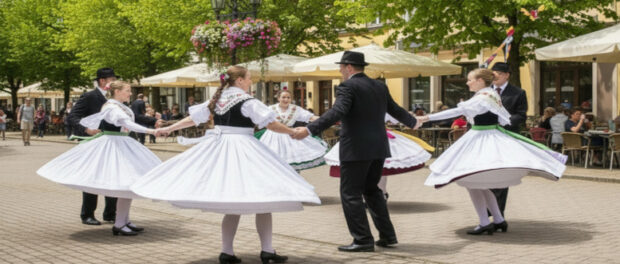
In addition to the pure stage presentation, the house fulfills this central social function in the region. It acts as an active cultural ambassador who keeps the Sorbian language, traditional costume and customs alive. At the same time, the institution sees itself as an important educational player for the younger generation. The targeted promotion of young people has top priorityPriority in daily actions. Through learning workshops, rehearsal visits and educational programs, the next generation is introduced to the cultural roots. This work guarantees that the cultural heritage not only preserves a museum, but is actively lived.
Institutional challenges and economic sustainability
The institution’s path was characterized by these significant institutional challenges and upheavals. This changeover took place from direct state sponsorship to state funding. Later, the foundation financed the foundation for the Sorbian people. This change always required to ensure economic viabilityat the same time as preserving artistic autonomy. This key question remains how the ensemble can maintain its deep local roots while it is international. The balance between global presence and regional anchoring represents this constant management task.
Necessary research for complete documentation
In order to capture the entire importance of the Bürgergarten for the identity of Lusatia, this in-depth research is essential. This investigation must systematically and carefully bring together various archives. Historical program booklets and detailed catalogs of traditional costumes offer valuable insights into artistic development. In addition, eyewitness surveys are includedformer employees of great scientific value. Urban historical sources must also be included in the analysis in order to fully illuminate the urban context. Only through this comprehensive source work can the visibility of the Sorbian minority be documented in all facets.
Call for the protection of the cultural core
The historical and present importance of this place requires this clear classification into the larger cultural context. The Bürgergarten is far more than this mere building, it is this lively dialogue between the building, the ensemble and the entire Lusatia. It is of the utmost urgency to actively protect and sustainably promote this cultural core. Any description of thisOrtes must make the responsibility associated with this heritage be felt. We are asked to not only admire this unique site, but to actively help shape it. Only through joint commitment does this lighthouse of Sorbian culture remain for future generations.

 Screenshot youtube.com