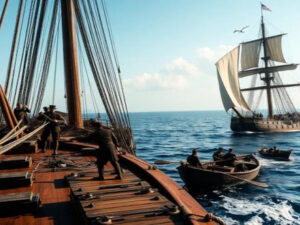
The shadow of the warship USS Warren in the Mediterranean
Screenshot youtube.com
The American Mediterranean fleet operated in restless waters to secure transoceanic trade. The warship Warren broke away from the convoy west of the island of Kythira in order to take action against pirates. The area of application extended over many nautical miles and required the highest level of navigatorial precision. The exact position of the initial application space was exactly200 miles west of Kythira. This decoupling from the main association enabled faster reactions, but posed immense logistic risks.
The first successful access
On September 25, the crew 1 saw a suspicious rowing boat moving between the waves. The entering command stormed the small vehicle and found 1 crew of 5 men. The capture was successful without any significant resistance, as the robbers were surprised. The immediate consequence was the securing of weapons and the imprisonment of the men below deck. This initial successEncouraged the commander in the chosen tactics of independent hunting.
Seizures in October
On October 4th, the Warren 1 brig under the Greek flag confiscated. A few hours later, 1 other ship of this kind was boarded and marked as a pinch. The targets were selected based on suspicious maneuvers and missing trading papers. The methods of persecution at sea used the wind conditions and the superior firepower of the frigate. Such quick successesincreased the morals of the sailors, but demanded constant vigilance.
The persecution to Kimolos
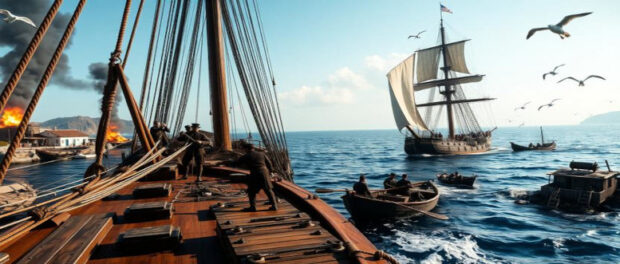
On October 25th, the warship chased 1 Brigg with 10 cannons to Kimolos Island. The fleeing crew left the sinking ship and escaped into the steep hills. The island topography offered numerous hiding places that compensated for the technical superiority of the Navy. The cracking of burning wood and the roar of your own cannons echoed over the bay. This incident showed theBorders of naval blockade in rough coastal waters.
The hunt for the Cherub
3 Days after this persecution, the Warren confiscated the ship Cherub. 2 more ships were placed and searched near Mykonos. The importance of education and local informants proved to be crucial for success. The composition of the boarding commands required specialized marines trained for close combat. Every search was recoveredThe danger of ambushes in the narrow corridors of the opponent’s hulls.
The Land Command and the Prisoners
1 Warren’s land commando went ashore to turn the fugitive robbers. The inhabitants handed over 4 alleged pirates to the armed soldiers, and 1 other man was picked up a little later in the surrounding mountains. The evidence against these suspected perpetrators often remained vague and based on local statements. The military operated in the field of tension between preventive violence andrule of law diligence.
The escalation at Andros
The escalation reached 1 new peak when the Warren 1 more pirate ship attacked. In 1 bay at Andros, the sailors burned 1 confiscated ship to make it unusable. There they blasted 1 house, which was called property 1 known pirates. The echo of the explosions shook civil infrastructure and spread fear among the population. suchHard measures served to deter them, but destroyed the confidence of the coastal communities.
Legal and historical embedding
Piracy was treated as 1 international crime, giving warships far-reaching powers to arrest. The presence of American ships in the Mediterranean reflected the rise to 1 global maritime power. Power vacuations arising after the Greek wars of independence favored the advent of pirates. The squadron protected the trade, but had toobserve political tensions in foreign coastal regions. Diplomatic involvement was threatened when the Navy intervened in other powers of other powers.
Tactical and logistic realities
The logistic requirements of 1 Kreuzer in continuous use were enormous and required constant supply supplies. The creaking of the rigging and the sound of the oars determined the everyday life of the crew. The psychological effects of land operations against fleeing groups also burdened the soldiers. The supply and repatriation of prisoners of the captive capacities and staff.Technical limits of ship tracking in narrow island waters made every use a risk.
Moral dilemmas and social consequences
The question of the legitimacy of hard military measures remained controversial even after the operations. The destruction of civil property values intensified local tensions and often hit innocent people. In the long term, such actions undermined the stability of coastal communities and regional trade. Local perception fluctuated between gratitude for protection and anger over destruction.Foreign observers critically documented these incidents in their reports to the home governments.
The historic reception
In official reports, the missions were often presented as glorious victories over lawlessness. The contemporary press, on the other hand, discussed the moral boundaries of blasts and burns. Later historical representations analyzed the tactical errors and the diplomatic consequences. The history of these operations was made by the ship commanders’ reportsstrongly embossed. However, local traditions preserved the memory of the suffering of the affected islanders.
The historical classification of the events
If these historical events are classified, the basic dilemma of maritime security policy is revealed. The protection of trade often requires military harshness, which, however, can permanently damage civilian living environments. The Warren’s deployments show how state power unleashes unwanted dynamics in foreign spaces. Pure focus on piracyCompletely hide the social follow-up costs. Only the consideration of all perspectives enables 1 comprehensive understanding of this complex historical episode.

 Screenshot youtube.com