The monetary revolution and the transition to rational civilization
Screenshot youtube.com
In ancient times, it was the culture of human history that coined the coins and thus triggered the revolution. That innovation was by no means limited to mere trade or economic transactions. The novel means of payment acted as a profound social catalyst. This development fundamentally changed the structure of Lydian society. even the gene poolThe people experienced noticeable influences from this monetary innovation.
The resolution of rigid tribal borders
The introduction of coins made it possible from then on to pay dowries in a standardized form. From now on, marriages no longer had to be concluded exclusively within their own tribe. This monetized form of marriage connections led to people from different tribes and regions founded families together. This increased genetic diversityenormous within the population. Social borders became significantly more permeable by the universal medium. Money brought people into contact with each other who would have been separated from each other by tradition or origin.
The penetration of all social spheres
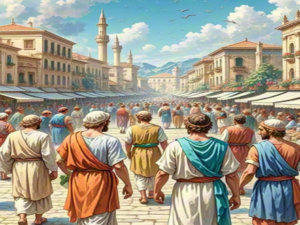
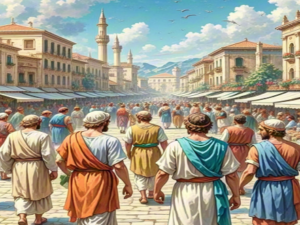
The new medium of exchange pervaded all areas of Lydian society. Religious communities accepted the coins as offerings. Temples evolved into places of economic power and further influence. Works of art were henceforth measured according to their material value. This development was given the completely changed form of recognition for cultural achievements.
The rationalization of conflicts
Disputes that were previously resolved with physical retribution or tribal rituals could now be settled by monetary compensation. People who were convicted for theft no longer had to be stoned. Instead, it was enough to pay the corresponding penalty in coins. In this way, physical violence was noticeably reduced and conflictsrationalized. The means of payment created the changed form of social order. In that order, abstract values replaced the previous concrete actions.
The objectification of everyday life
The great organizational power of money was shown in the ability to compare completely different goods and services. All goods and services could be brought to the common denominator. This principle acted as an objective arbitrator for everyday decisions. People could now have reviews about bread, olive oil, wine, clothing,Taxes and working hours. The complex network of everyday life became more understandable and predictable through this development.
The emergence of abstract thinking
This ability to compare values required the completely changed form of thinking. That thinking was based on abstraction, rationality and computational understanding. The pursuit of status, which was given by wealth, developed into a strong motivator. In order to achieve this status, people had to develop further skills. Instead of stories about divineThey had to reckon and think economically to tell legitimacy.
The demystification of the world
The mathematical skills demystified the world and urged people to act more rationally. The spread of basic arithmetic skills marked the beginning of profound change. Society moved from the heavenly order to the rational structure. This change was by no means only of an economic nature. Rather, it was about theIntellectual and cultural transformation of enormous scale.
The Greek adaptation and mastery
The Lyders started this process, but their neighbors adopted the ideas with unprecedented enthusiasm and consistency. Greek culture recognized the potential of money as a tool of order and analysis. Those masters of logic and mathematics used the means of payment for social structuring. The foundations of Western rationality were determined by the monetaryrevolution decisively influenced. The connection between coins, abstract thinking and social organization was clearly evident.
The anthropological legacy
The coin money not only made trade easier, but also changed thinking and redefined relationships. The introduction of coins represented the anthropological caesura. That event changed the relationship between people and themselves and the world. The Lydian invention initiated the transition from mythical explanations to rational structures. This was the foundation stone for thespiritual development, which should shape the entire ancient world and modern civilization.

 Screenshot youtube.com