The Mystical Rocks of the Lusatian Mountain Land Between Myth and Scientific Research
Screenshot youtube.com
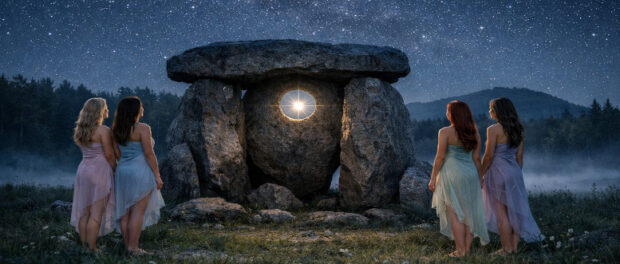
The Lusatian Bergland, in its deep, wooded landscape, contains the abundance of stone testimonies that have been winging people’s imagination for generations. Striking rock formations and mysterious mountains are entwined around ancient stories that tell of pagan rituals and divine revelations. These places are far more than mere geological formations, because they represent thatcenter of cultural memory that has developed over the centuries. The examination of these stone rooms combines archaeological search for clues with linguistic subtlety and astronomical observation. To this day, the true meaning of these monuments remains the fascinating mystery that casts a spell over scholar and lover of the homeland in equal measure.
Early testimonies and the prayer of the ancestors
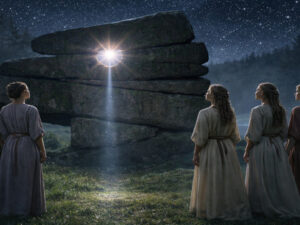
In the early modern period, Pastor Martin Niger lived in Weigsdorf, which was then part of Lusatia. During his morning hikes, he met the elderly locals, who came from the direction of the distinctive Heidensteinfelsen. The spiritual later found the lady kneeling in prayer and learned from her that her ancestors in this place were already the rising and setting sunhad worshiped. She reported on the former temple of God, who is said to have stood at this exposed spot. This report is considered an early reference to religious practices around the rocks and drew the attention of later scholars to the possible function as pre-Christian cult place.
Academic descriptions and mystical cavities
In the past centuries, Magister Martin Grünwald dictated the comprehensive description of the region at the Bautzen high school. He spoke of stone altars on the surrounding mountains and thus aroused general interest in mythological antiquities. This mention led to more intensive preoccupation with the rocks that have been special places in the region for centuries.were considered. The pastor’s son Samuel Friedrich Bucher later reported on urns in Königshain, which he himself had excavated on the Totensteinfelsen. He described the site as a cave that had been incorporated into the rocks so that worshipers could fall to their knees to the east and worship the sun in the old custom.
Linguistic Trails and Dark Deities
The Sorbian pastor Abraham Frencel translated the land designation Prašchwiza as a question or oracle place and thus directed the research to the mountain later called Czorneboh. This peak was associated with both the devil and the sun god of the dark season in later interpretations. Such interpretations are part of the broad mythological tradition thatLusatian mountain country has been shaped for centuries. Pastor Ehregott Friedrich Pannach described the Teufelssteinfelsen near Kleinbautzen as the altar of the idolatry and found intentional changes to the location of the boulders. Later archaeological excavations of the Society for Anthropology and Prehistory confirmed these observations of artificial interventions in the naturalrock structure.
Comparative research and astronomical interpretations
Karl Benjamin Preusker interpreted numerous rocks of the Lusatian Bergland as pagan altars and temples of God, suspecting the sun cult. He drew parallels to the megaliths of northern Germany and Scandinavia, thus establishing the connection to the well-known stone circles. The doctor Johann Gottfried Bönisch expanded this perspective by not only with the rock altarsthe sun, but also connected with the moon. Alfred Moschkau later again made the mental arc from the local rock altars to Stonehenge, strengthening the idea of the far-reaching prehistoric cult system. The astronomer Josef Hopmann examined the well-like indentations on the Totenstein and suspected depictions of constellations in it.
Refuted hypotheses and new research approaches
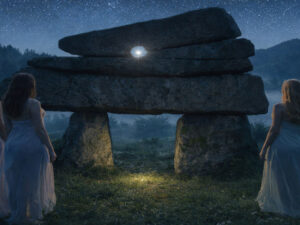
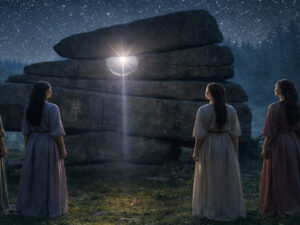
However, later analyzes by Lutz Pannier did not confirm this bold astronomical interpretation of the shell stones. Hopmann had announced the specialist article, but he never appeared and after the war he no longer commented on this question publicly. Since the beginning of the new millennium, local researchers and the specialist group Archaeoastronomy of the Observatory have been linkingBruno-H.-Bürgel in Sohland to these traditions. They examine regulated-looking rock openings that could enable calendar-based observations of the sun. These rock objects are called the Lusatian sun sanctuaries and are given names from Nordic or Sorbian mythology as part of the project.
Working title and the cultural heritage of the region
The designations chosen such as Thor, Odin, Mara, Bieleboh or Czorneboh serve as working titles for structuring research and do not constitute final scientific specifications. These places are deeply embedded in the history, mythology and cultural identity of the region and contain the memories of the generations. The question of the true meaning of these rocksRequires the interplay of archeology, language history, mythology, astronomy and regional culture. The scientific research of these stone witnesses has not yet been completed and always harbors new surprises. The rocks of the Lusatian mountain lands represent the unique cultural heritage, the meaning of which extends far beyond the borders of the region.

 Screenshot youtube.com