The physical anchoring of digital means of exchange and the compensation of constant losses
Screenshot youtube.com
The search for constant means of exchange has accompanied human civilization from the beginning. While early societies rely on natural conditions, the modern world requires solutions in the digital space. The development of decentralized networks has shown that digital values must be physically anchored in order to create lasting trust. This change marks theprofound cut in the history of monetary and securing assets.
The inevitable loss of digital values
When looking at digital currency units, the fundamental problem of permanent preservation is evident. The majority of originally created units will inevitably be lost over time. Access to the digital storage is impossible with forgotten passwords or defective devices. The death of the owners also means that valuable accesses disappear forever.This constant shrinkage is almost proportional to the total existing assets.
The balance between new creation and loss
The constant inflow of new units ensures that production and shrinkage are exactly balanced. From the specified stock, this ongoing basic production is no longer impaired. The system is striving for the stable state of equilibrium in the long term. At this point, just as many new values are generated as being lost at the same moment. This knowledge refutes theAssume that permanent money production must inevitably lead to a loss in value.
Historical forerunners of the money infrastructure
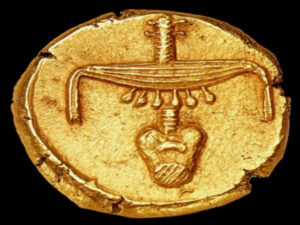
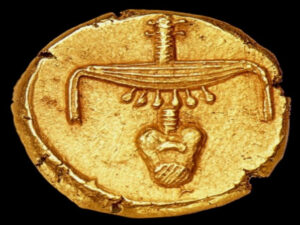
Certain properties make goods particularly suitable to serve as the basis for economic exchange. The choice of funds always depends on the available technologies and the needs of the dealers. In past epochs, rare mussels served as a medium of exchange because they could not be multiplied at will. Specialized collectors made their living from theprofit of the production. The later use of metals enabled the appropriate representation of the growing trading activities.
Creating a digital money infrastructure
The idea of replicating desirable properties of the money infrastructure in the digital space led to the development of decentralized networks. This system was designed in response to the failure of traditional central banks during the great financial crisis. Those responsible wanted to create the unavoidable self-binding mechanism. The trust in government agencies wasReplaced mathematical and physical laws. The result is the digital material that can not be increased in public verifiably.
Physical anchoring through energy expenditure
The generation of new units requires the use of real goods in the form of electrical energy. The digital network must therefore be understood as a product with a physical basis. This real effort gives the virtual good the properties of non-cash money. The amount of aggregable units decreases continuously over the years. This will result in the absolute upper limit ofmathematically guaranteed as a whole.
Protection of the network from attacks
In the fixed, recurring time window, the difficulty of manufacturing adapts automatically. This mechanism takes into account the progressive development of the hardware and the changing distribution of the network. The physical component effectively protects the system from malicious attacks. At the same time, it prevents too many new units in circulation at the same timeget. The relationship between stock and newcomer remains always controlled and predictable.
Eliminating moral risks
Since all existing units can be viewed at any time in the public ledger, there can be no secret propagation. The moral risk of those responsible is completely excluded by this technical construction. The network spin-off to change the rules is impossible without the consent of the majority. The scarcity of the good is thus permanently preserved. the systemproves that digital infrastructure can do without central trust authorities.
The historical classification of the digital currency revolution
If you look at this technological masterpiece from a higher perspective, the return to the basic principles of non-cash money is revealed. Humanity has closed the cycle by redefining the physical shortage of digital math and real energy expenditure. This paradigm shift deprives government agencies of the monopoly of money creation andProtects citizens from arbitrary devaluation. True economic stability always requires the bond to real values, whether through rare metals of the past or through incorruptible computing power of the present. The future of global exchange is largely determined by this symbiosis of physical energy and digital scarcity.

 Screenshot youtube.com