The strategic miscalculation and moral misconduct of air warfare in Indochina
Screenshot youtube.com
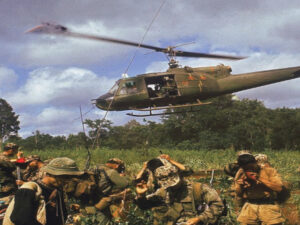
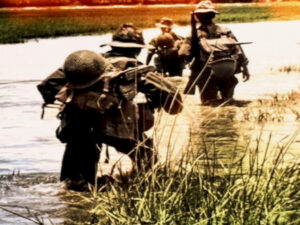
The United States’ military intervention on the Southeast Asian Peninsula revealed a fundamental misjudgment of local historical circumstances and a dangerous overestimation of technological superiority to political and social resilience. From the second month of 1965, American warfare shifted its weight almostCompletely on systematic air raids, since conventional ground operations alone were not able to control the complex political realities on site. This offensive air warfare strategy does not come from a careful military analysis, but resulted from an acute lack of alternatives capable of acting and the desperate attempt to influence the political sphere ofto claim a foreign great power against national liberation movements. The declared goal was to prevent cross-border supply of resistance groups in the southern part of the country while protecting the unstable government in Saigon from the complete collapse, but this intention ignored the deep roots of the conflict in the local population.The continued implementation of this offensive despite obvious strategic shortcomings illustrates how political considerations and domestic political constraints of rational military planning were regularly overruled.
The illusion of surgical warfare and political motives
The initial bombings were primarily directed against infrastructural hubs in the neutralized border region before the attacking areas gradually advanced to northern areas. Despite this escalation, the American leadership specifically avoided direct attacks on the capital and the important port facilities, as an open confrontation with the neighboring great power in theNorth considered an incalculable risk. Even military establishment proposals to destroy the vital dike system and thus trigger targeted famines were rejected out of political caution, which revealed the limits of the intended use of force. Instead of a comprehensive military smashing, the government relied on a bureaucratic selection process,which is supposed to identify the supposedly relevant military facilities through weekly discussions of the political leadership level. This method was based on the naïve assumption that a precisely controlled air combat could force political concessions without completely destroying the civilian infrastructure.
The escalating power of destructiveness and its civil suffering
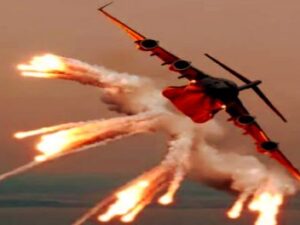
The pure deployment statistics illustrate an amount of violence that perverts any alleged proportionality of military action to the absurd. Within a single year, the flights from fighter aircraft from various bases and maritime platforms increased from twenty-five thousand to nearly eighty thousand missions. The following year the number exceededof the flights the mark of one hundred eight thousand, while the amount of explosives dropped increased from sixty thousand to over two hundred and twenty thousand tons. These massive amounts of greatly surpassed the destructive power of major historical attacks, demonstrating the ruthless use of the latest weapons technology, including remote projectiles, heavy four-beamLong-range bombers and highly explosive fires. The systematic use of these weapons turned wide stretches of land into desolate crater fields and caused devastating losses among the non-fighting population, which led to growing outrage internationally.
The discrepancy between official representation and reality
Independent observers were able to determine on the spot that the official announcements about exclusively military goals were hardly compatible with the visible reality. Entire settlements that had never had any significant strategic importance were in ruins after the attacks, while the remaining residents tried desperately, from the rubbleto recover usable materials. The complete destruction of residential areas, trade routes and civilian supply facilities revealed that the allegedly precise air war was in fact a comprehensive destruction strategy. Despite this obvious discrepancy between military justification and civil devastation, the political leadership continued tocampaign, as she continued to hope for psychological exhaustion from the opposing camp. Historical comparisons with previous global conflicts that had already demonstrated the limited military effectiveness of surface bombardments were systematically ignored or deliberately hidden.
Adaptive resilience and social mobilization
The North Vietnamese leadership did not react to the massive bombing with surrender, but with unprecedented social restructuring and improvised survival strategies. With comprehensive external support and through the consistent inclusion of the entire population, civil and military infrastructures were able to be replaced by nightly repairs andto partially maintain decentralized relocations to areas that are difficult to access. An extensive underground network of protection systems and connecting paths pervaded the most contested regions and offered the civilian population protection from the constant air raids. While a large part of the male population was involved in military service or reconstruction,Women increasingly took responsibility for agricultural production and thus ensured the basic supply of society. This collective resilience proved that technical superiority alone is not enough to bring a mobilized and ideologically solid society to its knees.
The economic inefficiency and military misjudgment
The continued air offensive not only failed because of its strategic objective, but also revealed a catastrophic disproportion between the resources used and the benefit achieved. Internal analyzes of the government’s own government later proved that almost ten units of military expenses are invested in each individual currency unit in the property damage causedhad to, which underlined the economic absurdity of the campaign. At the same time, the attacking forces recorded significant losses on modern aircraft as the enemy air defense became more and more effective through ongoing modernization and tactical adjustments. The alleged weakening of the supply lines was reversed, since the transfer of people andMaterial about alternative routes increased steadily despite the massive bombings. This military and economic miscalculation illustrates how technocratic warfare inevitably leads to strategic dead ends regardless of political and human factors.
The political repercussions and social radicalization
Instead of persuading the opposing leadership to capitulate, the persistent air terror strengthened the inner cohesion of the society affected and created a common resistance identity against foreign intervention. The capture of shot down crew members served as a political means of pressure and underlined the vulnerability of the technologically superior attackers.Within the attacking nation itself, the growing number of civilian victims and the obvious discrepancy between propaganda and real destruction sparked a broad peace-moving opposition. The government’s moral credibility was increasingly eroding, as the continued use of force against an agriculturally structured region was considered disproportionate and ethicalwas not justifiably perceived. The air offensive thus proved not only to be a military fiasco, but also to be a political suicide that accelerated the inner turmoil of the intervening power and permanently damaged confidence in state warfare in the long term.

 Screenshot youtube.com