The Morning of Doom and the Illusion of Persistence in Ancient Pompeii
Screenshot youtube.com
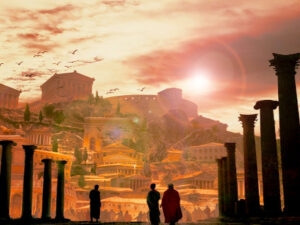
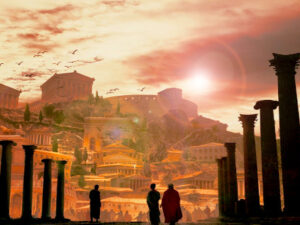
In 79, at the foot of Mount Vesuvius, there was a deceptive calm that determined the daily life of the wealthy citizens of Pompeii. No one suspected that a huge catastrophe was brewing beneath the earth, which would forever bury the flourishing community beneath it. Instead, the aristocracy devoted itself to its usual duties and the well-groomed appearance that itshigh social status. In the magnificent villas, the day began for the ladies of the upper class with an extensive and extremely elaborate morning routine. These rituals of personal care and clothing testified to a high degree of civilization, but completely blinded the approaching danger.
The awakening and the choice of intimate garb
Rectina woke up in the early hours of the morning on this fateful day, long before the first rays of sunlight illuminated the chambers of the villa. After a light breakfast, she went into the care of her maids to prepare the morning toilet. The first step of this procedure involved putting on the intimate garb, which was by no means lacking in ancient Rome.The men of the time wore a simple apron under their tunic, while the women preferred far more sophisticated solutions. Rectina opted for a tight-fitting apron made of soft leather, embellished with elaborate embroidery and tied at the sides with ribbons.
The external appearance and stole of the aristocracy
Above this intimate garment, the Roman mistress of the house wore a supportive breast bandage, which consisted of a soft bandage made of fabric or leather. This supportive garment lifted the chest and gave the silhouette its then highly coveted lush shape. A slave girl then handed her the long undergarment, which had long sleeves due to the cool autumn air.floor-length robe, which was called a stole, formed the fundamental garment of every class-conscious Roman woman. Under the richly decorated hem, flat and finely crafted shoes emerged, because high heels were still completely unknown in that era.
The Dangerous Art of Ancient Cosmetics
Rectina took a seat on a woven wicker chair, while a charcoal basin provided pleasant warmth in the room. The handmaids swarmed around their mistress to first cleanse the face and then apply a light primer. Pale skin was considered an unmistakable sign of the aristocracy, which is why the maids touched a cream of honey and lead white.Cheeks, they applied the finest hematite powder to give the cheeks a vibrant shimmer. The women emphasized their eyes with eyeshadow made of ash and a black eyelid line, the pigments of which were obtained from charred date seeds or burnt ants.
The tools of beauty and their preservation
To open your eyes, carefully bend the eyelashes upwards with specially shaped instruments. A simple piece of charcoal, which set a precise and dark accent, sufficed to tighten the eyebrows. On a small table stood various ivory boxes, which served as cosmetic chests and were filled with elegant vials. In these containers, the Roman kept herCreams, ointments and coloured powders. Rectina monitored every single step of this elaborate procedure in a mirror that a slave kept tirelessly in front of her.
The elaborate hairstyle and the use of hairpieces
Following the facial care, the maids devoted themselves to the complex design of the hairstyle. The dark hair was detangled with fine ivory combs and braided into long braids that were artfully rolled up on the back of the head. In order to give the hair more volume, hair extensions were used, which were widely used in Roman society. With a hot branding ironthe waitresses curled the hair on the temples into fine curls. The end of the hairstyle was a kind of crown that was cleverly hidden behind a cascade of real curls.
The Dimensions of Hair Art and the Color of Lips
Such hair structures could sometimes take on enormous proportions and were reminiscent of the magnificent head coverings of high clergy. However, Rectina chose a lighter version for this day, which was better suited for the upcoming trip. After completing the hairstyle, people turned to painting the lips, which they wished were as lush and full as possible. The most popularColor was a bold red obtained from ochre or hematite. Especially rich women could afford more intense shades of vermilion pigments or the bright red Mennige, which later served to decorate manuscripts in the Middle Ages.
The toxic ingredients and language of beauty spots
Since the lipsticks used contained mercury and the primer was based on lead white, the Roman woman was exposed to considerable health risks on a daily basis. Both substances are highly toxic, even though there is no concrete evidence of massive health damage from these cosmetics today. Finally, the waitresses applied a beauty stain, which Rectina placed directly above theCorner of the mouth. This stain gave her smile a certain subtlety and served as a silent code of seduction. Depending on the position of the spot on the face, the wearer sent different messages to her environment.
The perfection of fragrance and precious jewellery
As the last step of personal care, the mistress of the house wrapped herself in a cloud of fragrant essences, which were specially made in Pompeii. The perfume was in a tiny glass bottle in the shape of a sleeping pigeon, whose long tail had to be broken off before use. After applying the fragrance, Rectina put on the appropriate jewellery, which revealed her wealthshe wore earrings that resembled a fine mask and were set with tiny pearls and emeralds. An equally fine net of gemstones wrapped around her neck, while snake-shaped bracelets and several rings completed the ensemble.
The quirk of the small rings and the descent to the carriage
She placed a tiny ring on the penultimate phalanx of the index finger, which corresponded to a well-known quirk of the chic ladies of the city. Perhaps these small rings, which are often found during excavations, did not belong to small children, but served as a fashion accessory for adults. After one last controlling look in the mirror, Rectina wrapped herself ina scarf made of the finest wool. She left her magnificent house at the very moment when the first rays of sunshine peeked over the sea. In front of the villa there was already an elegant carriage waiting for them, which had been silently cleaned and prepared by the slaves at night.
The journey into the city and the unknown destination
The trust slave beckoned one of the maids to sit in the carriage as an accompaniment to the mistress. Then he himself took the place on the carriage trestle and gave the horses the signal to descend with a short whistle. The hard rhythm of the horse’s hooves on the stony pavement accompanied Rectina on her way to the city. Yesterday’s banquet was already completely done away with, andthe villa had a firm grip on everyday life again. The elegant travel company headed straight for Pompeii, because the Roman woman urgently needed to see the doctor.

 Screenshot youtube.com