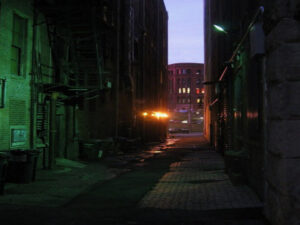
Russian Sovereign in Amsterdam and the Discovery of Maritime Power
Screenshot youtube.com
Toward the close of the seventeenth century, the balance of European power shifted in a decisive way, and command of the seas became the measure of wealth and influence. The great land empires of the east still rested on older forms of rule, while the western sea powers had opened a new age through long-distance trade, finance, and naval strength. Russia, the vast realm of the Romanovs, was almost entirely cut off from the sea and possessed neither a fleet of consequence nor access to the major routes of world commerce. The young sovereign Peter perceived this isolation as a source of weakness and resolved to travel westward in order to understand the foundations of foreign strength through direct experience. His journey brought him to Amsterdam, then the richest and most dynamic city of the known world, where he studied the sources of Dutch success while concealing his identity.
The Arrival of an Unusual Visitor
In the year 1697, an extraordinary guest reached the Dutch capital, for the Russian sovereign Peter the Great arrived in Amsterdam without revealing his true rank. He had disguised himself as a common sailor and wished to remain unrecognized so that he could learn without disturbance. The city he entered was at that time the wealthiest metropolis on earth and formed the beating center of international trade. Here the threads of the global economy converged, and whoever understood the mechanisms of this place understood the rules of a new epoch. Peter knew that the world was changing, and he was determined not merely to observe the change but to make it useful for his own empire.
The Foundations of Amsterdam
Amsterdam had been built on marshland and had grown from modest beginnings into a free city of remarkable elegance. Splendid houses lined the banks of a dense network of busy canals, and on the broad quays goods from every part of the world were handled. A flourishing exchange formed the financial backbone of this system and supplied merchants, shipowners, and craftsmen with the capital needed for their ventures. The city welcomed dissenters and religious refugees and founded its rise upon two mutually reinforcing pillars, namely Protestantism and commerce. This union of religious tolerance and mercantile ambition created an atmosphere in which ideas, capital, and people could circulate freely.
The Power of the Port
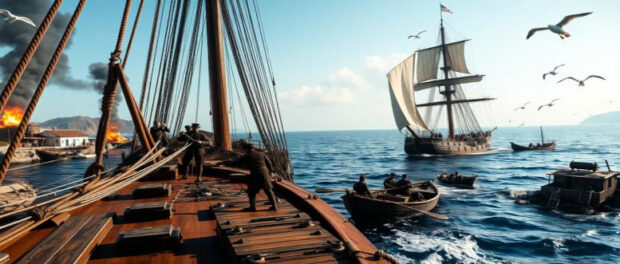
Amsterdam was home to the largest merchant fleet of its time and formed the beating heart of an empire that stretched from Holland to Cape Town, Zanzibar, and Malacca. The port of the city was a citadel of Dutch power, in which countless masts rose into the overcast sky of the lowlands. Each mast stood for a vessel that sailed to distant coasts and brought back goods, wealth, and knowledge. The source of this power lay not in fertile soil or rich mineral deposits but in command of the seas and in the art of exchange. Whoever observed the port of Amsterdam could perceive that a new form of power had arisen, resting not on land but on maritime dominance.
The Lesson of the Sea Powers
The Russians, and especially the land-bound Muscovites, had little knowledge of the sea and its possibilities, yet Peter grasped instinctively that the future would belong to the maritime powers. Whoever understood the sea also understood trade, and whoever mastered trade separated himself commercially from the rest of the world. Portugal had first learned this lesson during the age of discovery, and by the late seventeenth century it was Holland that reaped the fruits of that insight. Both sea powers had redrawn the map of the world by following trade routes and establishing bases at strategically vital points. These stations extended along Atlantic Africa, around the Cape of Good Hope, up the Indian Ocean, and farther eastward toward Asia.
The New Route to Asia
Portuguese and Dutch navigators had succeeded in circling the globe and thereby escaping the grip of the Ottoman Empire on the old silk roads. For centuries the Ottomans had controlled the land route between Europe and Asia and had burdened trade with heavy levies. The discovery of the sea route around Africa opened an alternative that allowed the European sea powers to deal directly with producers in Asia. As a result, the center of the world economy shifted from the Mediterranean to the Atlantic coast, and cities such as Lisbon and Amsterdam rose as new hubs of world trade. The Dutch were especially skillful in turning these possibilities into a coherent system of trading posts and fleet routes.
The Logic of Global Exchange
The rising Dutch had become entangled in a worldwide exchange based on a simple yet effective principle. They purchased goods such as pepper, cinnamon, and other spices at favorable prices in the East and sold them in the West at a multiple of that cost. The difference between purchase and sale they retained as profit, and this margin financed the further expansion of their fleet and trading posts. This system required not only seamanship but also a refined financial order that advanced funds for long voyages and distributed risk. Amsterdam thus became the pivot of a global network in which capital, goods, and information circulated in a constant cycle.
Russia and the Fear of Falling Behind
Russia fell farther behind in the face of these developments, and this fact displeased the young Romanov sovereign greatly. Peter was aware that his empire risked losing contact with the leading powers of Europe unless it soon took independent action. Determined to uncover the secrets of Dutch success, he went personally to the place where that success was made. He secured a four-month apprenticeship on the famous shipyards of Amsterdam, where the finest shipbuilders of the age worked. From there he observed and learned everything the city could offer, absorbing knowledge eagerly like a student facing the most important examination of life.
The Sovereign as Apprentice
It was a remarkable sight for witnesses, for the greatest landowner in the world traveled to the greatest shipbuilders of the world to be trained in their craft. Peter lived secretly in a small wooden artisan house and built his own bed with his own hands. He wore the dress of a Dutch carpenter and lived like a local, far from all court ceremonial. His Calvinist superior certified after the completion of the apprenticeship that he had become a good and skillful carpenter. This experience shaped the sovereign deeply, for it showed him that practical skill and manual labor were not shameful but the foundation of every great work.
The Model for a New Capital
His stay in the Netherlands would change both his own life and the history of Russia and Europe in a lasting way. When the sovereign later built his new capital, he oriented himself directly on the model of Amsterdam. He even chose a Dutch name for the foundation and called it Saint Pieter Burkh instead of using a Russian equivalent. The greatest city of Russia imitated the greatest city of Europe, for it was built on marshes and laid out around a network of canals. Impressed by the economic and cultural dynamism of cosmopolitan Amsterdam, Peter invited foreign specialists to settle in his new city and bring their knowledge with them.
The Character of the Autocrat
The autocratic ruler of the greatest land empire in the world was not a man who allowed conventions to limit him, and his personality was as vast as his realm. He was an imposing giant of a man who drank heavily, pursued women in an indiscreet manner, and in his spare time reportedly performed dissections on corpses. Peter, who in his own circle was always on guard against betrayal, was astonished by the lack of concern for privacy and the relaxed attitude toward security that he found in Holland. Wealthy Russians barricaded themselves behind militarized fortresses, while rich Dutch bankers, merchants, and legal scholars lived in houses with huge transparent windows that gave ordinary people direct views inside. This openness struck the sovereign as thoroughly modern, and the apparent social closeness of different classes moving side by side must have been deeply unsettling for a man who possessed more serfs than anyone else on earth.
Admiration and Anxiety Toward the West
Like many Russians, Peter the Great was both impressed and unsettled by the refinement and technological capability of Western Europe. This tension between seeing the West as a beacon of civilization and as a threat to one’s own order has long remained an unsolved puzzle for Russian thinkers. For many generations, ambitious Russian rulers have regularly valued outward western features while recoiling from the deeper inconveniences that a true adoption of liberal principles can impose on those in power. Peter embodied this tension in a particularly clear manner, for he wanted to harvest the fruits of the West without endangering the roots of his own autocracy. Thus he accepted the visible signs of modernity while carefully omitting the invisible foundations of freedom.
The Reform of the Nobility
After his return to Russia, Peter insisted that the Russian nobility shave off their long beards. The boyars were to adopt western fashion and behave more like modest, hard-working Dutch citizens rather than like the aristocrats owning serfs that they truly were. These orders were not mere whims of an eccentric ruler but the expression of a profound conviction. Peter had seen in Holland that prosperity did not arise from resources alone but from a certain attitude toward work, order, and community. The outward changes were meant to initiate an inner transformation and accustom the nobility to a new idea of duty and usefulness.
What the Sovereign Rejected
What did not please him in the Dutch system he deliberately left behind on the banks of the Amstel. The subordination of the Dutch monarch to the parliament of the country was abhorrent to him, for Peter had no intention of sharing or limiting his own power. Although he wished to enjoy the fruits of Dutch money, namely innovation, wealth, and sea power, he was not enthusiastic about the democratic and institutional compromises that the Dutch establishment accepted in return. Promoting debate and tolerating people who did not always agree was not his manner. Yet sometimes the visible benefits cannot be separated from their conditions, and this tension would accompany the Russian project of modernization permanently.
The Power of Tolerance
Dissent and creativity often contribute to the great adventure of commercial enterprise, and Dutch history offered the most impressive proof of this. Dutch tolerance, Dutch wealth, and Dutch financial genius seemed inseparably connected. The readiness to receive foreign ideas, foreign religions, and foreign skills had made Amsterdam a magnet for the ablest minds of Europe. This openness was not mere generosity but a hard competitive advantage, for it attracted capital and talent that found no home elsewhere. Peter recognized this connection, yet he was not prepared to draw the political consequences that such openness inevitably carried with it.
The Puzzle of a Small Great Power
Given the commercial energy and the skillful handling of money in seventeenth-century Amsterdam, it is hardly surprising that a curious and pioneering Russian monarch came to the Dutch capital incognito to uncover the secrets of wealth. Holland was for contemporaries a baffling phenomenon. How could such a small country possess such power and prosperity while a country as large as Russia remained in poverty? In the Russian world the right of power prevailed, and power required size, yet here the opposite seemed to be true. What alchemy was at work that turned a swamp into a treasury, and whatever the Dutch were drinking, Peter the Great wanted to taste of it too.

 Screenshot youtube.com